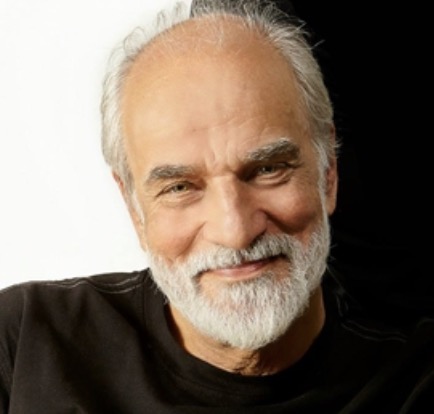
Albert Hirschfeld (Parents: Isaac and Rebecca Hirschfeld; Spouses: Florence Ruth Hobby (m. 1927–1943), Maria Karnilova (m. 1943–1990), Louise Kerz (m. 1996–2003); Daughter: Nina Hirschfeld) was the definitive master of theatrical caricature. For over eight decades, his rhythmic, elegant, and impossibly economical pen-and-ink lines captured the soul of Broadway, Hollywood, and the political elite. He did not merely draw likenesses; he distilled a person’s essence into a single, flowing gesture.
Born in St. Louis, Hirschfeld moved to New York City as a child. By age 17, he was working as an art director at Selznick Pictures. However, a trip to Paris in the 1920s changed his trajectory. Influenced by the spare, fluid aesthetic of Asian calligraphy and the avant-garde spirit of the European art scene, he began stripping away all “unnecessary” detail from his drawings. He realized that a simple, correctly placed curve could convey more character than a thousand hatched lines.
In 1928, a fortuitous sketch of the French actor Sacha Guitry led to a commission from the New York Herald Tribune. That drawing caught the eye of the New York Times, beginning an association that would last for 75 years. Hirschfeld became synonymous with the Broadway experience; his drawings were as essential to an opening night as the reviews themselves. Whether he was drawing the stoic face of a politician or the frantic energy of a musical performer, his work possessed a musicality that made his subjects appear to dance off the page.
Perhaps his most famous contribution is the “NINA” phenomenon. In 1945, after the birth of his daughter, Nina, he began hiding her name in the flowing folds of his drawings. He would add a number next to his signature to indicate how many times “NINA” appeared in the image. This became a national pastime, turning his illustrations into interactive puzzles for millions of readers. Even at age 99, he was still drawing, his hand remaining steady and his wit as sharp as ever until his death in 2003.
Hirschfeld’s work bridged the worlds of classic illustration and modern graphic design. He deeply influenced animators like Eric Goldberg (who channeled Hirschfeld’s style into the design of the Genie in Disney’s Aladdin). He was contemporary with and admired by other legendary cartoonists and illustrators like Miguel Covarrubias, whose work also prioritized elegant distortion, and James Thurber, whose whimsical simplicity mirrored Hirschfeld’s economy of line.
Active in others filds :
Animation (Artistic Consultant for Disney’s Aladdin, designing the Genie’s movements), Children’s Book Illustration, Lithography, Etching.
Al Hirschfeld Legacy :
Al Hirschfeld transformed caricature from a medium of cruel mockery into an art form of celebratory truth. His legacy is the “Hirschfeld Line”—a style so distinct it is instantly recognizable globally. He proved that minimalism could be more descriptive than realism, influencing generations of animators, graphic designers, and illustrators. His work resides in the permanent collections of the Metropolitan Museum of Art and the Museum of Modern Art, and the Broadway theatre formerly known as the Martin Beck Theatre was renamed the Al Hirschfeld Theatre in his honor in 2003.