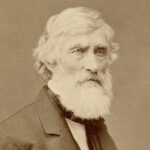
Alfred Stieglitz (Father: Edward Stieglitz; Mother: Hedwig Ann Werner; Spouse: Georgia O’Keeffe [m. 1924], Emmeline Obermeyer [m. 1893–1924]; Daughter: Katherine Stieglitz) Alfred Stieglitz was a monumental figure in 20th-century art, almost single-handedly elevating photography to the status of a fine art alongside painting and sculpture. Born in New Jersey and educated in Germany, he began his career as a mechanical engineer but quickly became obsessed with the technical and aesthetic possibilities of the camera.
In the early 1890s, he became a leader of the Pictorialist movement, which used soft focus and darkroom manipulation to make photographs resemble paintings. However, as his career progressed, he transitioned toward “Straight Photography,” emphasizing sharp focus, high contrast, and the capture of the “unmanipulated” reality of the modern world. His most famous early works, such as The Steerage (1907) and The Terminal (1892), are considered masterpieces of early modernism.
Beyond his own photography, Stieglitz was a visionary gallerist and publisher. He founded the Photo-Secession group and the influential magazine Camera Work. Through his galleries, most notably 291, he introduced American audiences to European avant-garde artists like Henri Matisse, Pablo Picasso, and Marcel Duchamp long before they were widely accepted.
His later life was defined by his professional and romantic partnership with the painter Georgia O’Keeffe. Between 1917 and 1937, he created a massive, systematic “composite portrait” of her, consisting of over 300 photographs that captured her hands, face, and torso. Through his relentless promotion of modern art and his insistence on the artistic integrity of the photographic print, Stieglitz fundamentally reshaped the American cultural landscape.
Active in others filds : Art Gallery Management (291, The Intimate Gallery, An American Place), Magazine Publishing (Camera Work, Notes), Art Criticism, Curating.