


Figurative Art
A comprehensive guide to the visual principles, history, and pioneers of this movement. Curated for researchers and students seeking a structured analysis of artistic styles & Technique .
Available Art Style & Movement
Select Art Style...
 Abstract
 Abstract Expressionism
 Academic Art
 Aestheticism
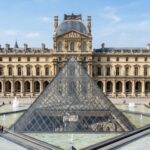 Architectural Movements
 Art Deco
 Art Nouveau
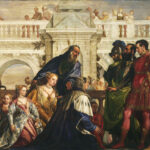 Baroque
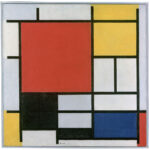 Bauhaus
 Byzantine
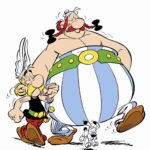 Cartoon
 CGI
 Chiaroscuro
 Chiaroscuro Noir
 Classical Architecture
 Classicism
 Comic
 Conceptual
 Contemporary
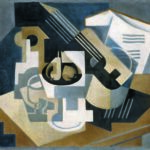 Cubism
 Dada
 Early Renaissance
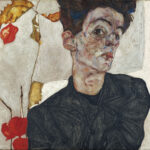 Expressionism
 Fantasy Art
 Fashion
 Fashion Design
 Fashion Illustration
 Fashion Photography
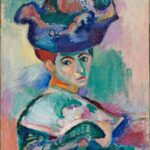 Fauvism
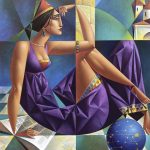 Figurative Art
 Figurative Photography
 Fresco
 Gothic
 Haute Couture
 High Renaissance
 Hybrid
 Illustration
 Impressionism
 Landscape
 Line art
 Manga
 Mannerism
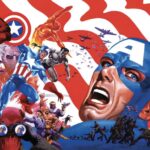 Marvel
 Matte Painting
 Miniature
 Minimalism
 Modern Architecture
 Modernism
 Muralism
 Naturalism
 Neoclassicism
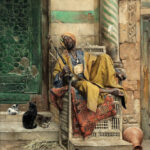 Orientalism
 Photography
 Pop Art
 Pre-Raphaelite
 Realism
 Regionalism
 Relief
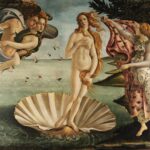 Renaissance
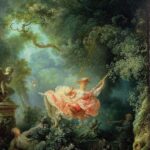 Rococo
 Romanticism
 SCI-FI
 Sculpting
 Street Art
 Surrealism
 Symbolism
 Tempera
 Tenebrism
 Tonalism
 VFX
 Victorian
General Specifcations for Figurative Art
Figurative art (or Figurativism) encompasses any form of visual artwork—paintings, sculptures, graphic arts, or digital media—that retains strong, recognizable references to real-world objects, subjects, and specifically the human body. Unlike pure abstraction (which operates entirely through non-representational form, color, and line), figurative art uses spatial illusion, anatomical proportions, lighting, and narrative structures to visually anchor the subject in recognizable reality.
Historically, figurative art served as the central engine of human artistic production—from paleolithic cave paintings and classical marble portraiture to high-Renaissance humanism and modern psychological expressionism. In modern art theory, “figurative” does not merely denote photo-realism; rather, it describes a spectrum that ranges from strict naturalism to distorted, stylized, or expressive representational form. The core requirement is that the human or physical figure remains the primary structural and narrative axis of the artwork.
Related to Figurative Art
Note : The images below might not strictly correspond to the style and technique of Figurative Art, but rather represent an artist who also includes this approach in their portfolio.

Eugene Delacroix


Francis Bacon


Michelangelo


John Singer Sargent


Lucian Freud


Masaccio


Jenny Saville


Peter Paul Rubens


Rembrandt

Baroque . Chiaroscuro . Figurative . Realism
Classification
-
Category: Representational Art, Painting, Sculpture, Drawing, Digital Character Concept Art.
-
Era/Period: Prehistoric Antiquity to Present (with major 20th-century revivals balancing modern abstraction).
-
Origin Location: Global (developed independently across ancient Mesopotamia, Egypt, Greece, China, India, and Mesoamerica).
Visual & Technical Specs
-
Key Technical Characteristics:
-
Anatomical Construction: Structural reliance on gesture, skeletal structure, muscle grouping, and volumetric form.
-
Volumetric Rendering: Use of light and shade (Chiaroscuro, Sfumato, or dynamic directional lighting) to map 3D volume on a 2D surface.
-
Narrative Focus: Human pose, expression, and spatial interaction convey psychological, historical, or mythological themes.
-
Spatial Illusion: Application of linear, atmospheric, or foreshortened perspective to anchor figures within an environment.
-
-
Synthetic Color & Material Specs:
Pioneers & Key Works
Historical Pioneers (Classical to Pre-20th Century)
-
Phidias (Classical Greek Sculpture)
-
Polykleitos (Greek Canon of Proportions)
-
Giotto di Bondone (Proto-Renaissance Realism)
-
Masaccio (Renaissance Linear Perspective & Form)
-
Leonardo da Vinci (High Renaissance Sfumato & Anatomy)
-
Michelangelo Buonarroti (Anatomical Expressionism & Sculpture)
-
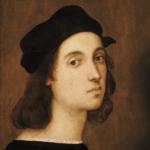
Raphael (Raffaello Sanzio) (Harmonic Classical Composition)
-
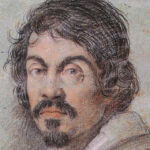
Caravaggio (Michelangelo Merisi) (Tenebrism & Dramatic Realism)
-
Rembrandt van Rijn (Psychological Portraiture & Chiaroscuro)
-
Diego Velázquez (Imperial Portraiture & Painterly Realism)
-
Peter Paul Rubens (Flemish Baroque)
-
Gian Lorenzo Bernini (Baroque Marble Realism)
-
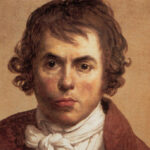
Jacques-Louis David (Neoclassical Figuration)
-
Eugene Delacroix (Romantic Expressionist Figuration)
-
Gustave Courbet (19th-Century Realism)
-
Edouard Manet (Modernist Transitional Figuration)
-
Auguste Rodin (Expressive Modern Sculpture)
-
Edgar Degas (Figurative Movement & Dynamics)
-
Ilya Repin (Russian Narrative Realism)
-
John Singer Sargent (Virtuoso Portraiture)
-
Pablo Picasso (Cubist & Neoclassical Figuration)
20th-Century Revivalists & Modern Figurative Masters
(Artists who championed, reclaimed, or re-invented the human form amidst the rise of pure Abstraction and Conceptualism)
-
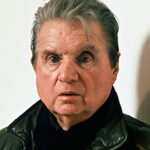
Francis Bacon (Existential & Visceral Figuration)
-
Lucian Freud (Psychological & Impasto Nude Portraiture)
-
David Park (Founder of the Bay Area Figurative Movement)
-
Richard Diebenkorn (Bay Area Figurative & Spatial Abstraction)
-
Elmer Bischoff (Bay Area Painterly Figuration)
-
Alberto Giacometti (Post-War Existentialist Sculptural Figuration)
-
Philip Guston (Neo-Expressionist Rejection of Abstraction)
-
Georg Baselitz (German Neo-Expressionism)
-
Jenny Saville (Contemporary Visceral & Volumetric Flesh Studies)
-
Paula Rego (Narrative & Psychological Storytelling)
Masterpieces
-
David (Michelangelo, 1504)
-
Mona Lisa (Leonardo da Vinci, 1506)
-
The Calling of Saint Matthew (Caravaggio, 1600)
-
Las Meninas (Diego Velázquez, 1656)
-
The Burghers of Calais (Auguste Rodin, 1889)
-
Les Demoiselles d’Avignon (Pablo Picasso, 1907)
-
Three Studies for Figures at the Base of a Crucifixion (Francis Bacon, 1944)
-
Man Pointing (Alberto Giacometti, 1947)
-
Kids on Bikes (David Park, 1950)
-
Benefits Supervisor Sleeping (Lucian Freud, 1995)










Philosophy & Context
-
The “Why”: Figurative art exists because the human form is the ultimate mirror for the human condition. It allows creators to convey emotion, mortality, power, vulnerability, and narrative identity. While abstract art focuses on pure form or spiritual emotion, figurative art grounds philosophy in physical embodiment.
-
Historical Context: From ancient ritualistic depictions of gods and rulers to modern explorations of psychological trauma, figuration constantly adapts. In the 20th century, when pure abstract expressionism dominated the Western art world, artists like David Park and Francis Bacon revolted, proving that the human figure remained the most potent vehicle for complex visual ideas.
Modern Influence: Cinema, TV & CGI
-
2D, 3D, CGI, VFX: Modern 3D digital character art, digital sculpting (ZBrush/Mudbox), character rigging, and performance-capture VFX are direct technological evolutions of classical figurative art. Principles established by classical sculptors and painters—such as muscle tension, skeletal proportions, skin translucency (subsurface scattering), and silhouette recognition—form the core technical foundation for 3D character artists, digital double creation, and cinematic creature design.
-
Modern Legacy: Cinematic character design in franchises like Avatar, The Lord of the Rings (Gollum), and high-end digital human doubles rely on academic figurative anatomy combined with real-time shader pipelines.
Modern Influence: AI & Hybrid Media
-
AI & Hybrid Workflows: Generative AI models are trained heavily on classical and modern figurative artwork. Deep learning networks rely on anatomical structural dataset tagging (pose estimation, skeletal tracking) to synthesize digital figures.
-
AI Prompting Keywords: figurative art, anatomical precision, painterly brushwork, dynamic pose, volumetric lighting, chiaroscuro, Lucian Freud impasto, expressive figure, gesture sketch, sculptural form, naturalistic proportions.
For a complete look at how figurative art evolved into modern 3D workflows, check out this breakdown on the history and mechanics of figurative art. It explores the Bay Area Figurative Movement and how modern painters brought human forms back into abstract spaces.
Explore More

Art Styles by random seed
Baroque
The Baroque art movement represents a period of extreme visual exuberance, dramatic intensity, and monumental grandeur that swept across Europe following the Renaissance and Mannerist periods. Rooted initially in the Catholic Church’s Counter-Reformation efforts to inspire awe and devotion, Baroque art breaks the fourth wall, pulling the viewer directly into the emotional climax of the scene.

Unlike the calm, balanced, and idealized compositions of the High Renaissance, Baroque art is characterized by tension, instability, and explosive movement. In painting, this is achieved through aggressive diagonals and deep, enveloping shadows piercing through brilliant, theatrical spotlights. In sculpture and architecture, it manifests through twisting forms, undulating facades, and the blurring of boundaries between different mediums—often combining painting, stucco, and sculpture into a single, overwhelming spatial experience (bel composto).
Miniature
Miniature painting is a highly disciplined, small-scale art form characterized by extreme precision, vibrant mineral pigments, and a rejection of Western three-dimensional perspective. While each region has its own identity, they share a “flat” or isometric perspective, where the importance of a subject is dictated by its placement or color rather than its distance from the viewer.
-
Persian (Iranian) Miniature: Known for the “Herat” and “Safavid” schools. It features lyrical compositions, intricate “Tazhib” (illumination), and a focus on epic poetry (Shahnameh) and mysticism.
-
Indian (Mughal/Rajput) Miniature: A fusion of Persian technique and Indian flora/fauna. It introduced more naturalism, portraiture, and the “Ragmala” (musical modes) paintings.
-
East Asian (China/Japan) Influence: While often appearing as scrolls, the “miniature” element exists in Album Leaves and Fan Paintings. They emphasize calligraphic line work, the “spirit resonance” of brushstrokes, and the philosophical use of “negative space” (Ma).
High Renaissance
The High Renaissance represents the absolute peak of artistic achievement, mathematical harmony, and humanistic idealization in Western art. Centered primarily in Rome and Venice after originating in Florence, this short-lived period refined the technical breakthroughs of the Early Renaissance—such as linear perspective and anatomical accuracy—into a unified aesthetic of perfect balance, ideal proportion, and monumental scale.
For researchers, students, and digital artists, the High Renaissance is defined by three fundamental pillars:
-
Disegno vs. Colore: The divide between Florence/Rome (emphasizing precise line, structural drawing, and anatomical geometry) and Venice (emphasizing atmospheric color, tone, and expressive brushwork).
-
Atmospheric Mastery: The refinement of Sfumato (delicate, imperceptible blending of tones without sharp borders) and Chiaroscuro (dramatic contrast between light and dark to build 3D mass).
-
Idealized Naturalism: Moving past stiff realism to create forms that represent perfect, divine versions of human anatomy and natural environments, heavily influenced by Classical Greco-Roman antiquity.
Victorian
The Victorian era (spanning Queen Victoria’s reign from 1837 to 1901) represents a transformative period in visual history, marked by rapid industrialization, imperial expansion, technological leaps, and intense social stratification. Visually, “Victorian Style” is not a single aesthetic, but an umbrella movement characterized by eclecticism, ornate historical revivals, high ornamental density, and narrative moralism.
Across various visual disciplines, the style manifests through distinct sub-movements and mediums:
-
Painting & Illustration: Ranging from narrative genre scenes of high society and moral dilemmas to the luminous, medievalist rebellion of the Pre-Raphaelite Brotherhood (PRB) and the mood-focused Aesthetic Movement.
-
Architecture: Characterized by dramatic historicism—predominantly Gothic Revival, Queen Anne Style, and Italianate, alongside structural iron-and-glass engineering (such as Joseph Paxton’s Crystal Palace).
-
Interior Design: Heavily layered and ornamental, featuring dark wood paneling, flock wallpaper (pioneered by William Morris), tufted velvet upholstery, brass, stained glass, and clashing floral patterns.
-
Fashion: Highly structured silhouettes reflecting social status; defined by tight corsetry, massive crinolines (later evolving into bustles), rich silks, lace collars, mourning wear, and early synthetic aniline dyes (mauveine).
-
Photography: The birthplace of early commercial and fine-art photography, evolving from daguerreotypes and salted paper prints to wet-plate collodion portraits, combination printing, and early photojournalism.
Comic
Comic Art is a sophisticated, highly structured system of visual storytelling that relies on sequential iconography to convey narratives across time and space. Unlike static fine art paintings, the structural unit of a comic is not a solitary canvas, but the relational tension between multiple images arranged in a deliberate progression.
The fundamental engine of the comic art medium is what theorist Will Eisner termed “Sequential Art” and Scott McCloud expanded upon as the management of “the gutter”—the blank space separating individual panels. Within these gutters, a psychological phenomenon known as closure occurs: the reader’s mind actively bridges the spatial gaps to construct a fluid progression of time, motion, and causality.
Historically, the aesthetic parameters of classic comic art were dictated by the severe limitations of industrial mass printing. Because early 20th-century comic strips and books were printed on cheap, highly absorbent newsprint using high-speed rotary presses, subtle color gradations and delicate linework were impossible to reproduce. To prevent ink bleeding (smudging), artists engineered a specialized graphic shorthand built upon three technical pillars:
-
Bold Ink Contours: Clear, heavy, black outlines defined silhouettes and separated figures from backgrounds, ensuring structural readability even if color registration shifted during printing.
-
High-Contrast Chiaroscuro & Hatching: Cross-hatching, feathering, and solid black fills (spotting blacks) were utilized to simulate depth, texture, and shadow using only pure black ink.
-
Ben-Day Dots & Halftones: To produce secondary colors and shading without paying for expensive multi-toned inks, printers overlaid small, spaced dots of primary colors (Cyan, Magenta, Yellow). The human eye optically blends these dots from a distance to perceive flesh tones, purples, and shadows.
As the medium matured, it diverged into major global traditions, each with distinct visual philosophies: Euro-French Ligne Claire (clean, unvarying line weights with flat color fields), American corporate superhero aesthetics (hyper-muscular anatomy, dynamic perspective shifts, and cinematic framing), and Japanese Manga (expressive, deconstructive anatomy, cinematic pacing, and highly stylized speed lines).
Figurative
Figurative art (or Figurativism) encompasses any form of visual artwork—paintings, sculptures, graphic arts, or digital media—that retains strong, recognizable references to real-world objects, subjects, and specifically the human body. Unlike pure abstraction (which operates entirely through non-representational form, color, and line), figurative art uses spatial illusion, anatomical proportions, lighting, and narrative structures to visually anchor the subject in recognizable reality.
Historically, figurative art served as the central engine of human artistic production—from paleolithic cave paintings and classical marble portraiture to high-Renaissance humanism and modern psychological expressionism. In modern art theory, “figurative” does not merely denote photo-realism; rather, it describes a spectrum that ranges from strict naturalism to distorted, stylized, or expressive representational form. The core requirement is that the human or physical figure remains the primary structural and narrative axis of the artwork.

