Cgitems Logo
Entering
Figurative Photography
Loading Encyclopedia...
Connecting to Cgitems Server...
Thanks for your patience
Figurative Photography - CGItems
☆
  • UK - English UK - English
  • France - Français France - Français
  • Germany - Deutsch Germany - Deutsch
  • Netherlands - Nederlands Netherlands - Nederlands
  • Norway - Norsk Norway - Norsk
  • Denmark - Dansk Denmark - Dansk
  • Finland - Suomi Finland - Suomi
  • Vietnam - Tiếng Việt Vietnam - Tiếng Việt
  • Italy - Italiano Italy - Italiano
  • Sweden - Svenska Sweden - Svenska
  • Brazil - Português Brazil - Português
  • Greece - Ελληνικά Greece - Ελληνικά
  • Thailand - ไทย Thailand - ไทย
  • Iran - فارسی Iran - فارسی
  • Arab - العربية Arab - العربية
  • Spain - Español Spain - Español
  • China - 中文 China - 中文
  • Turkey - Türkçe Turkey - Türkçe
  • Russia - Русский Russia - Русский
  • South Korea - 한국어 South Korea - 한국어
  • Japan - 日本語 Japan - 日本語
  • India - हिन्दी India - हिन्दी

Visual Art Encyclopedia & Galleria

Art Movement , Style & Technique

Figurative Photography

SUB CATEGORIES
×

Figurative Photography

Figurative Photography

A comprehensive guide to the visual principles, history, and pioneers of this movement. Curated for researchers and students seeking a structured analysis of artistic styles & Technique .

Available Art Style & Movement

Select Art Style...
  • Abstract
  • Abstract Expressionism
  • Academic Art
  • Aestheticism
  • Architectural Movements
  • Art Deco
  • Art Nouveau
  • Baroque
  • Bauhaus
  • Byzantine
  • Cartoon
  • CGI
  • Chiaroscuro
  • Chiaroscuro Noir
  • Classical Architecture
  • Classicism
  • Comic
  • Conceptual
  • Contemporary
  • Cubism
  • Dada
  • Early Renaissance
  • Expressionism
  • Fantasy Art
  • Fashion
  • Fashion Design
  • Fashion Illustration
  • Fashion Photography
  • Fauvism
  • Figurative Art
  • Figurative Photography
  • Fresco
  • Gothic
  • Haute Couture
  • High Renaissance
  • Hybrid
  • Illustration
  • Impressionism
  • Landscape
  • Line art
  • Manga
  • Mannerism
  • Marvel
  • Matte Painting
  • Miniature
  • Minimalism
  • Modern Architecture
  • Modernism
  • Muralism
  • Naturalism
  • Neoclassicism
  • Orientalism
  • Photography
  • Pop Art
  • Pre-Raphaelite
  • Realism
  • Regionalism
  • Relief 
  • Renaissance
  • Rococo
  • Romanticism
  • SCI-FI
  • Sculpting
  • Street Art
  • Surrealism
  • Symbolism
  • Tempera
  • Tenebrism
  • Tonalism
  • VFX
  • Victorian

General Specifcations for Figurative Photography

Figurative Photography (or Figurative Portraiture and Body Photography) is a central discipline of photographic art where the human body—its form, gesture, anatomy, and psychological presence—serves as the primary visual and thematic subject. Unlike commercial fashion or standard studio headshots, figurative photography treats the human figure as an expressive canvas. It explores physical structure, contour, light interaction across skin, movement, vulnerability, identity, and the human condition.

The genre spans a broad spectrum: from classical nude studies that mirror Renaissance sculpture and hyper-detailed studio lighting to surreal, staged narratives, candid street documentation of human posture, and visceral, unedited photojournalism. Figurative photography relies heavily on the technical interplay between directional lighting, lens compression, depth of field, exposure dynamics, and print tonality to transform a living subject into a permanent visual composition.

Related to Figurative Photography

Note : The images below might not strictly correspond to the style and technique of Figurative Photography, but rather represent an artist who also includes this approach in their portfolio.

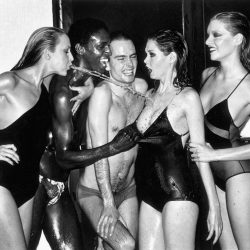
Peter Lindbergh

Classification

  • Category: Photographic Art, Fine Art Photography, Portraiture, Nude Photography, Environmental Portraiture.

  • Era/Period: Mid-19th Century (1839) to Present.

  • Origin Location: Europe and North America (developed in tandem with early photographic chemistry in France and Great Britain).

Visual & Technical Specs

  • Key Technical Characteristics:

    • Chiaroscuro & Tone Mapping: High-contrast key lighting, rim lighting, and subtle gradient fall-off to define muscle structure, bone highlights, and anatomical depth.

    • Lens Dynamics & Depth of Field: Selective focal length usage (50mm–135mm for natural perspective; 35mm or wide-angle for dramatic spatial tension). Shallow depth of field separates the figure from background noise.

    • Subsurface & Texture Capture: High-acutance capture of skin texture, pores, muscle tension, micro-expressions, and specular highlights across skin tones.

    • Pose & Gesture Silhouette: Emphasis on negative space around the human outline, gestural alignment, and geometric framing of limbs and torso.

  • Synthetic Color & Material Specs:

    • Color Palette: High-contrast Monochrome (Silver Gelatin, Platinum/Palladium print tones), muted natural skin tones, dramatic duotones, or cinematic color grading (analog film stocks like Kodak Tri-X, Ilford HP5, or Fuji Velvia).

    • Mediums & Tools: Large/Medium Format Film Cameras, High-Resolution Digital Sensor Systems, Studio Strobes, Softboxes, Fresnel Lights, Refractors, Darkroom Silver Gelatin Prints.

Pioneers & Key Works

Historical Pioneers (19th to Mid-20th Century)

  1. Nadár (Gaspard-Félix Tournachon) (Early Parisian Figurative Portraiture)

  2. Julia Margaret Cameron (Victorian Allegorical Figurative Photography)

  3. Eadweard Muybridge (Pioneering Motion Studies of the Human Figure)

  4. Alfred Stieglitz (Early Modernist Intimate Figuration)

  5. Edward Weston (Abstracted Sculptural Nudes & Form)

  6. Man Ray (Surrealist Figurative Rayographs & Solarization)

  7. Henri Cartier-Bresson (Figurative Humanism & The Decisive Moment)

  8. Bill Brandt (Distorted Wide-Angle Nudes & High-Contrast Forms)

  9. Irving Penn (Sculptural Studio Portraiture & Stark Backdrops)

  10. Richard Avedon (High-Energy, Stark-White Background Figuration)

  11. Yousuf Karsh (Dramatic Chiaroscuro Figurative Lighting)

  12. August Sander (Typological Documentary Figuration)

  13. Dorothea Lange (Social Realist Environmental Portraiture)

  14. Brassaï (Gyula Halász) (Nighttime Urban Figurative Form)

  15. Imogen Cunningham (Botanical & Anatomical Plant/Body Studies)

  16. W. Eugene Smith (Visceral Photojournalistic Figuration)

  17. Arnold Newman (Environmental Portraiture Integration)

  18. Philippe Halsman (Dynamic Action & Jumpology Figuration)

  19. Horst P. Horst (Classical Studio Figurative Fashion)

  20. Cecil Beaton (High-Fashion & Royal Figurative Staging)

20th-Century Revivalists & Modern Masters

(Photographers who expanded, challenged, or redefined the human figure through intimacy, identity, and raw physical presence)

  1. Diane Arbus (Unflinching Marginalized Portraiture)

  2. Robert Mapplethorpe (Classical Marble-Like Sculptural Body Photography)

  3. Helmut Newton (Erotic, High-Power Architectural Figuration)

  4. Sebastião Salgado (Epic Humanist & Laborer Figurative Landscapes)

  5. Annie Leibovitz (Cinematic Staged Narrative Portraiture)

  6. Sally Mann (Visceral, Wet-Plate Collodion Family & Body Studies)

  7. Peter Lindbergh (Unretouched Realism & Cinematic B&W Fashion)

  8. Nan Goldin (Raw, Intimate Counter-Culture Figuration)

  9. Cindy Sherman (Self-Referential Conceptual Figurative Transformation)

  10. Herb Ritts (Sculptural Tonal Body Form in Natural Light)

Masterpieces

  1. Human and Animal Locomotion Studies (Eadweard Muybridge, 1887)

  2. Le Violon d’Ingres (Man Ray, 1924)

  3. Nude, 1936 (Edward Weston, 1936)

  4. Migrant Mother (Dorothea Lange, 1936)

  5. Mainbocher Corset (Horst P. Horst, 1939)

  6. Behind the Gare Saint-Lazare (Henri Cartier-Bresson, 1932)

  7. Dovanima with Elephants (Richard Avedon, 1955)

  8. Patty Smith, Horses (Robert Mapplethorpe, 1975)

  9. Sub-Saharan Migrants (Sebastião Salgado, 1986)

  10. Untitled Film Stills (Cindy Sherman, 1977–1980)

Philosophy & Context

  • The “Why”: Figurative photography bridges the raw immediacy of real life with the structured aesthetic of classical sculpture and painting. By capturing a real physical human being through a lens, the artist explores truth, mortality, identity, and vulnerability. It strips away abstraction to confront the viewer with the physical reality of human existence.

  • Historical Context: In its infancy, photography was dismissed as a mere technical recording tool. Pioneers like Julia Margaret Cameron and Edward Weston fought to establish photographic figuration as fine art by treating the camera lens with the same compositional rigor as a painter’s brush or a sculptor’s chisel. In the late 20th century, artists like Mapplethorpe and Arbus used figurative photography to challenge social taboos around body image, gender, and marginalization.

Modern Influence: Cinema, TV & CGI

  • 2D, 3D, CGI, VFX: Figurative photography is the fundamental benchmark for photorealistic digital human creation in CGI. Subsurface scattering (SSS) algorithms, micro-skin displacement maps, specular reflection maps, and virtual camera lighting rigs in tools like Unreal Engine, Maya, and ZBrush are calibrated directly against real-world photographic optics and lighting setups developed by figurative photographers.

  • Modern Legacy: Virtual cinematography, 3D photogrammetry head/body scanning rigs, and digital double workflows in films (Avatar, The Curious Case of Benjamin Button) directly replicate studio lighting ratios and lens characteristics derived from master figurative portraiture.

Modern Influence: AI & Hybrid Media

  • AI & Hybrid Workflows: Generative AI tools (Midjourney, Stable Diffusion) rely heavily on photographic datasets. Diffusion models parse figurative photography terminology to construct realistic human lighting, skin texture, anatomical proportions, and lens attributes.

  • AI Prompting Keywords: figurative photography, sculptural studio lighting, rim light, subsurface scattering, 85mm lens portrait, Kodak Tri-X 400 grain, high-contrast monochrome, anatomical detail, soft specular skin highlights, Rembrandt lighting, Richard Avedon white studio background, raw skin texture.

Explore More

Minimalism 1

Some Other Art Styles

Art Styles by random seed

Line art

Line Art is one of the most fundamental, ancient, and enduring forms of visual communication. By definition, it consists of distinct straight or curved lines placed against a (usually plain) background, completely omitting strong gradations of shade (chiaroscuro) or color to represent two-dimensional or three-dimensional objects. It relies entirely on the eye’s ability to interpret structural boundaries, edges, and form through contour alone.

For researchers, designers, and students, Line Art is not merely a single “style” but a foundational discipline that spans millennia and branches into distinct technical variations:

  • Pure Contour Drawing: Focuses solely on the external edge of an object, using a continuous, unweighted line to define the boundary between form and space.

  • Weighted/Varied Line Art: Utilizes changes in line thickness (tapering and swelling) to suggest depth, light source, shadow, and structural mass without using actual gradients.

  • Cross-Hatching and Stippling: Techniques where form, density, and value are built up using clusters of parallel lines (hatching), intersecting lines (cross-hatching), or dots (stippling).

  • Technical & Blueprint Line Art: Orthographic projections, architectural schematics, and vector-based diagrams where line weight dictates structural hierarchy, material thickness, or hidden lines rather than artistic expression.

This drawing is Pablo Picasso's 1920 portrait of the composer Igor Stravinsky
This drawing is Pablo Picasso’s 1920 portrait of the composer Igor Stravinsky

Because it strips away the “distraction” of color and rendering, Line Art forces an emphasis on composition, gesture, silhouette, and absolute precision. A single misplaced line can alter the entire anatomy or perspective of a piece.

Fashion Illustration

Fashion illustration is a specialized genre of art dedicated to the visual communication of clothing and the “mood” of style. Unlike photography, which captures a literal moment, fashion illustration translates the fantasy and silhouette of a design through an artist’s subjective lens.

For students and researchers, it is defined by Graphic Shorthand and 9-Head Proportions. While a natural human body is roughly 7.5 heads tall, fashion illustrators elongate the figure to 9 or even 10 heads to emphasize the drape and movement of fabric. The style is historically linked to the growth of high-fashion magazines like Vogue and Harper’s Bazaar. It is a discipline of efficiency: a single, perfectly placed brushstroke must often represent the weight of silk or the stiffness of wool.

Early Renaissance

The Early Renaissance (Quattrocento) marks the transition from the symbolic, flat world of the Middle Ages to a revolutionary era of Humanism and Scientific Realism. This period was defined by the rediscovery of Classical antiquity and a desire to represent the physical world as it actually appeared to the human eye.

The most significant breakthrough of this era was the development of Linear Perspective, a mathematical system used to create the illusion of depth on a flat surface. Artists began to study human anatomy through dissection and observation, leading to figures that possessed “gravitas”—a sense of weight, volume, and three-dimensional presence. Unlike the later High Renaissance (which sought idealized perfection), Early Renaissance art often retains a crisp, clear, and almost analytical focus on detail and mathematical harmony.

Orientalism

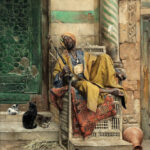
Orientalism in the visual arts refers to a highly prominent 19th-century movement where Western European painters—primarily from France, Great Britain, Germany, and Austria—depicted the landscapes, cultures, people, and daily life of the Near East, Middle East, and North Africa. Far from a uniform genre, Orientalism operated on a vast spectrum between exacting, scientific ethnography and purely theatrical, romanticized fantasy.

For researchers, students, and art historians, understanding the dual nature of this style is critical:

  • The Realist / Documentary Approach: Artists like David Roberts and John Frederick Lewis traveled extensively, living within the communities they painted. They acted almost as visual archaeologists, documenting Islamic architecture, bustling bazaars, and ancient ruins with remarkable topographic precision. Because sketching crowds openly was often culturally sensitive or forbidden, these artists routinely relied on hidden cameras, clandestine rooftop vantage points, or staged private sittings to achieve hyper-accurate lighting and fabric drapery.

  • The Studio Studio / Fantasy Approach: Conversely, masters like Jean-Auguste-Dominique Ingres never set foot in the East. Instead, they relied heavily on published travelogues, photographs, and studios back in Paris or London that were packed with imported props (such as silks, carpets, hookahs, and weaponry). They created highly polished, Academic Realism scenes of harems, snake charmers, and baths—frequently blending Turkish, Egyptian, and Moroccan motifs into a generalized, exotic construct designed to satisfy Western curiosity and societal desires.

Fantasy art

Fantasy Art is a broad, highly influential visual genre characterized by the depiction of mythic, supernatural, magical, or speculative themes that exist outside the boundaries of our consensus reality. It is an art form rooted in world-building, where the impossible is rendered with enough structural and material logic to suspend the viewer’s disbelief. Unlike abstract art, Fantasy Art typically relies on Representational Realism or Academic Realism to ground its impossible subjects—such as mythical creatures, ancient sorcery, invented landscapes, and legendary heroes—in a tangible, believable environment.

For researchers, historians, and digital artists, Fantasy Art is understood through several distinct sub-movements and technical evolutions:

  • The Mythological & Romantic Roots: Early foundations heavily borrowed from the Pre-Raphaelites and Symbolists, focusing on folklore, Arthurian legends, and classical mythology with a soft, idealized, and romanticized lens.

  • The Pulp & Sword-and-Sorcery Era (Mid-20th Century): Dominated by paperback book covers and magazines. This phase introduced hyper-muscular anatomy, dynamic kinetic energy, and raw, visceral action compositions.

  • Contemporary High Fantasy & Imaginative Realism: The modern phase blends classical oil painting techniques with advanced digital tools, emphasizing complex ecosystem designs, cultural anthropology for fictional races, and highly sophisticated atmospheric lighting.

Haute Couture

aute Couture (French for “High Dressmaking” or “High Sewing”) is the highest tier of fashion design, treating garments as wearable sculpture and fine art. Unlike commercial Prêt-à-Porter (Ready-to-Wear), Haute Couture garments are constructed entirely by hand from start to finish. They are custom-fitted to a single specific client, requiring multiple painstaking fittings.

For researchers and art students, Haute Couture is not just a descriptive term—it is a legally protected designation. In France, a fashion house can only call itself a Maison de Haute Couture if it is officially approved by the Chambre Syndicale de la Haute Couture (under the French Ministry of Industry). To maintain this status, a brand must meet strict criteria:

  • Custom Craftsmanship: Every garment must be designed for private clients with one or more personal fittings.

  • The Atelier System: The house must maintain a workshop (Atelier) in Paris that employs at least 15 full-time staff members.

  • Artisanal Collaboration: Ateliers must work with specialized French art-craft houses (Les Métiers d’Art), such as Maison Lesage (embroidery), Lemarié (feathers and flowers), and Lognon (pleating).

  • Style By Leda

    Seasonal Showcases: The house must present a collection of at least 50 original designs to the public twice a year (January and July), featuring both daywear and eveningwear.

The visual language of Haute Couture spans from structural, architectural tailoring to surreal, ethereal textile art. It serves as the ultimate laboratory for experimental fashion, where fabric manipulation techniques are pushed to their physical limits.

Reset to Default
+ FAVORITES ✎
✕
⋮ ☆ Figurative Photography
✕
HELP AGENT
PLEASE WAIT, LOADING...
×
MCA

--
Analyzing image & extracting data...

Link Copied!

General Inquiry

Have a question or feedback regarding portfolios? Drop us a line.

Strictly plain English text structure only.

Attachments Inventory

Max 500KB per file. Max 10 images.

Delivery Confirmed

Thank you. Your message and data structural packages have been safely transferred to our desk.

Artist Name Artwork Details
Search with Google Lens
Print...