Marvel
A comprehensive guide to the visual principles, history, and pioneers of this movement. Curated for researchers and students seeking a structured analysis of artistic styles & Technique .
Available Art Style & Movement
Abstract
Abstract Expressionism

Academic Art
Aestheticism
Architectural Movements
Art Deco
Art Nouveau
Baroque
Bauhaus

Byzantine
Cartoon
CGI
Chiaroscuro
Chiaroscuro Noir
Classical Architecture
Classicism

Comic
Conceptual
Contemporary
Cubism

Dada
Early Renaissance
Expressionism
Fantasy Art
Fashion
Fashion Design
Fashion Illustration
Fashion Photography
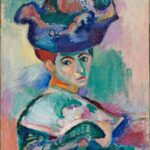
Fauvism
Fresco
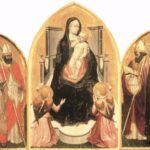
Gothic
Haute Couture
High Renaissance
Hybrid
Illustration
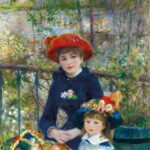
Impressionism

Landscape
Line art

Manga
Mannerism
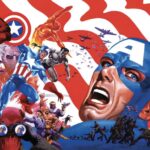
Marvel
Matte Painting

Miniature
Minimalism
Modern Architecture
Modernism

Muralism
Neoclassicism
Orientalism
Photography
Pop Art
Pre-Raphaelite
Realism
Regionalism
Relief
Renaissance
Rococo
Romanticism

SCI-FI
Sculpting
Street Art
Surrealism
Symbolism
Tempera
Tenebrism
Tonalism
VFX
Victorian
General Specifcations for Marvel
The “Marvel Style” is less a single aesthetic and more an evolutionary lineage of visual storytelling that prioritize dynamic energy, anatomical exaggeration, and emotional relatability. Unlike the “stiff” heroism of earlier eras, the Marvel style—pioneered in the 1960s—introduced characters with flaws, reflected through expressive “acting” in the drawings.
A core technical component is the “Marvel Method”: a collaborative process where the artist (not the writer) plots the visual pacing and action based on a brief synopsis, giving the artist primary control over the “cinematography” of the page. Visually, it is defined by “Kirby Krackle” (clusters of black dots representing cosmic energy), foreshortened limbs that seem to “pop” out of the panel, and high-velocity action lines. From the primary-colored 1960s to the hyper-detailed, painted realism of the 1990s and 2000s, the style consistently balances superheroic scale with human vulnerability.
Related to Marvel
Note : The images below might not strictly correspond to the style and technique of Marvel, but rather represent an artist who also includes this approach in their portfolio.
Classification
-
Category: Painting (Illustration), Digital/AI Art, Cinema (VFX).
-
Era/Period: 1939–Present (Modern “Marvel Style” established 1961).
-
Origin Location: New York City, USA.
Visual & Technical Specs
-
Key Visual Characteristics: Extreme foreshortening, “Kirby Krackle” energy effects, heavy muscular definition, dynamic multi-panel layouts, and “smear” lines to indicate superhuman speed.
-
Color Palette: * Classic: High-contrast primary colors (Red, Blue, Yellow) due to early printing limits.
-
Modern: Complex digital gradients, cinematic “teal and orange” lighting, and metallic textures.
-
-
Mediums & Tools: * Traditional: India ink, Bristol board, Ben-Day dots (historical).
Pioneers & Key Works
-
Founders/Key Artists: Jack “The King” Kirby, Steve Ditko, John Romita Sr., Jim Steranko, Alex Ross (Painterly Style).
-
Masterpieces:
-
Fantastic Four #1 (1961) – The birth of the modern Marvel look.
-
The Amazing Spider-Man (Steve Ditko era) – Introduced “lanky” and eerie superheroism.
-
Marvels (Alex Ross, 1994) – Shifted the industry toward photorealistic painted art.
-
Annihilation (Various, 2006) – Modern “Cosmic” Marvel aesthetic.
-
-
Influential Schools/Groups: The Marvel Bullpen, Image Comics (founded by former Marvel artists).
Philosophy & Context
-
The “Why”: To bring “the world outside your window” into comics. The goal was to make gods and monsters feel physically heavy and emotionally real. The style emphasizes tension and release—characters are rarely at rest; they are either in mid-combat or burdened by heavy thought.
-
Historical Context: Born in the Atomic Age and the Space Race, Marvel art reflected a fascination with science, radiation, and the “burden” of power during the Cold War.
Modern Influence: Cinema, TV & CGI
Update Soon
Modern Influence: AI & Hybrid Media
-
Modern Legacy: Marvel styles are a primary training set for AI. The “Alex Ross” look is often used to generate “what if” live-action concepts, while the “Kirby” style is used for retro-future aesthetics.
-
AI Prompting Keywords: Marvel Comics style, Jack Kirby aesthetic, high-contrast inks, dynamic superhero pose, extreme foreshortening, Kirby Krackle, cinematic comic book lighting, vibrant primary colors, detailed muscular anatomy, 1960s retro comic art.
Explore More
Art Styles by random seed
Photography
Photography, derived from the Greek words phos (“light”) and graphe (“drawing”), is the art and science of creating durable images by recording light. Unlike traditional plastic arts, photography began as a purely chemical and mechanical process. It has evolved through three major technological revolutions:
-
The Chemical Era (1839–1970s): Based on light-sensitive silver halides on metal, glass, or film.
-
The Analog/Film Era (1900s–Present): The democratization of the medium via roll film, leading to photojournalism and “The Decisive Moment.”
-
The Digital Revolution (1990s–Present): The transition to electronic sensors (CCD/CMOS) and algorithmic processing.
For researchers, photography is unique because it serves a dual purpose: it is a mechanical record of reality (evidence) and an expressive art form (interpretation). The style is defined by the photographer’s control over the “Exposure Triangle”: Aperture (depth of field), Shutter Speed (motion), and ISO (sensitivity/grain).
Illustration
Illustration is a foundational discipline within the visual arts where imagery is created specifically to enhance, clarify, illuminate, or visually represent a companion text, concept, narrative, or message. Unlike fine art painting, which frequently functions as a self-contained, open-ended exploration, illustration is fundamentally purpose-driven and contextual. It acts as a bridge between direct literary text and universal visual perception.
For academic researchers, students, and professional studios, illustration must be analyzed through its critical historical and practical sub-categories:
-
-
Book and Narrative Illustration: Originating in illuminated manuscripts, this phase hit its peak during the “Golden Age of Illustration” (late 19th to early 20th century). It relies on intricate line work, cross-hatching, and rich tonal values to breathe life into fictional and historical worlds.
-
Editorial and Advertising Illustration: Emerged with the explosion of print journalism and magazines. It prioritizes conceptual clarity, often using metaphor, satire, flat vector dynamics, or heavy stylistic abstraction to distill complex political or cultural commentary into a single, punchy image.
-
Scientific, Technical, and Medical Illustration: A highly specialized domain requiring extreme physiological or mechanical accuracy. It utilizes distinct graphic protocols (exploded views, cross-sections, and callouts) to communicate data that a standard photograph cannot clearly isolate.
-
Concept Art & Commercial Design: The modern frontier of illustration used heavily in pre-production for video games, cinema, and brand design. It focuses on atmospheric depth, world-building blueprints, and iterative character design layouts.
-
Tempera
most notably egg tempera—is one of the oldest and most durable painting mediums in art history, defined by its unique chemistry of binding powdered pigments with a water-soluble binder, usually organic egg yolk (sometimes whole egg or egg white mixed with water and glues). Unlike oil paint, which dries slowly through oxidation, tempera dries almost instantaneously as the water evaporates, leaving behind a resilient, insoluble film.

For researchers and art historians, tempera requires an entirely different technical methodology than oils. Because it cannot be applied in thick, juicy impasto strokes or blended smoothly on the canvas like oils, artists must build up forms through thousands of microscopic, translucent brushstrokes—a process known as hatching and cross-hatching. This gives true egg tempera a distinctive, luminous matte surface with a subtle, glowing internal depth, as light penetrates the thin layers of pigment before bouncing back off the white gesso ground. It does not yellow or darken significantly with age, which is why 14th-century altarpieces retain their jewel-like brilliance today. While largely superseded by the flexibility of oil painting during the Northern and Italian High Renaissance, tempera experienced major revivals during the Pre-Raphaelite movement, American Regionalism, and among modern precisionists who valued its sharp, graphic clarity.
Surrealism
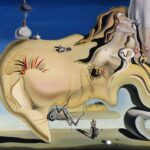
Surrealism was a 20th-century avant-garde movement in art and literature that sought to release the creative potential of the unconscious mind. Emerging in the aftermath of World War I and heavily influenced by the psychoanalytic theories of Sigmund Freud, Surrealism aimed to resolve the previously contradictory conditions of dream and reality into an absolute reality, a “surreality.”
The movement fundamentally split into two distinct visual methodologies. Automatism (Abstract Surrealism) relied on spontaneous, unedited expression to bypass the conscious mind, using techniques like doodling, dripping, and frottage to let the subconscious dictate the form. Veristic Surrealism (Representational Surrealism), on the other hand, used highly meticulous, academic realism to paint impossible, dream-like scenes. These artists rendered objects with photographic precision but stripped them of their normal context, juxtaposing unrelated elements to shock the viewer’s rational mind.
Contemporary art
Here is the professional entry for Contemporary Art, structured for the Cgitems Encyclopedia.
Contemporary art is not a single “style” but a vast, ongoing period of art history that began in the late 20th century. Unlike historical movements (such as Gothic or Romanticism), it is characterized by pluralism: the idea that there is no single “correct” way to create art. It is defined by its global nature, its embrace of new technologies, and its tendency to prioritize the idea or concept over the physical object.
For researchers and digital artists, Contemporary art is significant because it broke the “fourth wall” of the gallery. It moved away from traditional painting and sculpture into Installation, Performance, and Digital Media. While the “Comic Noir” or “Chiaroscuro” styles rely on fixed aesthetic rules (like high-contrast lighting and shadows), Contemporary art often deconstructs those rules. It might take a “Noir” aesthetic and turn it into a 3D immersive room where the shadows are generated by the viewer’s own data or movement. It is art that is “of our time,” reflecting current social, political, and technological shifts.


Matte painting
Matte painting is a foundational visual effects technique used to create the illusion of environments, landscapes, or structures that would be too expensive, dangerous, or physically impossible to build or visit. For researchers, students, and digital artists, Matte Painting is distinct because it is applied fine art masquerading as absolute reality. It relies on photorealism, precise linear perspective, atmospheric rendering, and perfect continuity of light.
Historically, the art form evolved through three technological eras:
-
The Glass & Cutout Era (1907–1980s): Artists painted directly onto massive sheets of optical glass using oils or acrylics. Areas where live-action footage would appear were left completely clear or blacked out (matted). The camera filmed through the glass, combining the live actors and the painting in a single camera take or via subsequent optical printer passes.
-
The Digital 2D Era (1990s–2000s): The transition to computers allowed artists to trade physical brushes for digital tablets. Software like Adobe Photoshop enabled artists to blend real photographic elements with digital paint (photo-bashing) to achieve unprecedented realism, though shots remained mostly flat, static plates.
-
The Modern 2.5D / 3D Digital Environment Era (2000s–Present): Modern Digital Matte Painters (DMPs) do not just paint flat backgrounds; they project their 2D assets onto simplified 3D geometry (projection mapping). This allows the virtual camera to move, tilt, and pan within the painting, creating realistic parallax (where closer objects move faster than distant ones).