Naturalism
A comprehensive guide to the visual principles, history, and pioneers of this movement. Curated for researchers and students seeking a structured analysis of artistic styles & Technique .
Available Art Style & Movement
Abstract
Abstract Expressionism
Academic Art
Aestheticism
Architectural Movements
Art Deco
Art Nouveau
Baroque
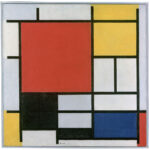
Bauhaus

Byzantine
Cartoon
CGI
Chiaroscuro
Chiaroscuro Noir
Classical Architecture
Classicism

Comic
Conceptual
Contemporary
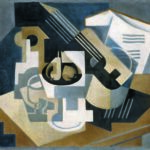
Cubism

Dada
Early Renaissance
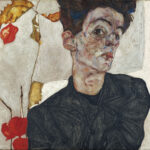
Expressionism

Fantasy Art
Fashion
Fashion Design
Fashion Illustration
Fashion Photography
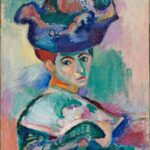
Fauvism

Figurative Art

Figurative Photography
Fresco

Gothic
Haute Couture
High Renaissance
Hybrid
Illustration

Impressionism

Landscape
Line art

Manga
Mannerism

Marvel
Matte Painting

Miniature
Minimalism
Modern Architecture
Modernism

Muralism

Naturalism
Neoclassicism
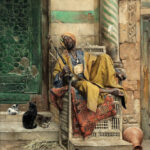
Orientalism
Photography

Pop Art
Pre-Raphaelite
Realism
Regionalism
Relief
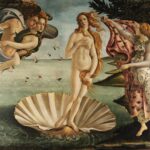
Renaissance
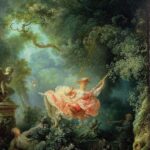
Rococo
Romanticism

SCI-FI

Sculpting
Street Art
Surrealism

Symbolism
Tempera
Tenebrism
Tonalism
VFX
Victorian
General Specifcations for Naturalism
Naturalism in the fine arts refers to the accurate, un-idealized depiction of nature, human figures, and everyday environments as they appear in real life. Emerging prominently in the mid-to-late 19th century alongside the rise of empirical science and early photography, Naturalism bridged the gap between Romantic emotionalism and the radical fragmentation of early Modernism.
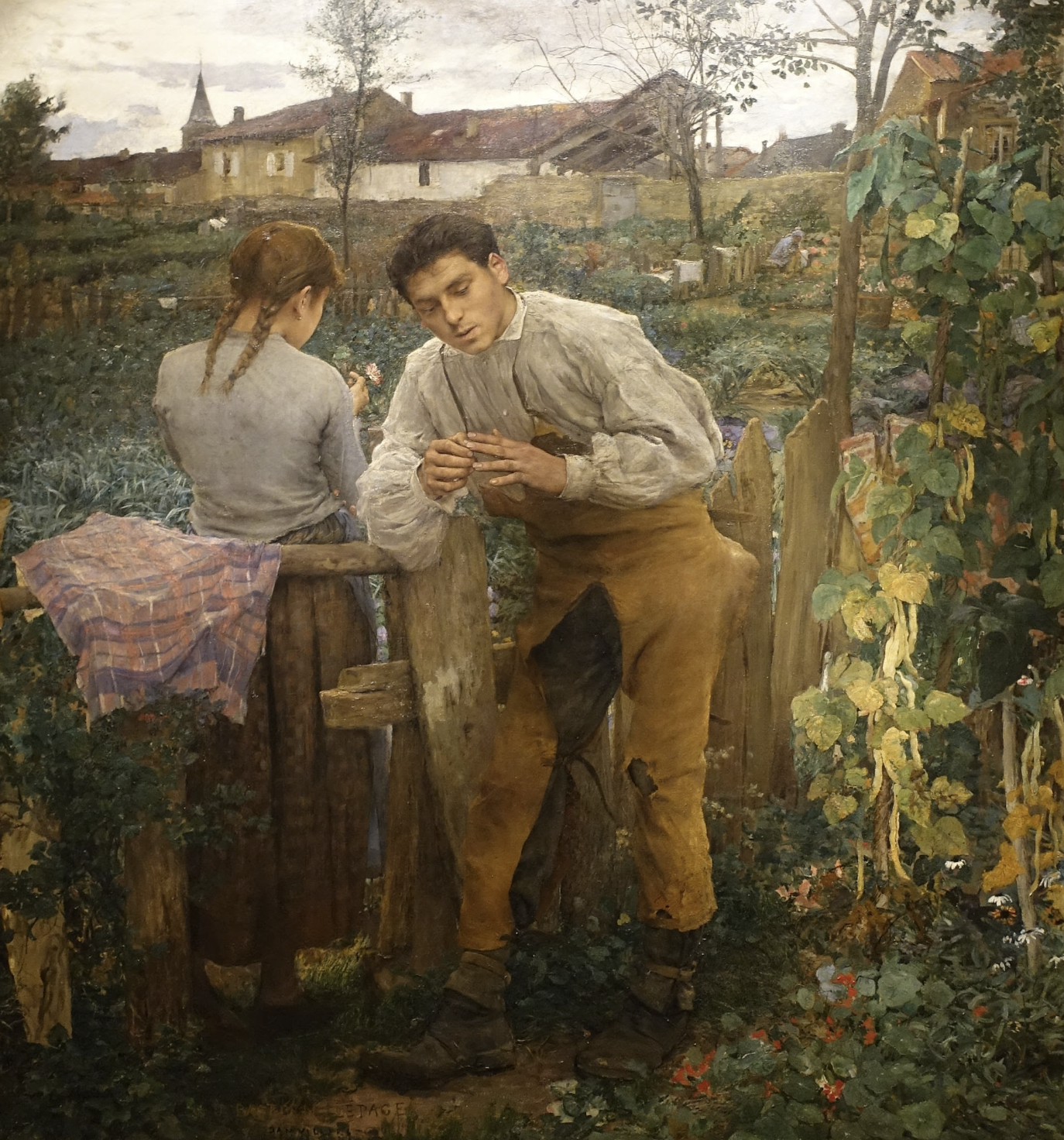
Unlike Neoclassicism (which idealized form according to classical Greco-Roman beauty standards) or Romanticism (which stylized form to express heightened emotional drama), Naturalism adheres strictly to careful observation. While closely intertwined with Realism, Naturalism often emphasizes a higher level of technical finesse, precise photographic values, diffuse outdoor daylight, and a deterministic view of human life—frequently recording subjects in their authentic social, rural, or working-class conditions without moralizing or romantic commentary.
Related to Naturalism
Note : The images below might not strictly correspond to the style and technique of Naturalism, but rather represent an artist who also includes this approach in their portfolio.
Classification
-
Category: Fine Arts, Visual Arts (Painting, Sculpture, Illustration).
-
Era/Period: Late 18th to Late 19th Century (Peak: 1870–1900); periodic 20th-century revivals.
-
Origin Location: Western Europe (France, Great Britain, Germany, Russia, and Scandinavia).
Visual & Technical Specs
Key Visual Characteristics: High optical fidelity, natural anatomical proportions, diffused outdoor daylight (Plein Air execution), neutral values, unposed subject placement, accurate atmospheric depth, and unembellished textures (cloth, soil, skin, foliage).
Color Palette: Earthy, subdued tones dominated by raw ochre, burnt umber, viridian green, slate gray, muted cobalt, and soft atmospheric whites. High-contrast theatrical lighting (chiaroscuro) is replaced by cool, diffuse ambient daylight.
Mediums & Tools: Oil on heavy linen canvas, charcoal, gouache, graphite pencil, plein air field easel boxes, and early photographic plates used for anatomical reference.
Pioneers & Key Works
-
Jules Bastien-Lepage (France) – Pioneer of late 19th-century Naturalism
-
Émile Friant (France)
-
Jean-François Millet (France) – Barbizon School pioneer
-
Camille Corot (France)
-
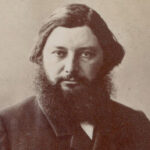
Gustave Courbet (France)
-
Léon Lhermitte (France)
-
Pascal Dagnan-Bouveret (France)
-
Ilya Repin (Russia) – Peredvizhniki / Itinerants movement
-
Ivan Shishkin (Russia)
-
Vasily Polenov (Russia)
-
George Clausen (United Kingdom) – New English Art Club
-
Henry Herbert La Thangue (United Kingdom)
-
Stanhope Forbes (United Kingdom) – Newlyn School founder
-
Peder Severin Krøyer (Denmark) – Skagen Painters
-
Michael Ancher (Denmark)
-
Anna Ancher (Denmark)
-
Max Liebermann (Germany)
-
Wilhelm Leibl (Germany)
-
Winslow Homer (United States)
-
Thomas Eakins (United States)
10 20th-Century Revivalists & Modern Realist Masters
-
Andrew Wyeth (United States) – American Regionalist Naturalism
-
Edward Hopper (United States) – Urban Naturalism
-
Norman Rockwell (United States) – Narrative figurative Naturalism
-
Lucian Freud (United Kingdom) – Un-idealized anatomical Naturalism
-
Antonio López García (Spain) – Hyper-observed urban Naturalism
-
Claudio Bravo (Chile) – Classical precision Naturalism
-
Pietro Annigoni (Italy)
-
Robert Henri (United States) – Ashcan School
-
George Bellows (United States)
-
Bo Bartlett (United States) – Contemporary figurative Naturalism
Masterpieces
-
Haymaking (Les Foins) – Jules Bastien-Lepage (1877)
-
All Saints’ Day (Toussaint) – Émile Friant (1888)
-
Barge Haulers on the Volga – Ilya Repin (1870–1873)
-
The Gleaners – Jean-François Millet (1857)
-
The Gross Clinic – Thomas Eakins (1875)
-
Summer Day on Skagen’s Southern Beach – P.S. Krøyer (1884)
-
A Hop-Pickers’ Feast – George Clausen (1884)
-
Christina’s World – Andrew Wyeth (1948)
Philosophy & Context
-
The “Why”: Naturalism sought to record truth as observed through empirical experience rather than elevated through heroic idealization. Influenced by Charles Darwin’s theories of evolution, Emile Zola’s literary naturalism, and scientific determinism, artists believed that human beings are shaped fundamentally by their environment, genetics, and working conditions.
-
Historical Context: Naturalism rose during the height of the Industrial Revolution and the growth of empirical science. As cities expanded and photographic technology matured, visual artists rejected classical mythology and historical idealization in favor of documenting genuine human labor, rural life, and unadorned nature.
Modern Influence: Cinema, TV & CGI
-
2D, 3D, CGI, VFX: Naturalism forms the foundational bedrock of photorealistic 3D rendering, modern VFX composition, and cinematic lighting design. Physically Based Rendering (PBR) workflows—which simulate real-world material properties like roughness, subsurface scattering, and index of refraction (IOR)—are direct technical extensions of Naturalist visual principles.
-
Modern Legacy: Cinematic directors and cinematographers rely on Naturalist aesthetics to ground fantasy or historical narratives in physical reality (e.g., Roger Deakins’ natural light compositions in 1917 or The Revenant‘s reliance on natural overcast daylight and wide focal lenses).
Modern Influence: AI & Hybrid Media
-
Modern Legacy: In AI generative systems (Midjourney, Stable Diffusion, Flux), Naturalism prompts act as a anchor to suppress stylized “digital art” finishes, oversaturated glow effects, or exaggerated proportions. Prompting with Naturalist references produces physically plausible textures, authentic subsurface skin scatter, and believable ambient illumination.
-
AI Prompting Keywords: Naturalism art style, Jules Bastien-Lepage lighting, un-idealized detail, diffuse daylight, soft ambient occlusion, natural color palette, raw textures, photo-accurate proportions, overcast sky, earth tones, plein air realism, 19th-century oil painting.
-
Explore More
Art Styles by random seed
Figurative
Figurative art (or Figurativism) encompasses any form of visual artwork—paintings, sculptures, graphic arts, or digital media—that retains strong, recognizable references to real-world objects, subjects, and specifically the human body. Unlike pure abstraction (which operates entirely through non-representational form, color, and line), figurative art uses spatial illusion, anatomical proportions, lighting, and narrative structures to visually anchor the subject in recognizable reality.
Historically, figurative art served as the central engine of human artistic production—from paleolithic cave paintings and classical marble portraiture to high-Renaissance humanism and modern psychological expressionism. In modern art theory, “figurative” does not merely denote photo-realism; rather, it describes a spectrum that ranges from strict naturalism to distorted, stylized, or expressive representational form. The core requirement is that the human or physical figure remains the primary structural and narrative axis of the artwork.
Manga
Manga (漫画) is a sophisticated Japanese sequential art form that evolved from 12th-century scrolls into a global cultural phenomenon. Unlike Western comics, Manga is a multi-generational medium with specific demographic classifications: Shonen (young males), Shojo (young females), Seinen (adult men), and Josei (adult women).
Technically, Manga is defined by its “cinematic” pacing. While Western comics often focus on action-to-action transitions, Manga frequently uses aspect-to-aspect transitions—lingering on a falling leaf or a background detail to establish mood or “Ma” (the interval of empty space). The style relies heavily on a specialized vocabulary of visual symbols, such as “sweat drops” for anxiety or “popping veins” for anger. For researchers, the core of Manga’s power lies in its Iconic Abstraction: characters are drawn with simplified, expressive features (large eyes, minimal noses) to allow the reader to project themselves onto the character more easily.
Haute Couture
aute Couture (French for “High Dressmaking” or “High Sewing”) is the highest tier of fashion design, treating garments as wearable sculpture and fine art. Unlike commercial Prêt-à-Porter (Ready-to-Wear), Haute Couture garments are constructed entirely by hand from start to finish. They are custom-fitted to a single specific client, requiring multiple painstaking fittings.
For researchers and art students, Haute Couture is not just a descriptive term—it is a legally protected designation. In France, a fashion house can only call itself a Maison de Haute Couture if it is officially approved by the Chambre Syndicale de la Haute Couture (under the French Ministry of Industry). To maintain this status, a brand must meet strict criteria:
-
Custom Craftsmanship: Every garment must be designed for private clients with one or more personal fittings.
-
The Atelier System: The house must maintain a workshop (Atelier) in Paris that employs at least 15 full-time staff members.
-
Artisanal Collaboration: Ateliers must work with specialized French art-craft houses (Les Métiers d’Art), such as Maison Lesage (embroidery), Lemarié (feathers and flowers), and Lognon (pleating).
-

Style By Leda Seasonal Showcases: The house must present a collection of at least 50 original designs to the public twice a year (January and July), featuring both daywear and eveningwear.
The visual language of Haute Couture spans from structural, architectural tailoring to surreal, ethereal textile art. It serves as the ultimate laboratory for experimental fashion, where fabric manipulation techniques are pushed to their physical limits.

Architectural
Classical Architecture refers to the highly structured, formalized building traditions derived from ancient Greece and Rome. It is a style dictated by sacred geometry, mathematical ratios, and a strict adherence to symmetry. Rather than merely being a historical era, Classical Architecture is a comprehensive design system that has been revived, adapted, and reinterpreted across millennia (through the Renaissance, Neoclassicism, and Beaux-Arts movements).
The cornerstone of the system is the Architectural Order. An Order dictates the specific shape, proportions, and decoration of the column, its base, its capital (the top of the column), and the entablature (the horizontal superstructure sitting on top). For students and researchers, the system is divided into five definitive canonical orders:
-
Doric: The oldest, simplest, and sturdiest order, featuring a plain capital and no base (Greek Doric) or a simple base (Roman Doric).
-
Ionic: Characterized by elegant, slender proportions and a capital decorated with spiral, scroll-like carvings called volutes.
-
Corinthian: The most ornate style, featuring an elongated capital intricately carved with stylized acanthus leaves.
-
Tuscan: A simplified, unfluted Roman adaptation of the Doric order.
-
Composite: A rich Roman combination of the Ionic volutes and Corinthian acanthus leaves.
A core concept in Classical Architecture is entasis—the subtle, intentional swelling or curving of a column’s shaft. Classical architects discovered that perfectly straight columns appear to bow inward when viewed from a distance due to an optical illusion. Entasis corrects this, making the columns appear perfectly straight, rigid, and organically alive under the heavy weight they support.
Cubism
Cubism represents the most radical aesthetic and conceptual rupture in Western art since the early Renaissance discovery of linear perspective. Initiated in Paris around 1907 by Pablo Picasso and Georges Braque, the movement systematically dismantled the five-hundred-year-old illusionistic tradition of painting as an open window into a unified, three-dimensional space (trompe-l’œil). Instead, Cubism posited that the flat surface of the canvas is an autonomous physical plane, and that human perception is an additive, dynamic process rather than a static, monocular snapshot.
Rather than portraying objects from a fixed viewpoint, Cubist artists fragmented their subjects into geometric facets, intersecting planes, and angular facets, reassembling them within a shallow pictorial depth. This allowed multiple, simultaneous viewpoints (profile, overhead, frontal, interior) to coexist across a single composition—a conceptual framework known as simultaneity.
Cubism fundamentally transformed painting from an act of mimesis (direct imitation of visible reality) to an act of semiotic construction. The canvas became an arena for signs, visual puns, and spatial paradoxes. The movement advanced through distinct developmental phases:
-
Proto-Cubism / Cézannian Cubism (1907–1909): Characterized by dense, sculptural volumes, simplified natural geometries, and direct structural influence from Paul Cézanne and Oceanic/African tribal carvings.
-
Analytical Cubism (1909–1912): Marked by the systematic deconstruction of objects into interwoven crystalline facets, transparent planes, a severely muted monochromatic palette (ochres, greys, browns), and the near-total dissolution of the boundary between the figure and its surrounding ground.
-
Synthetic Cubism (1912–1919): A phase that reversed the deconstructive trajectory by synthesizing and building up forms from flat shapes, vibrant decorative colors, collaged elements (papier collé), typography, and industrial materials.
-
Crystal Cubism (1914–1920s): A wartime and post-war consolidation characterized by flat, tightly locked, non-overlapping geometric planes, architectural clarity, and an emphasis on formal order.
The repercussions of Cubism were immediate and international. It laid the direct conceptual, structural, and procedural foundations for virtually every major modernist avant-garde that followed, including Futurism, Orphism, Rayonism, Vorticism, Suprematism, Constructivism, De Stijl, Purism, and Dada.
Architectural
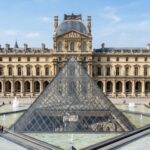
Architectural movements represent the evolution of human civilization through the lens of Form, Function, and Material. Unlike isolated art movements, architecture is bound by the laws of physics and the socio-economic needs of the time. A “Movement” in architecture is defined by a shared vocabulary of structural elements (how it stands up) and aesthetic ornamentation (how it looks).
For the Cgitems database, architectural movements are analyzed through three primary lenses:
-
Structural Innovation: The transition from Post-and-Lintel (Ancient) to Arches/Vaults (Medieval) to Steel Frames (Modern) and finally to Computational/Parametric design.
-
Spatial Philosophy: How a building treats the person inside—from the intimidating “divine scale” of the Gothic era to the “human-centric” ergonomics of Modernism.
-
The Facade & Envelope: The “skin” of the building, which reflects the artistic trends of the era, such as the intricate carvings of the Baroque or the “Glass Curtain Walls” of the International Style.