Regionalism
A comprehensive guide to the visual principles, history, and pioneers of this movement. Curated for researchers and students seeking a structured analysis of artistic styles & Technique .
Available Art Style & Movement
Select Art Style...
 Abstract
 Abstract Expressionism
 Academic Art
 Aestheticism
 Architectural Movements
 Art Deco
 Art Nouveau
 Baroque
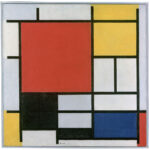 Bauhaus
 Byzantine
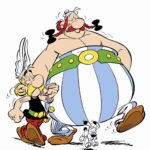 Cartoon
 CGI
 Chiaroscuro
 Chiaroscuro Noir
 Classical Architecture
 Classicism
 Comic
 Conceptual
 Contemporary
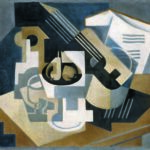 Cubism
 Dada
 Early Renaissance
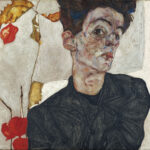 Expressionism
 Fantasy Art
 Fashion
 Fashion Design
 Fashion Illustration
 Fashion Photography
 Fauvism
 Fresco
 Gothic
 Haute Couture
 High Renaissance
 Hybrid
 Illustration
 Impressionism
 Landscape
 Line art
 Manga
 Mannerism
 Marvel
 Matte Painting
 Miniature
 Minimalism
 Modern Architecture
 Modernism
 Muralism
 Neoclassicism
 Orientalism
 Photography
 Pop Art
 Pre-Raphaelite
 Realism
 Regionalism
 Relief
 Renaissance
 Rococo
 Romanticism
 SCI-FI
 Sculpting
 Street Art
 Surrealism
 Symbolism
 Tempera
 Tenebrism
 Tonalism
 VFX
 Victorian
General Specifcations for Regionalism
Regionalism (often referred to as American Regionalism) was a realist modern art movement that flourished during the 1930s Great Depression era. As a direct rejection of the urban, abstract, and highly intellectual avant-garde movements coming out of Europe (like Cubism and Surrealism), Regionalism sought to create a uniquely American aesthetic.
The movement deliberately focused on rural environments, small-town life, and the agrarian working class of the American Midwest and Deep South. It was championed as “art for the people,” meant to be easily understood and deeply resonant with the average citizen who was suffering through economic collapse and the Dust Bowl. While often perceived as purely nostalgic and comforting, many Regionalist works actually contained biting social satire, subtle psychological tension, and critiques of agricultural mismanagement or religious fanaticism.
Related to Regionalism
Note : The images below might not strictly correspond to the style and technique of Regionalism, but rather represent an artist who also includes this approach in their portfolio.
Classification
-
Category: Painting, Muralism, Printmaking (Lithography).
-
Era/Period: 1930s to 1940s (The Great Depression to the end of WWII).
-
Origin Location: United States (Primarily the Midwest and Texas/Southwest).
Visual & Technical Specs
-
Key Visual Characteristics: Highly readable narrative scenes, elongated or slightly stylized figures, sweeping and undulating landscapes, crisp architectural lines, and a deliberate avoidance of pure abstraction. Elements of “rural gothic” and magical realism are frequently present.
-
Color Palette: Earthy and grounded. Dominant tones include wheat yellow, muted barn reds, dusty prairie greens, storm-cloud blues, and soil browns, reflecting the agricultural landscape.
-
Mediums & Tools: Oil paint, egg tempera (which allowed for incredibly crisp, hard-edged details), and lithography. Government-sponsored mural projects under the WPA (Works Progress Administration) utilized fresco and tempera on large architectural walls.
-
Synthetic: N/A (Historically traditional, though the aesthetic is now synthesized in digital matte painting for period films).
Pioneers & Key Works
Pioneers & Key Artists (c. 20): The movement was spearheaded by the “Regionalist Triumvirate” (Wood, Benton, Curry) and expanded through localized collectives like the Dallas Nine.
-
Grant Wood (The Midwestern master of crisp, Gothic realism)
-
Thomas Hart Benton (Known for fluid, muscular, and sculptural figures)
-
John Steuart Curry (Chronicler of violent Kansas weather and rural faith)
-
Alexandre Hogue (Texas Regionalist; chronicler of Dust Bowl erosion)
-
Jerry Bywaters (Leader of the Texas Regionalism/Dallas Nine movement)
-
Charles E. Burchfield (Visionary, slightly hallucinatory rural landscapes)
-
John Rogers Cox (Crisp, magical-realist wheat fields and desolate plains)
-
Marvin Cone (Iowa landscapes and hauntingly empty barns)
-
Dale Nichols (Idealized, stylized red barns and winter farming scenes)
-
Joe Jones (Wheat harvests with underlying Social Realist critiques)
-
Paul Sample (New England and rural American scenes)
-
Doris Lee (Folk-inspired, bustling rural domestic scenes)
-
Clarence Holbrook Carter (Stark, sometimes surreal depictions of rural poverty)
-
Peter Hurd (Painter of the harsh, luminous New Mexico/Southwest landscape)
-
Otis Dozier (Texas Regionalist; dynamic, rhythmic natural forms)
-
Everett Spruce (Bold, slightly modernist Texas landscapes)
-
William Lester (Geometric and slightly cubist interpretations of rural Texas)
-
Florence McClung (Printmaker and painter of Texas rural horizons)
-
Aaron Bohrod (Chicago/Midwest scenes transitioning to trompe-l’œil)
-
Adolf Dehn (Prolific lithographer of agrarian life and human foibles)
20th-Century Revivalists & Associated Figures (c. 10): Artists who carried the torch of rural narrative, localized focus, or Neo-Regionalism after the movement’s official decline:
-
Andrew Wyeth (Elevated Regionalist aesthetics into stark Magic Realism)
-
Norman Rockwell (The illustrative, commercial counterpart to Regionalism)
-
Bo Bartlett (Contemporary Neo-Regionalist painting American life on an epic scale)
-
John Wilde (Midwestern Magic Realism, heavily influenced by early Regionalism)
-
George Weymouth (Brandywine tradition, rural realist painter)
-
James Bama (Western Regionalism; hyper-realist depictions of modern Wyoming)
-
F. Scott Hess (Narrative realism with a strong sense of localized American unease)
-
Jamie Wyeth (Continuing the rural, coastal narrative tradition)
-
Thomas Blackshear (Western Neo-Regionalism)
-
Bryan Schutmaat (Contemporary Neo-Regionalist photography of the American West)
Masterpieces:
-
American Gothic (Grant Wood, 1930) – The most famous American painting of the 20th century.
-
Tornado Over Kansas (John Steuart Curry, 1929) – A dramatic, chaotic depiction of rural survival.
-
A Social History of the State of Indiana (Thomas Hart Benton, 1933) – A sweeping, muscular mural.
-
Drought Survivors (Alexandre Hogue, 1936) – A haunting Texas Dust Bowl scene.
-
Grey and Gold (John Rogers Cox, 1942) – A pristine, eerie intersection of rural roads and wheat.


Philosophy & Context
-
The “Why”: Regionalism was driven by a desire for cultural independence and national myth-making. The artists wanted to divorce American art from the perceived elitism and intellectualism of Paris and New York. By painting the heartland, they believed they were capturing the “true” American spirit—resilient, hard-working, and grounded in the soil—providing comfort and identity during the darkest days of the Great Depression.
-
Historical Context: The movement was heavily supported by the U.S. government through New Deal programs (like the WPA), which paid artists to paint murals in post offices and public buildings to boost morale. It fell out of favor after WWII, as the rise of fascism made hyper-nationalistic, figurative art feel uncomfortably close to totalitarian propaganda, giving way to the abstract freedom of Abstract Expressionism.
Modern Influence: Cinema, TV & CGI
-
2D, 3D, CGI, VFX: The Regionalist aesthetic is the direct visual blueprint for “Americana” in cinema. The sweeping, golden-hour wheat fields and slightly exaggerated rural Gothic architecture seen in films like the Coen Brothers’ O Brother, Where Art Thou?, Terrence Malick’s Days of Heaven, and the Smallville scenes in Superman films all utilize Regionalist color grading and framing. In CGI and matte painting, the “Benton sky” (undulating, highly stylized clouds) is often used to evoke a mythic American past.
-
Modern Influence: AI & Hybrid Media
-
Modern Legacy: AI image generators easily adapt to Regionalist prompts because the style has such clear, hard-edged parameters and distinct thematic motifs (red barns, pitchforks, overalls, rolling hills). It is frequently used to generate concept art for rural horror, alternative history Americana, and folk-tale illustrations.
-
AI Prompting Keywords: American Regionalism painting, Grant Wood style, Thomas Hart Benton swirling clouds, 1930s rural America, stylized Midwestern farm, crisp lines, egg tempera aesthetic, amber waves of grain, rural gothic, dramatic Dust Bowl lighting.
Explore More

Art Styles by random seed
Hybrid
Hybrid Art is a contemporary artistic paradigm defined by the deliberate convergence, blurring, and recursive looping of disparate media, techniques, and disciplines. It moves beyond the limitations of traditional, medium-specific practice, operating instead as a transdisciplinary system architecture: a methodology in which manual craftsmanship, digital execution, and generative AI processes are synthesized into a single, unified visual identity.
Unlike multimedia, which places different art forms side-by-side, Hybrid Art dissolves the boundary between them entirely. No individual medium operates in a silo; each becomes a stage within one continuous, iterative workflow.
Core Principles
- Process-Oriented Methodology: Hybrid practice is defined less by a fixed medium than by the management of an integrated system of tools. The workflow itself, how the piece moves between hand, machine, and model, is as critical to the work as its final aesthetic output.
- Synergetic Creation: The essence of Hybrid Art lies in producing qualities that exceed the sum of its parts. By integrating contrasting elements, human-driven design and AI-driven refinement, structural rigidity and generative fluidity, it achieves a complexity unattainable through any single tool in isolation.
- Human–Machine Dialectic: At the center of contemporary Hybrid practice is the interplay between human intentionality (conceptual depth, compositional judgment, emotional and architectural intent) and machine agency (scale, computational complexity, and unpredictable generative potential). The artist remains the creative director; the machine is the highly efficient collaborator.
The Three Technical Domains
A Hybrid workflow typically moves across three interlocking domains, each contributing something the others cannot:
- The Physical Ground (Analog): Hand-drawn graphite sketches, raw textures, impasto oil layers, or physical artifacts carrying human-scale imperfection and resistance. This is the domain of the artist’s hand.
- The Virtual Framework (Digital 2D/3D): CGI assets, procedural meshes, and digital painting layers used to construct spatial depth, clean geometry, camera perspective, and lighting maps. In advanced pipelines, artists build basic geometry and lighting in software such as Blender, Maya, or 3ds Max to establish absolute structural control before any generative step begins.
- The Latent Layer (Generative AI): Machine learning models (diffusion models, custom-trained LoRAs, ControlNet-style adapters) deployed not as automated image generators, but as advanced “algorithmic brushes.” Using depth maps, normal maps, or wireframes from the digital stage as a strict blueprint, the AI synthesizes patterns, reinterprets brushstrokes, and maps stylistic textures, ensuring geometric integrity is preserved even as the look is explored and reimagined.
Why the Synergy Works
Pure AI generation alone tends to suffer from spatial inconsistency, unpredictable perspective, and a lack of precise control. Pure traditional 3D rendering, by contrast, is often slow, demanding hours of meticulous texturing, lighting, and heavy compute. The Hybrid workflow resolves both limitations at once:
- Structural control comes from the 3D/analog foundation, anchoring the AI to a strict geometric blueprint.
- Instant look development comes from AI exploration, letting an artist test dozens of aesthetic directions in seconds rather than days.
- Pipeline optimization comes from shifting tedious detailing and atmospheric rendering to generative tools, compressing production timelines from days to minutes.
The Recursive Workflow
The defining hallmark of Hybrid Art is that it rarely moves linearly. A single piece may begin as a hand-drawn sketch, be upscaled and lit inside a 3D environment, reinterpreted through a text-to-image or image-to-image diffusion process, and finally be projected back onto physical canvas, where the artist applies glazes, oils, or further physical texture. The result is a dense, multi-layered visual fabric in which the boundaries between human hand, code, and neural network are completely dissolved.
From Technical Artist to Creative Director
Hybrid methodology does not replace human artistry; it elevates it. Core composition, architectural intent, and emotional lighting remain entirely artist-driven; the AI functions as an efficient collaborator handling scale and iteration, not authorship. As production pipelines across VFX, gaming, and concept art continue to adopt this approach, fluency in Hybrid methodology has become a defining competitive skill for the modern digital creator.
Historical Context and Significance
Rooted in the historical evolution of mixed-media and collage, Hybrid Art has emerged in the digital age as an independent expressive language: a philosophical and technical response to a complex, multi-layered world. It dissolves the traditional boundaries between reality and simulation, the handmade and the technological, the analog and the algorithmic.
Condensed Summary
Hybrid Art is the art of reconciling the disparate: a transdisciplinary, recursive workflow in which analog craft, digital construction, and generative AI collide, not as separate steps, but as one continuous system, to produce forms of expression unattainable through any single medium alone.
Early Renaissance
The Early Renaissance (Quattrocento) marks the transition from the symbolic, flat world of the Middle Ages to a revolutionary era of Humanism and Scientific Realism. This period was defined by the rediscovery of Classical antiquity and a desire to represent the physical world as it actually appeared to the human eye.
The most significant breakthrough of this era was the development of Linear Perspective, a mathematical system used to create the illusion of depth on a flat surface. Artists began to study human anatomy through dissection and observation, leading to figures that possessed “gravitas”—a sense of weight, volume, and three-dimensional presence. Unlike the later High Renaissance (which sought idealized perfection), Early Renaissance art often retains a crisp, clear, and almost analytical focus on detail and mathematical harmony.
Regionalism
Regionalism (often referred to as American Regionalism) was a realist modern art movement that flourished during the 1930s Great Depression era. As a direct rejection of the urban, abstract, and highly intellectual avant-garde movements coming out of Europe (like Cubism and Surrealism), Regionalism sought to create a uniquely American aesthetic.
The movement deliberately focused on rural environments, small-town life, and the agrarian working class of the American Midwest and Deep South. It was championed as “art for the people,” meant to be easily understood and deeply resonant with the average citizen who was suffering through economic collapse and the Dust Bowl. While often perceived as purely nostalgic and comforting, many Regionalist works actually contained biting social satire, subtle psychological tension, and critiques of agricultural mismanagement or religious fanaticism.
Photography
Photography, derived from the Greek words phos (“light”) and graphe (“drawing”), is the art and science of creating durable images by recording light. Unlike traditional plastic arts, photography began as a purely chemical and mechanical process. It has evolved through three major technological revolutions:
-
The Chemical Era (1839–1970s): Based on light-sensitive silver halides on metal, glass, or film.
-
The Analog/Film Era (1900s–Present): The democratization of the medium via roll film, leading to photojournalism and “The Decisive Moment.”
-
The Digital Revolution (1990s–Present): The transition to electronic sensors (CCD/CMOS) and algorithmic processing.
For researchers, photography is unique because it serves a dual purpose: it is a mechanical record of reality (evidence) and an expressive art form (interpretation). The style is defined by the photographer’s control over the “Exposure Triangle”: Aperture (depth of field), Shutter Speed (motion), and ISO (sensitivity/grain).
Conceptual Art
Conceptual Art (or Conceptualism) is a movement that prizes the idea or concept behind the work over the finished physical object or the technical skill required to make it. In this style, the “art” is the mental process and the proposition rather than the painting, sculpture, or installation itself. It was a radical shift that essentially argued that if an artist “thinks” of a work, it exists, whether or not it is physically executed.
For researchers and students, it is characterized by its “dematerialization” of the art object. It often utilizes everyday materials, text, photography, and performance to document an idea. The aesthetic is frequently “anti-visual” or clinical, mimicking the appearance of information, data, or instructional manuals to distance the work from traditional notions of beauty or craftsmanship.
Abstract Expressionism
Abstract Expressionism stands as a monumental pivot in art history, marking the moment the center of the international art world shifted from Paris to New York City. Rather than depicting the external, visible world, these artists sought to map the interior landscape of human emotion, trauma, and the subconscious mind. It is a deeply individualistic style where the act of painting itself becomes the primary subject.
For students and researchers, the movement must be understood through its two distinct structural branches, each approaching the canvas with a completely different energy:
-
Action Painting (Gestural Abstraction): Led by figures who treated the canvas not as a space to reproduce an object, but as an arena in which to act. The physical movement of the painter’s entire body—dripping, splashing, pouring, and aggressively sweeping paint across raw, unprimed canvas—is left raw and visible. The texture, weight, and chaotic trajectory of the pigment record a literal performance of the artist’s psychological state.
-
Color Field Painting: A more meditative, serene approach where large, flat expanses of saturated color are applied to the surface. These artists eliminated all sense of a focal point, geometric lines, or painterly chaos. Instead, they relied on the pure, immersive power of vast color planes to induce a spiritual or transcendent emotional response in the viewer, swallowing their field of vision entirely.