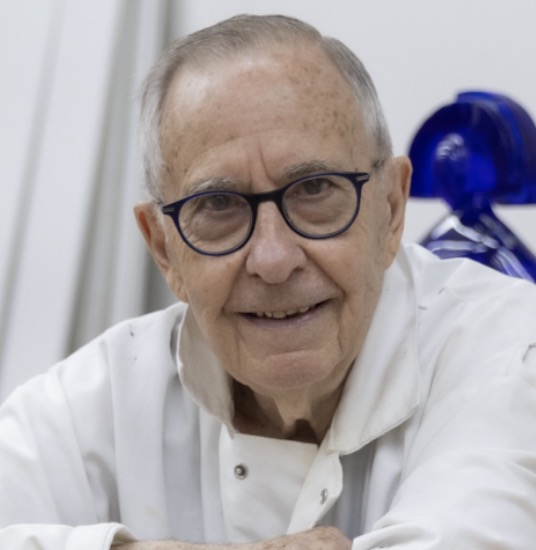
Benedict Chukwukadibia Enwonwu (Father: Odigwe Emeka Enwonwu, a traditional sculptor; Mother: Ilom) was a pioneering Nigerian painter and sculptor who became one of the most influential African artists of the 20th century. He was a central figure in the development of Nigerian modernism, effectively bridging the gap between traditional Igbo aesthetics and Western academic techniques.

Born into an artistic family in Onitsha, Enwonwu was introduced to wood carving by his father, who was an official sculptor for the traditional court. After demonstrating immense talent in primary school, he was encouraged by British art teacher Kenneth Murray, who provided him with rigorous formal training. In 1944, Enwonwu received a scholarship to study at the Slade School of Fine Art in London. This experience exposed him to European modernism, but rather than abandoning his roots, Enwonwu utilized these new tools to assert his African identity on the global stage.
His work is characterized by a “Pan-African” aesthetic—a fusion of the elongated, stylized forms found in traditional Igbo sculpture with the expressive, fluid brushwork of Western painting. He became a celebrity in the UK and Nigeria alike, famously becoming the first African artist to receive a commission from the British Royal Family, painting a portrait of Queen Elizabeth II in 1956 during her visit to Nigeria.
One of his most significant works, the portrait of Tutu (1974), featuring the Ife princess Adetutu Ademiluyi, gained international legendary status. After being “lost” for decades, its discovery in a London flat in 2018 triggered a global sensation, selling for over £1.2 million and marking a milestone for African modern art in the international auction market. Throughout his career, Enwonwu served as a cultural ambassador for Nigeria, constantly advocating for the legitimacy and importance of African art in a post-colonial world.
Active in others filds :
Art Education (Teacher and Art Adviser to the Nigerian government), Literature and Social Commentary (Writing on African art philosophy).
Ben Enwonwu Legacy :
Ben Enwonwu is widely regarded as the “Father of Nigerian Modernism.” His legacy is twofold: he successfully challenged the colonial narrative that African art was merely “primitive” ethnography, proving it was a sophisticated, evolving modern practice. Secondly, he laid the foundational aesthetic language for generations of contemporary African artists, showing how to balance heritage with global modernism. He remains a symbol of national pride in Nigeria and a pivotal figure in the global art market’s ongoing appreciation for African modern masters.