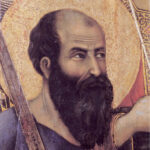


Corrado Giaquinto (Parents: Francesco Giaquinto, a tailor, and Maria Angela Fontana; He was intended for the priesthood by his parents but chose art instead) was a preeminent Italian painter of the 18th century, celebrated across Europe for his luminous frescoes, fluid brushwork, and elegant, harmonious color palettes. Operating at the brilliant intersection of the Late Baroque and Rococo movements, he became one of the most sought-after court painters of his era, leaving a profound artistic footprint spanning Italy and Spain.
Born in the coastal southern town of Molfetta, Giaquinto was initially funneled toward a religious path by his family. However, his clear artistic calling led him to study under Saverio Porta before migrating to Naples in 1719. In Naples, he entered the studio of Nicola Maria Rossi and subsequently became a prized pupil of the Baroque master Francesco Solimena. Seeking greater opportunities, Giaquinto moved to Rome in 1727, where he set up an independent workshop and absorbed the lighter, more airy grace of Sebastiano Conca. It was in Rome that his signature style blossomed: a dreamlike approach utilizing delicate pastels, shimmering whites, and dramatic, weightless figures floating effortlessly across vast ceilings.
Giaquinto’s rising reputation caught the attention of European monarchy. In 1733, he was summoned to Turin by the House of Savoy to complete major decorative commissions for the Villa della Regina and the Basilica of Superga. Returning to Rome, he secured high-profile papal and aristocratic commissions, cementing his status as an international art celebrity.
The pinnacle of his career arrived in 1753 when King Ferdinand VI of Spain invited him to Madrid. Appointed First Court Painter (Primer Pintor de Cámara) and Director of the Real Academia de Bellas Artes de San Fernando, Giaquinto spent nearly a decade orchestrating the visual landscape of the Spanish empire. He created majestic, sprawling ceiling frescoes for the newly built Royal Palace of Madrid and the royal palaces at Aranjuez, elevating state propaganda to an ethereal, celestial realm.
Plagued by failing health and exhausted by heavy royal workloads, Giaquinto returned to Naples in 1762. He spent his final years painting tranquil religious works until his death in 1766, leaving behind an artistic legacy that defined the sweeping, operatic beauty of the high Rococo era.
Active in others filds :
Art Academy Administration (Director of the San Fernando Academy in Madrid), Tapestry Cartoon Design (Supervising the Royal Tapestry Factory of Santa Bárbara).
Corrado Giaquinto Legacy :
Corrado Giaquinto serves as a crucial artistic bridge between the intense, shadowed theatricality of the Italian High Baroque and the serene, structured clarity of emerging European Neoclassicism. His masterful mastery of luminous color and aerial perspective profoundly influenced subsequent generations of European artists. Most notably, during his decade in Madrid, he served as a key mentor and major stylistic influence on the young Francisco Goya, who directly studied Giaquinto’s frescoes and inherited his fluid, confident command of light.