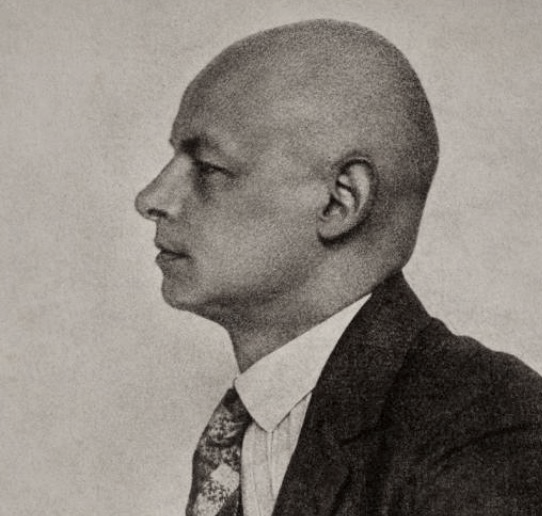


Spinoza Bernard Ginsburg (Father: Max Ginsburg, Mother: Pauline) often hailed as the “Michelangelo of the comic strip,” was a pioneering American cartoonist, illustrator, and art educator who revolutionized the depiction of the human form in sequential art.
Born in Chicago as Spinoza Bernard Ginsburg, he displayed early artistic talent and began his formal training at the Art Institute of Chicago at the age of 12. He started his professional career at age 15 as an assistant cartoonist. In 1934, he moved to New York City, where he eventually joined United Feature Syndicate. His breakthrough came in 1937 when he was selected to succeed Hal Foster as the artist for the Tarzan Sunday comic strip. Hogarth drew Tarzan for 12 years (1937–1945; 1947–1950), introducing a new level of dynamic energy, anatomical exaggeration, and expressionist composition to the medium.
Beyond his work as a practitioner, Hogarth was a titan of art education. In 1947, he co-founded the Cartoonists and Illustrators School in New York City, which later became the world-renowned School of Visual Arts (SVA). He designed the curriculum and served as an administrator and instructor until 1970.
Hogarth is perhaps best known to modern artists for his series of instructional books, including Dynamic Anatomy (1958), Dynamic Figure Drawing (1970), and Drawing Dynamic Hands (1977). These texts remain essential references for visual artists, animators, and comic creators worldwide, emphasizing the rhythmic and structural masses of the human body in motion.
In 1972, he returned to sequential art with a large-format graphic novel version of Tarzan of the Apes, followed by Jungle Tales of Tarzan (1976). He remained active as a teacher and lecturer until his death in Paris in 1996.
Active in others filds : Art Education (Co-founder of SVA), Author (Instructional Art Books), Art Theory.