


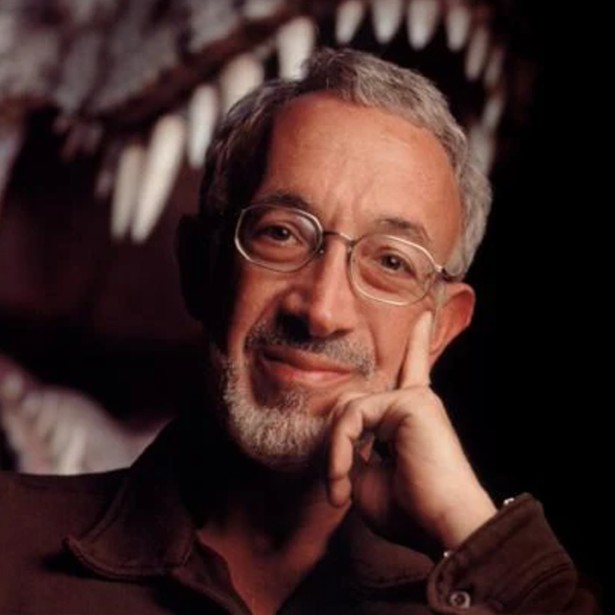
Stan Winston
1. Biography & Summary
Date and Place of Birth: April 7, 1946, in Arlington, Virginia, United States.
Status: Deceased. Passed away on June 15, 2008, in Malibu, California, United States.
Professional Summary: Stan Winston was a legendary American special makeup effects creator, animatronic designer, and filmmaker who stood as one of the most transformative figures in cinematic visual effects history. Over a career spanning nearly four decades, Winston created some of the most iconic creatures and physical characters in film history, including the T-800 Endoskeleton in The Terminator, the practical animatronic dinosaurs in Jurassic Park, the alien hunter in Predator, and the Queen Alien in Aliens. By combining traditional sculpture and puppetry with cutting-edge mechanical engineering and early CGI integration, he established the gold standard for tactile, photorealistic practical effects in cinema.
2. Background
Early Life and Education: Growing up in Virginia, Winston possessed a passion for art, acting, and puppetry from an early age. He attended the University of Virginia, graduating in 1968 with a degree in painting and sculpture. Moving to Hollywood in 1969 with initial ambitions of becoming an actor, he soon discovered his true calling behind the camera. He entered the competitive Walt Disney Studios makeup apprenticeship program, spending three years mastering classic prosthetic makeup techniques under industry veterans before establishing his own studio, Stan Winston Studio, in 1972.
3. Questions
Turning Point & Inner Motivation: Winston’s major turning point arrived in the early 1980s when director James Cameron entrusted him to design and construct the iconic T-800 Endoskeleton and prosthetic makeup for The Terminator (1984). Driven by an inner philosophy that creatures on screen must feel like living, breathing actors rather than mechanical props, Winston was motivated to blur the line between technology and organic performance. He approached every creature design from a performer’s perspective, ensuring that animatronics could express genuine emotion, personality, and physical presence to interact seamlessly with live actors on set.
Technical Barriers & Challenges: During the 1980s and 1990s, mechanical animatronics were often rigid, slow, and prone to breaking down under continuous studio lighting, while early CGI lacked tactile surface texture and physical presence. For Jurassic Park (1993), constructing a full-scale, 20-foot-tall, 9,000-pound animatronic T-Rex pushed physical engineering to its limits. Winston overcame these barriers by pioneering hydraulic telemetry systems, lightweight carbon-fiber frameworks, and custom flexible latex skins. Furthermore, instead of competing against the emerging CGI technology from Industrial Light & Magic, Winston embraced a hybrid model, combining physical animatronics for close-ups with digital models for wide shots, proving that practical and digital effects are most effective when used together.
Thinking Style & Problem Solving: Winston’s approach was a masterclass in blending fine art, mechanical engineering, and theatrical performance. He solved complex visual challenges by starting with classic fine-art principles—sculpting anatomically detailed clay models—before handing the designs over to his team of mechanical engineers to build internal aluminum skeletons, hydraulic actuators, and radio-controlled servomotors. His problem-solving was always performer-centric, often hiding puppeteers within creature suits or utilizing telemetric “exoskeleton” rigs that allowed puppeteers to control massive animatronic limbs in real time through natural body movements.
Long-term Legacy: Stan Winston permanently reshaped the visual effects industry and cinema culture. He proved that physical animatronics could carry the emotional and dramatic weight of a blockbuster film. To ensure the survival and evolution of practical creature crafts in the digital age, he co-founded Digital Domain in 1993 alongside James Cameron and Scott Ross, bridging the gap between practical and digital visual effects. Following his passing, his family and key studio leads established the Stan Winston School of Character Arts, an international educational platform that continues to train future generations of sculptors, animatronics engineers, and makeup artists worldwide.
4. Network & Connections
Key Direct Collaborators: James Cameron (director with whom he collaborated on The Terminator, Aliens, Terminator 2: Judgment Day, and Avatar), Steven Spielberg (director of Jurassic Park and A.I. Artificial Intelligence), John Carpenter (director of The Thing), Rick Baker and Rob Bottin (fellow legendary special makeup effects pioneers), and key studio supervisors like Shane Mahan, John Rosengrant, Alan Scott, and Lindsay Macgowan (who went on to found Legacy Effects to carry on his studio’s work).
Indirect Connections & Influencers: Dick Smith (the legendary “Godfather of Makeup” whose prosthetic work on The Exorcist inspired Winston’s generation), Walt Disney Studios (where Winston learned his foundational makeup craft), and Industrial Light & Magic (ILM), whose CGI teams worked side-by-side with Winston’s physical creature crews to revolutionize visual effects in the 1990s.
5. Filmography
Key Projects & Designs: Winston’s filmography contains many of the most celebrated creature designs in movie history. His groundbreaking practical work includes The Terminator (1984) and Terminator 2: Judgment Day (1991), Aliens (1986), Predator (1987), Edward Scissorhands (1990), Batman Returns (1992), Jurassic Park (1993), Interview with the Vampire (1994), A.I. Artificial Intelligence (2001), and Iron Man (2008), where his studio constructed the physical, wearable Mark I and Mark III armor suits.
6. Awards
Major Recognitions: Stan Winston is one of the most awarded visual effects creators in Academy history. He won four Academy Awards: Best Visual Effects for Aliens (1986), Best Visual Effects and Best Makeup for Terminator 2: Judgment Day (1991), and Best Visual Effects for Jurassic Park (1993). He also received six additional Oscar nominations, won three BAFTA Awards, earned a star on the Hollywood Walk of Fame in 2001, and received numerous Saturn Awards, cementing his status as an undisputed giant of cinematic illusion.

