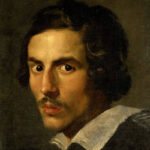


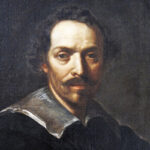
Giovanni Pisano (Father: Nicola Pisano, the famous sculptor; he was born into a family of highly skilled stone-carvers) Giovanni Pisano was a pioneering Italian sculptor, painter, and architect whose work marked a dramatic shift from the static, classical forms of the early Middle Ages toward the emotional intensity of the Gothic style. As the son and apprentice of the renowned sculptor Nicola Pisano, Giovanni was steeped in the traditions of stone carving from his youth, but he soon evolved beyond his father’s classical interests to develop a deeply expressive and narrative-driven aesthetic.
He is best known for his series of monumental pulpits, specifically those in the cathedrals of Pistoia and Pisa. Unlike earlier pulpit designs that relied on balanced, calm figures, Giovanni’s panels are characterized by deep undercutting, sharp shadows, and figures that appear to twist and move in intense, human agony or joy. He effectively used “dramatic tension”—elongated bodies, sharply rendered drapery, and expressive facial features—to bring biblical narratives to life. This emotional resonance was a direct bridge to the innovations later seen in the works of Giotto and the early masters of the Italian Renaissance.
Throughout his career, Giovanni moved frequently between the major city-states of Tuscany, serving as a chief architect and sculptor for the cathedrals of Siena, Pisa, and Pistoia. His ability to fuse the monumental scale of architecture with the delicate, narrative focus of sculpture made him the most influential sculptor of his generation in Italy.
Giovanni Pisano Legacy :
Giovanni Pisano died circa 1315, leaving behind a legacy as the primary force that introduced Northern Gothic sensitivity to Italian sculpture. His “dramatic naturalism” broke the rigid norms of 13th-century art, proving that stone could express the full spectrum of human psychological states. He is widely considered the true father of the Italian Proto-Renaissance in sculpture; his influence provided the foundation for the revolutionary approaches to human form and emotion later adopted by artists like Giotto and even the young Michelangelo, who studied the vitality of the Pisan school to inform his own early work.
Active in others filds :
Architecture (Cathedral design and supervision).