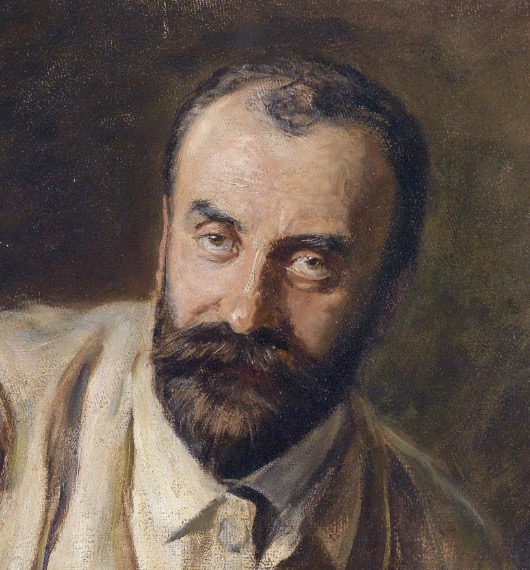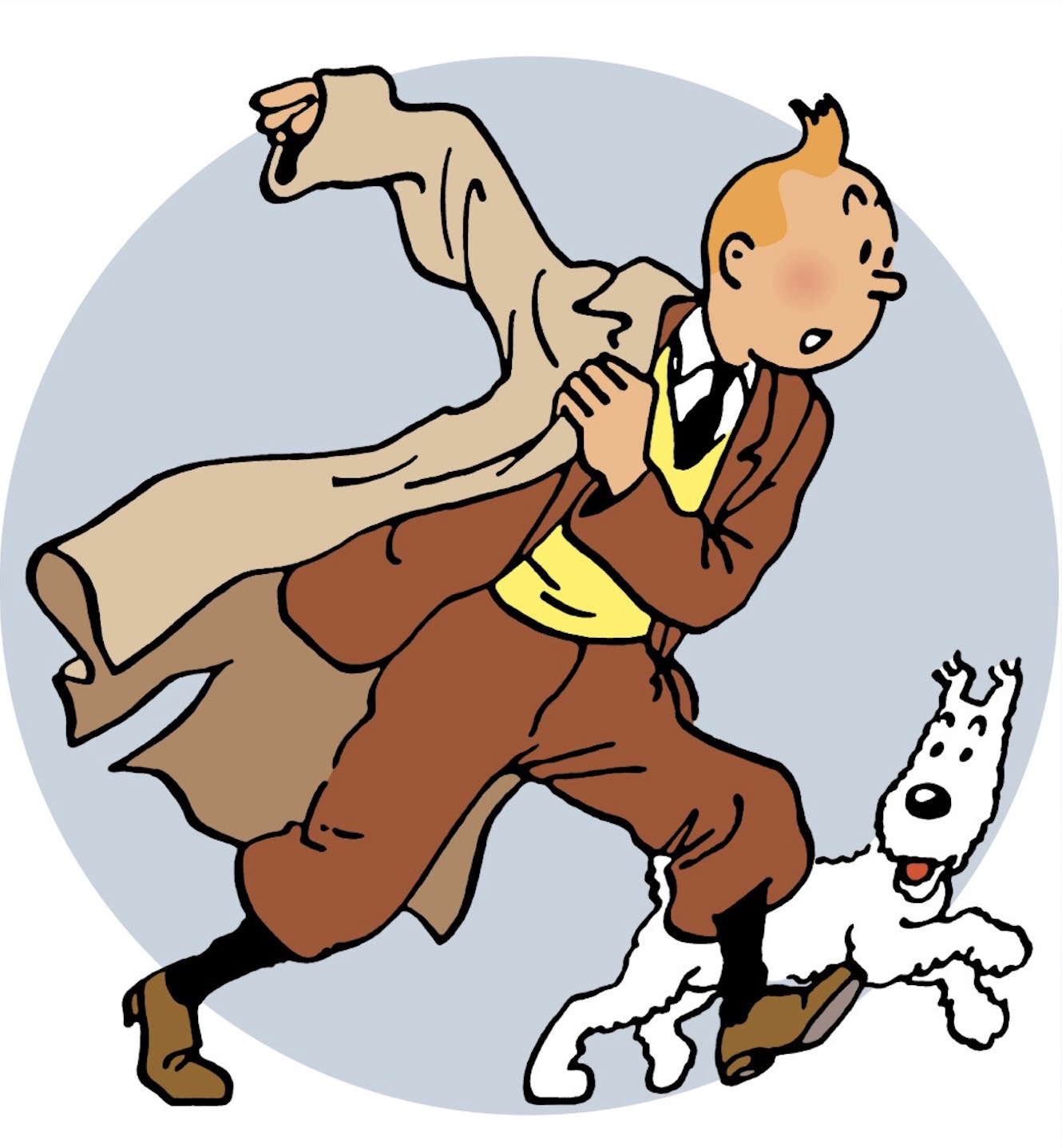


Georges Prosper Remi, universally known by his pen name Hergé (derived from the French pronunciation of his reversed initials, “R.G.”), was a Belgian cartoonist and the creator of The Adventures of Tintin, one of the most popular European comic series of the 20th century.
Born in a Brussels suburb, Hergé’s early artistic development was deeply influenced by his time in the Boy Scouts, where he created his first comic series, The Adventures of Totor, for Le Boy-Scout Belge in 1926. In 1929, while working for the conservative newspaper Le Vingtième Siècle, he launched Tintin in the Land of the Soviets. The character of Tintin, a young reporter, along with his fox terrier Snowy, became an instant success.
Hergé is best known for pioneering the Ligne Claire (Clear Line) style. This aesthetic is characterized by strong, continuous black outlines of uniform width, vivid flat colors, and a complete absence of hatching or shading. While his characters remained stylized and expressive, Hergé insisted on meticulous realism for his backgrounds, vehicles, and settings. This commitment to accuracy began in earnest with The Blue Lotus (1934), following his friendship with Chinese sculpture student Zhang Chongren, who encouraged him to research his subjects thoroughly.
During World War II, Hergé continued to publish Tintin strips in Le Soir, which led to accusations of collaboration after the war, though no formal charges were brought against him. In 1946, he founded Tintin magazine, and in 1950, he established Studios Hergé to manage the increasing workload of his globally expanding brand.
Over his career, Hergé completed 23 Tintin albums, which have been translated into over 100 languages and sold hundreds of millions of copies. He died in 1983, leaving the 24th adventure, Tintin and Alph-Art, unfinished. His work remains a cornerstone of the “ninth art” and continues to influence graphic designers and illustrators worldwide.
Active in others filds :
Graphic Design, Advertising, Typography, Commercial Illustration.
Notable Collaborations :
Hergé’s most significant artistic collaboration was with the Chinese artist and sculptor Zhang Chongren, whose close friendship directly inspired the narrative realism of The Blue Lotus and broke Western stereotypes of China. Within Studios Hergé, he collaborated with legendary Franco-Belgian comic creators including Edgar P. Jacobs (creator of Blake and Mortimer), Jacques Martin (creator of Alix), and Bob de Moor, all of whom heavily contributed to the intricate background work and structural coloring of the Tintin albums.
Georges Prosper Remi Legacy :
Hergé is widely revered as the founding father of European sequential art, elevating comics to what is now celebrated in the French-speaking world as the “Ninth Art.” His invention of the Ligne Claire style revolutionized graphic design and commercial illustration, directly influencing pop art and future generations of cartoonists globally, from Joost Swarte to Andy Warhol. The Musée Hergé in Louvain-la-Neuve stands as a architectural monument to his enduring graphic legacy, and Tintin remains an immutable cornerstone of global popular culture.
Selected Notable Works :
Tintin in the Land of the Soviets (1930), The Blue Lotus (1936), The Black Island (1938), The Crab with the Golden Claws (1941), The Secret of the Unicorn (1943), Prisoners of the Sun (1949), Destination Moon (1953), The Calculus Affair (1956), Tintin in Tibet (1960), The Castafiore Emerald (1963), Flight 714 to Sydney (1968), Tintin and Alph-Art (1986, posthumous)
Awards and Honors :
Adamson Award for Best International Comic Strip Cartoonist (Sweden, 1971), Yellow Kid “Una Vita per il Cartooning” Lifetime Achievement Award (Sanremo, 1972), Saint-Michel Grand Prize (Brussels, 1973), Light of Culture Award from the Kingdom of Belgium (1978), Posthumous induction into the Will Eisner Comic Book Hall of Fame (2003), Asteroid 1652 Hergé named in his honor.