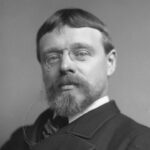

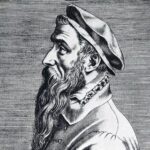
Jan van Eyck (Brother: Hubert van Eyck; Wife: Margareta van Eyck) was a titan of the Northern Renaissance and one of the most significant European painters of the 15th century. While he did not invent oil painting—a myth perpetuated by later Italian historians like Giorgio Vasari—he fundamentally revolutionized the medium. By painstakingly layering thin, translucent glazes of oil paint, van Eyck achieved an unprecedented level of luminous realism, vibrant color, and microscopic detail that forever changed the trajectory of Western art.
Very little is known about his early life, but by 1422, he was a master painter working in The Hague for John of Bavaria, ruler of Holland. Following John’s death in 1425, van Eyck was appointed as court painter (valet de chambre) to Philip the Good, Duke of Burgundy. Philip held van Eyck in incredibly high esteem, paying him a massive salary and entrusting him with secret diplomatic missions across Europe, including travels to the Iberian Peninsula to negotiate the Duke’s marriage to Isabella of Portugal.
Relocating to Bruges in 1432, van Eyck produced his most iconic masterpieces. That same year, he completed the monumental Ghent Altarpiece (started by his older brother Hubert), a towering achievement of complex theology and breathtaking naturalism. Soon after, he painted the Arnolfini Portrait (1434), a masterclass in complex perspective, hidden symbolism, and the rendering of light and texture. Unlike many of his contemporaries, van Eyck confidently signed and dated his works, often using his personal motto “ALS ICH KAN” (As I can). He remained in Bruges, operating a highly successful workshop until his death in 1441.
Active in others filds :
Diplomacy (Served as a trusted envoy and diplomat for Philip the Good), Manuscript Illumination (Widely believed to be the anonymous “Hand G” of the Turin-Milan Hours).
Notable Collaborations :
Hubert van Eyck (His older brother, with whom he famously co-created the Ghent Altarpiece); Philip the Good (His primary patron and the Duke of Burgundy, who utilized van Eyck’s artistic and diplomatic skills extensively).
Jan van Eyck Legacy :
Van Eyck’s legacy is the establishment of the Early Netherlandish painting tradition. His mastery of the oil medium set a technical standard that deeply influenced both Northern European and Italian Renaissance painters. His ability to render the physical world with obsessive, glowing precision—from the texture of fur and velvet to the reflection of a room in a curved mirror—remains a benchmark for optical realism in art history.
Selected Notable Works :
Ghent Altarpiece (1432), Portrait of a Man (Self Portrait?) (1433), The Arnolfini Portrait (1434), The Annunciation (c. 1434–1436), Madonna of Chancellor Rolin (1435), Madonna of Canon van der Paele (1436), Lucca Madonna (1437), Dresden Triptych (1437), Saint Barbara (1437), Portrait of Margaret van Eyck (1439)
Awards and Honors :
Appointed Court Painter (Valet de chambre) to Duke Philip the Good (1425), Granted a lifelong royal pension and salary unmatched by his peers, Exempted from the strict regulations of the Bruges painters’ guild due to his elite royal status.
Exhibitions & Art Venues :
Saint Bavo’s Cathedral (Ghent), The National Gallery (London), Musée du Louvre (Paris), Groeningemuseum (Bruges), Kunsthistorisches Museum (Vienna), Royal Museum of Fine Arts (Antwerp), Gemäldegalerie (Berlin), The Frick Collection (New York), Metropolitan Museum of Art (New York), National Gallery of Art (Washington D.C.)