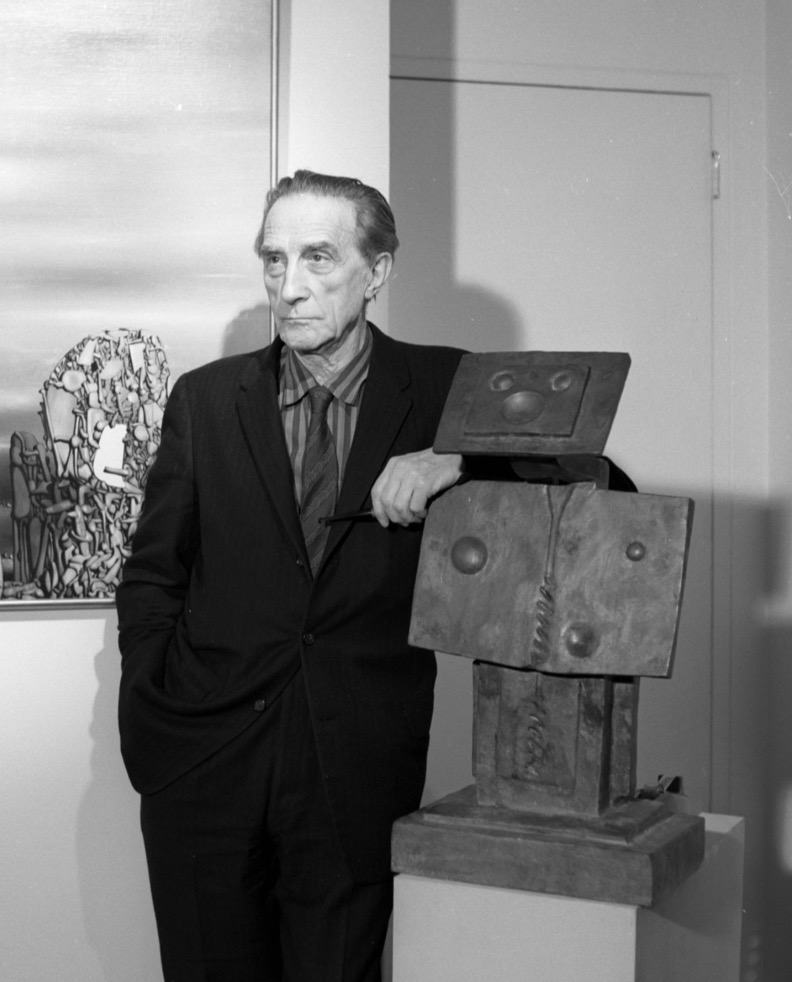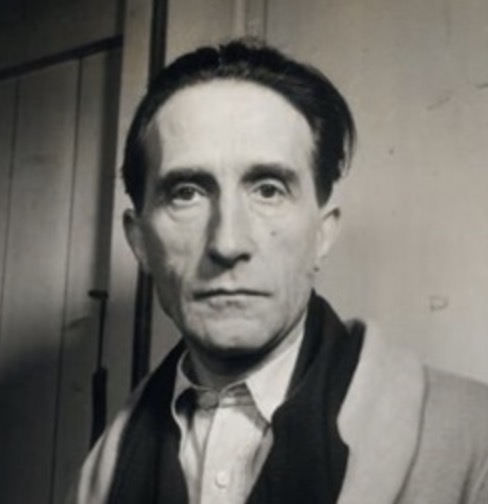
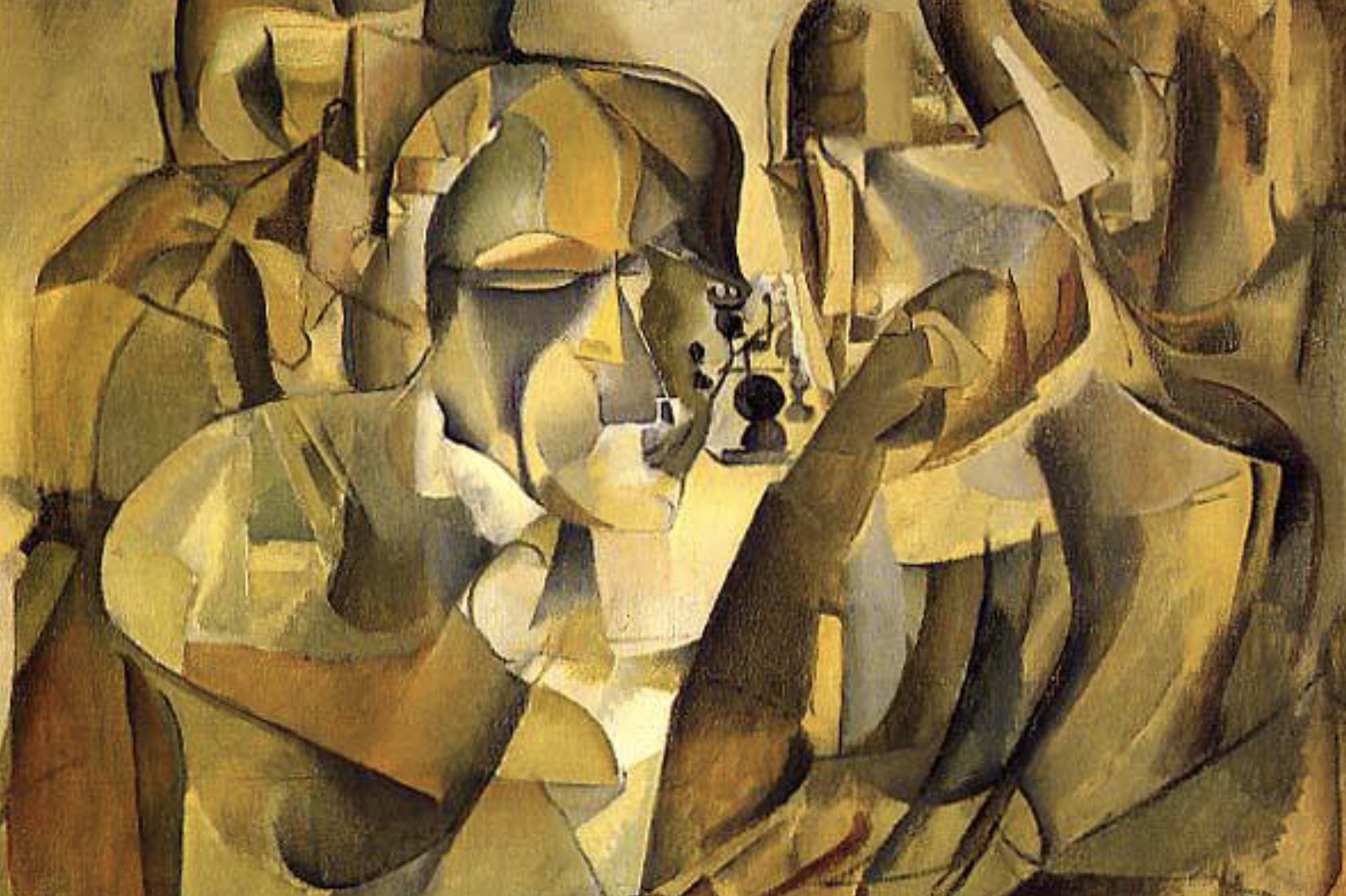


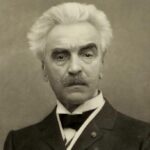

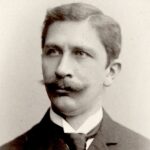
Henri-Robert-Marcel Duchamp Was widely regarded as one of the most influential artists of the 20th century, fundamentally altering the definition of art through his invention of the “readymade” and his philosophical challenge to traditional aesthetics. Born into a cultured family of artists in northern France, Duchamp initially experimented with Post-Impressionism, Fauvism, and Cubism. His early masterpiece, Nude Descending a Staircase, No. 2 (1912), caused a massive scandal at the 1913 Armory Show in New York, effectively introducing European avant-garde art to the American public and establishing his international notoriety.
Disillusioned by traditional painting and the carnage of World War I, Duchamp largely abandoned canvas work to explore conceptual ideas. In 1913, he introduced the concept of the readymade—ordinary, mass-produced manufactured objects designated as art simply by the artist’s choice. His most notorious piece, Fountain (1917), a standard porcelain urinal signed with the pseudonym “R. Mutt,” sent shockwaves through the art establishment and laid the theoretical groundwork for conceptual art, pop art, and minimalism.
Operating between Paris and New York, Duchamp spent nearly a decade secretly working on his monumental masterpiece, The Bride Stripped Bare by Her Bachelors, Even (The Large Glass) (1915–1923), before declaring it “definitively unfinished.” Beyond his physical artworks, Duchamp spent his later decades as an avid chess master, author, and mastermind behind several groundbreaking international Surrealist exhibitions. He quietly spent his final years in New York and France, leaving behind a legacy that redefined art not as a matter of visual craftsmanship, but of intellectual choice.
Active in others filds :
Chess (Professional chess player representing France in international Olympiads), Film Direction (Experimental kinetic cinema), Curatorial Design (Pioneering immersive exhibition design for Surrealist shows).
Notable Collaborations :
Duchamp collaborated extensively with the avant-garde elite of his era, most notably working with artist Man Ray to co-found the New York Dada movement and co-establishing the Society of Independent Artists. He collaborated closely with surrealist patron Peggy Guggenheim, avant-garde composer John Cage, and artist Francis Picabia on various publications, kinetic projects, and exhibition installations.
Marcel Duchamp Legacy :
Duchamp’s legacy is defined by his paradigm shift from retinal art (art meant solely to please the eye) to conceptual art (art meant to engage the mind). By proving that an idea and the artist’s selection carry more weight than physical craftsmanship, he dismantled traditional hierarchies and opened the floodgates for contemporary practices. As conceptual artist Joseph Kosuth famously noted, “All art after Duchamp is ready-made in nature.” His influence remains absolute across every modern medium, from performance art to installation and digital media.
Selected Notable Works :
Sad Young Man in a Train (1911), Nude Descending a Staircase, No. 2 (1912), *Wheel * (1913), Bottle Rack (1914), Fountain (1917), L.H.O.O.Q. (1919), The Bride Stripped Bare by Her Bachelors, Even (The Large Glass) (1915–1923), Étant donnés (1946–1966)
Awards and Honors :
(Duchamp largely shunned official state honors during his lifetime, choosing an independent anti-establishment ethos.) Key Recognitions: Honorary Member of the American Academy of Arts and Letters, extensive retrospectives at the Pasadena Art Museum, Tate Gallery, and the Museum of Modern Art (MoMA), posthumous installations at the Philadelphia Museum of Art.
Exhibitions & Art Venues :
Philadelphia Museum of Art, Museum of Modern Art (New York), Tate Modern (London), Centre Pompidou (Paris), The Art Institute of Chicago, Venice Biennale, Solomon R. Guggenheim Museum (New York), Armory Show (New York), Galerie Schwarz (Milan), Moderna Museet (Stockholm)