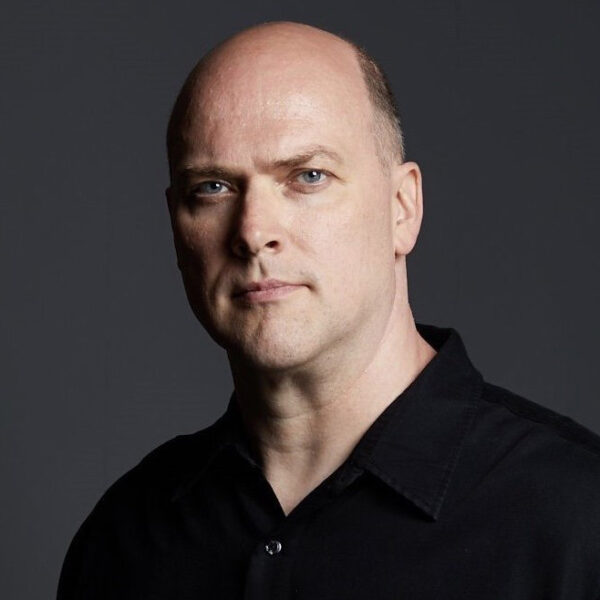

Michelangelo di Lodovico Buonarroti Simoni (Father: Lodovico di Leonardo Buonarroti Simoni, a government official; Mother: Francesca di Neri del Miniato di Siena; He never married and had no children, leaving his legacy to his nephew, Leonardo) Michelangelo Buonarroti (1475–1564) was a towering titan of the High Renaissance, universally acknowledged during his lifetime as Il Divino (“The Divine”). A master sculptor, painter, architect, and poet, his unparalleled ability to infuse cold stone and flat plaster with breathtaking psychological tension, anatomical precision, and spiritual grandeur fundamentally reshaped the trajectory of Western art.
Born in the small Tuscan village of Caprese, Michelangelo was raised in Florence. Despite his father’s initial disapproval of an artistic career, he was apprenticed at age thirteen to the prominent painter Domenico Ghirlandaio. His extraordinary talent caught the attention of Lorenzo de’ Medici (“the Magnificent”), the ruler of Florence, who invited the young artist to live in the Medici palace. There, Michelangelo studied classical sculpture and absorbed the humanist philosophies that would underpin his life’s work.
Michelangelo considered himself first and foremost a sculptor, famously believing that his role was simply to chip away the marble to liberate the living figure trapped within. In his early twenties, he traveled to Rome and carved the Pietà (1498–1499) for St. Peter’s Basilica, a heartbreakingly beautiful depiction of the Virgin Mary cradling the dead body of Christ, executed with a polish and tenderness he would never repeat. Returning to Florence, he completed the monumental David (1501–1504). Carved from a single, flawed block of Carrara marble discarded by other artists, this 17-foot masterpiece discarded the traditional depiction of a triumphant boy and instead captured a muscular, fiercely focused warrior moments before battling Goliath.

In 1508, Pope Julius II summoned Michelangelo back to Rome for a project the artist fiercely resisted: painting the ceiling of the Sistine Chapel. Over four agonizing years, working primarily on his back atop high scaffolding, he produced a sprawling, complex decorative scheme centered on Genesis. Masterpieces within the fresco, such as The Creation of Adam, redefined the depiction of the human body, utilizing muscular, twisting poses that anticipated the emotional exaggeration of the Mannerist movement. Decades later, he returned to the chapel to paint the ominous, apocalyptic The Last Judgment (1536–1541) on the altar wall.
In his final decades, Michelangelo shifted his intense focus toward architecture and poetry. He was appointed chief architect of St. Peter’s Basilica in 1547. He refused a salary for the holy task, designing the majestic, soaring dome that dominates the Roman skyline to this day. A deeply spiritual, melancholic, and often combative man, he worked up until a few days before his death at age 88, leaving behind a body of work that pushed the boundaries of human creative capability.
Active in others filds : Architecture (St. Peter’s Dome, Laurentian Library), Poetry (Author of over 300 sonnets and madrigals), Military Engineering (Designing fortifications for the defense of Florence).
Michelangelo Buonarroti Legacy :
Michelangelo was the first Western artist to have his biography published while he was still alive (written by Giorgio Vasari and Ascanio Condivi), cementing his status as the archetypal “tortured genius.” His revolutionary focus on anatomical exaggeration, expressive distortion, and dynamic tension fractured the rigid harmonies of the High Renaissance, directly birthing the Mannerist movement. For centuries, his works served as the ultimate benchmark for anatomical drawing and heroic sculpture, profoundly shaping everyone from Auguste Rodin to modern comic pioneers like Burne Hogarth, who looked to Michelangelo’s hyper-articulated musculature to define dynamic figure drawing.
Selected Notable Works :
Pietà (1499), David (1504), Doni Tondo (1507), Sistine Chapel Ceiling (1512), Moses (1515), Dying Slave (1516), Laurentian Library (1524), The Last Judgment (1541), Brutus (1542), Conversion of Saul (1545), Pietà Rondanini (1564), St. Peter’s Basilica Dome (1564)
Honors :
Appointed Chief Architect of St. Peter’s Basilica, granted honorary citizenship of Rome, widely recognized as Il Divino (The Divine) by his contemporaries, received life-long patronage from the Papal States and the Medici family, his biography was the subject of the first true art-historical publication by Vasari.