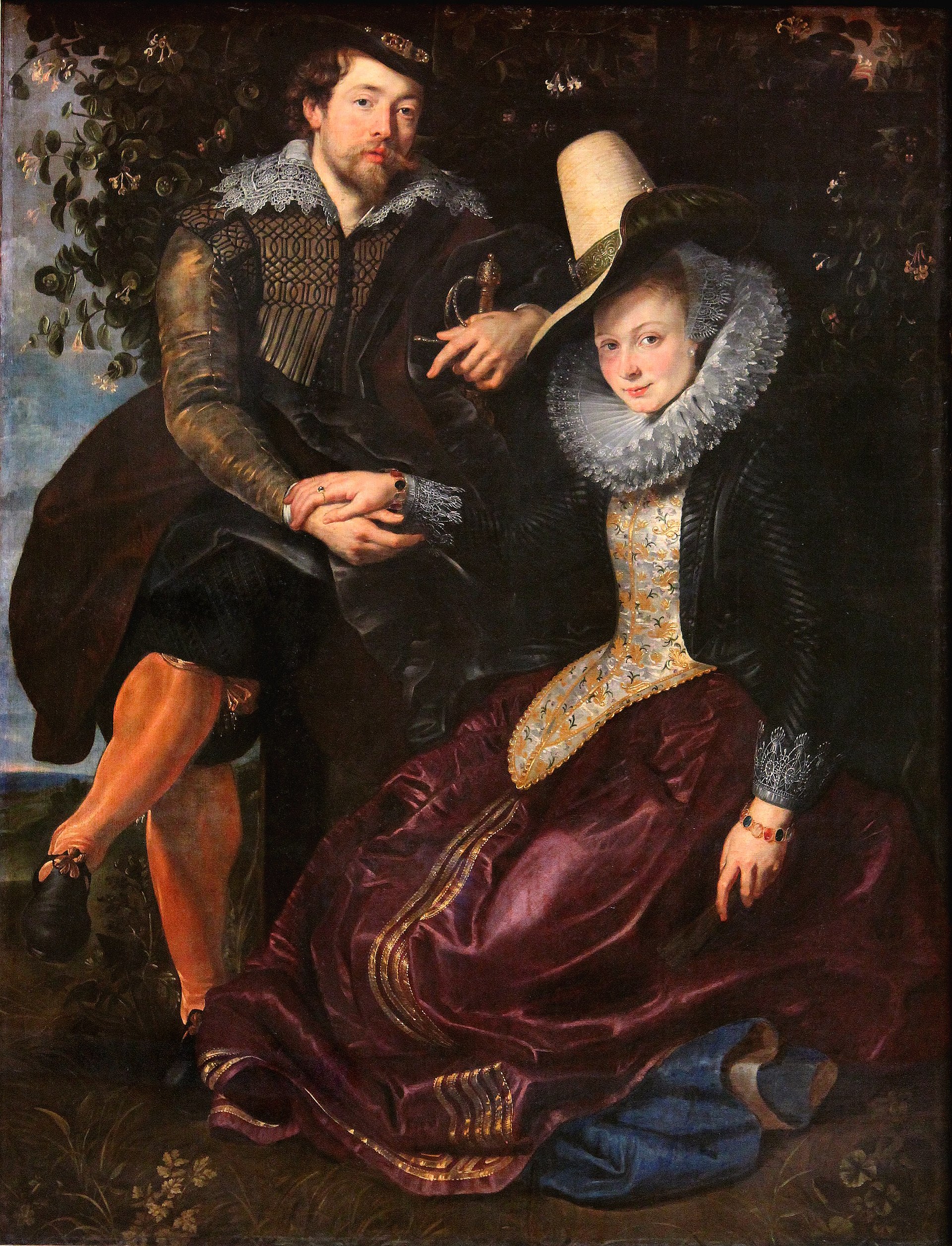
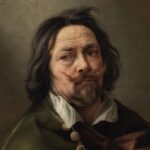
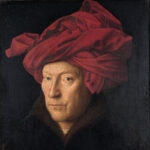
Pieter Paul Rubens (Father: Jan Rubens, a lawyer; Mother: Maria Pypelinckx; Spouses: Isabella Brant [died 1626], Hélène Fourment; He had eight children across both marriages) was the definitive virtuoso of the Flemish Baroque style and one of the most prolific, versatile, and influential painters in Western art history. Renowned for his stupendous, large-scale compositions, he epitomized the dramatic energy, sensual richness, and intellectual depth of Counter-Reformation art.
Born in Germany where his family had fled to escape religious persecution in Antwerp, Rubens returned to Flanders as a child following his father’s death. He received a rigorous classical education and completed his artistic apprenticeship under local masters like Otto van Veen. In 1600, he traveled to Italy, spending eight formative years absorbing the grand compositions of Michelangelo and Titian, while simultaneously being captivated by the dramatic, high-contrast lighting (chiaroscuro) of Caravaggio.

Upon returning to Antwerp in 1609, Rubens was appointed court painter to the Spanish governors of the Netherlands. He established a massive, highly organized studio workshop that became an industrial powerhouse of fine art. Rubens would sketch the initial composition (modello) and apply the final, masterful brushstrokes, while an elite team of specialized assistants—including a young Anthony van Dyck—executed the intermediate stages. This setup allowed him to fulfill a dizzying volume of international commissions for European royalty and the Catholic Church.

Rubens’ artwork is celebrated for its sweeping, dynamic movement, theatrical use of light, and highly expressive color palettes. He was equally masterly in rendering grand religious epics, such as The Elevation of the Cross (1610), and complex mythological allegories. He became particularly famous for his depiction of full-figured, voluptuous female nudes, rendered with a luminous, fleshy realism that gave rise to the art historical term “Rubenesque.” His grandest career achievement was the Marie de’ Medici Cycle (1622–1625), a monumental series of 24 paintings celebrating the life of the Queen Mother of France, seamlessly blending real historical events with Roman mythology.
Beyond his staggering artistic output, Rubens was a highly educated polymath who spoke five languages. He possessed a rare political tact that allowed him to operate as a high-level diplomat, traveling between the warring courts of Spain and England to negotiate peace treaties. He was knighted by both King Philip IV of Spain and King Charles I of England for his diplomatic services. He spent his final years in a grand estate outside Antwerp, painting serene landscapes until his death from gout-related heart complications in 1640.
Active in others filds :
International Diplomacy (Royal Envoy), Architecture & Design (Designed his own Italianate palatial home, the Rubenshuis), Art Collecting, Antiquarian Scholar.
Peter Paul Rubens Legacy :
Revered as the “prince of painters,” Rubens synthesized the grandeur of the Italian Renaissance with Flemish realism. His workshop structure revolutionized how large-scale paintings were produced, directly influencing future generations of artists. His mastery of color and energetic compositions cemented him as the definitive engine of the Baroque movement.
Selected Notable Works :
Equestrian Portrait of the Duke of Lerma (1603) , Samson and Delilah (1609–1610) , The Elevation of the Cross (1610–1611) , The Descent from the Cross (1612–1614) , Prometheus Bound (1611–1612) , Marie de’ Medici Cycle (1622–1625) , The Fall of Phaeton (c. 1604/1605) , Portrait of Helena Fourment (c. 1630) , Venus and Adonis (c. 1635) , The Garden of Eden with the Fall of Man (c. 1615)
Awards and Honors :
Knighted by King Charles I of England (1630) , Knighted by King Philip IV of Spain (1631) , Appointed Court Painter to Archduke Albert and Infanta Isabella of the Spanish Netherlands (1609) , Master of the Guild of St. Luke (1598)
Exhibitions & Art Venues :
The Rubens House (Antwerp) , The Louvre (Paris) , State Hermitage Museum (St. Petersburg) , Prado Museum (Madrid) , National Gallery (London) , Alte Pinakothek (Munich) , Metropolitan Museum of Art (New York) , Kunsthistorisches Museum (Vienna) , Mauritshuis (The Hague) , Royal Museum of Fine Arts (Antwerp)