


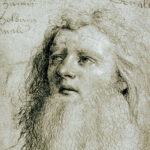


Stefan Lochner (Also known as Meister Stefan; little is known of his family, though it is believed he was of Swabian origin) was the most celebrated German painter of the mid-15th century and the undisputed master of the Cologne School of painting. While the details of his early life remain obscure, he arrived in Cologne around 1440 and quickly established himself as the city’s leading artist. His style represents the pinnacle of the “Soft Style” (Weicher Stil) of the International Gothic period, characterized by graceful, elongated figures, delicate facial features, and a lyrical, almost poetic approach to religious subjects.
Lochner’s work is marked by a sophisticated blend of German piety and Flemish influence. He was one of the first German painters to incorporate the detailed realism and spatial depth pioneered by Early Netherlandish masters like Jan van Eyck, while maintaining a distinctly German sense of decorative charm and gentle emotional warmth.
His magnum opus is the massive Dombild Altarpiece (Adoration of the Magi), commissioned for the Cologne Cathedral around 1442. This triptych is widely regarded as one of the most important works of German art from the 15th century. It features stunning, vibrant colors, elaborate costumes, and a luminous, heavenly gold background that exemplifies the opulent aesthetic of the period. Lochner’s ability to render textures—from the shimmer of gold brocade to the softness of velvet—made him a favorite among the wealthy merchant class and the clergy alike. He was a prominent citizen in Cologne, serving on the city council, before his career and life were tragically cut short by the plague in 1451.
Stefan Lochner Legacy :
Lochner died during the plague outbreak of 1451, leaving behind a legacy as the definitive master of the Cologne School. His influence was immense throughout the German-speaking territories, setting a standard for religious iconography that persisted for decades. He is credited with successfully importing the artistic innovations of the Low Countries into Germany, effectively acting as a bridge between the late medieval traditions and the full flourishing of the Northern Renaissance. His works, particularly the Dombild, remain central to the cultural heritage of Cologne, standing as a testament to an era where decorative elegance and spiritual depth were seamlessly intertwined.



