Cgitems Logo
Entering
Art Movements
Loading Encyclopedia...
Connecting to Cgitems Server...
Thanks for your patience
Art Movements - CGItems
☆
  • UK - English UK - English
  • France - Français France - Français
  • Germany - Deutsch Germany - Deutsch
  • Netherlands - Nederlands Netherlands - Nederlands
  • Norway - Norsk Norway - Norsk
  • Denmark - Dansk Denmark - Dansk
  • Finland - Suomi Finland - Suomi
  • Vietnam - Tiếng Việt Vietnam - Tiếng Việt
  • Italy - Italiano Italy - Italiano
  • Sweden - Svenska Sweden - Svenska
  • Brazil - Português Brazil - Português
  • Greece - Ελληνικά Greece - Ελληνικά
  • Thailand - ไทย Thailand - ไทย
  • Iran - فارسی Iran - فارسی
  • Arab - العربية Arab - العربية
  • Spain - Español Spain - Español
  • China - 中文 China - 中文
  • Turkey - Türkçe Turkey - Türkçe
  • Russia - Русский Russia - Русский
  • South Korea - 한국어 South Korea - 한국어
  • Japan - 日本語 Japan - 日本語
  • India - हिन्दी India - हिन्दी

Visual Art Encyclopedia & Galleria

SUB CATEGORIES
×

Fashion Design

Available Art Style , Movement & Technique

The Art Movements section here is a comprehensive encyclopedia uniting movements, styles, execution techniques, related artists, artworks, and deep historical context into a single dynamic platform bridging classical art and modern digital creation. Every movement and style features a dedicated, comprehensive page, such as Impressionism, designed for thorough study and exploration.

Art Movements 1

Select Art Styles & Movements

Fantasy art

Fantasy Art is a broad, highly influential visual genre characterized by the depiction of mythic, supernatural, magical, or speculative themes that exist outside the boundaries of our consensus reality. It is an art form rooted in world-building, where the impossible is rendered with enough structural and material logic to suspend the viewer’s disbelief. Unlike abstract art, Fantasy Art typically relies on Representational Realism or Academic Realism to ground its impossible subjects—such as mythical creatures, ancient sorcery, invented landscapes, and legendary heroes—in a tangible, believable environment.

For researchers, historians, and digital artists, Fantasy Art is understood through several distinct sub-movements and technical evolutions:

  • The Mythological & Romantic Roots: Early foundations heavily borrowed from the Pre-Raphaelites and Symbolists, focusing on folklore, Arthurian legends, and classical mythology with a soft, idealized, and romanticized lens.

  • The Pulp & Sword-and-Sorcery Era (Mid-20th Century): Dominated by paperback book covers and magazines. This phase introduced hyper-muscular anatomy, dynamic kinetic energy, and raw, visceral action compositions.

  • Contemporary High Fantasy & Imaginative Realism: The modern phase blends classical oil painting techniques with advanced digital tools, emphasizing complex ecosystem designs, cultural anthropology for fictional races, and highly sophisticated atmospheric lighting.

Architectural

Architectural movements represent the evolution of human civilization through the lens of Form, Function, and Material. Unlike isolated art movements, architecture is bound by the laws of physics and the socio-economic needs of the time. A “Movement” in architecture is defined by a shared vocabulary of structural elements (how it stands up) and aesthetic ornamentation (how it looks).

For the Cgitems database, architectural movements are analyzed through three primary lenses:

  • Structural Innovation: The transition from Post-and-Lintel (Ancient) to Arches/Vaults (Medieval) to Steel Frames (Modern) and finally to Computational/Parametric design.

  • Spatial Philosophy: How a building treats the person inside—from the intimidating “divine scale” of the Gothic era to the “human-centric” ergonomics of Modernism.

  • The Facade & Envelope: The “skin” of the building, which reflects the artistic trends of the era, such as the intricate carvings of the Baroque or the “Glass Curtain Walls” of the International Style.

Conceptual Art

Conceptual Art (or Conceptualism) is a movement that prizes the idea or concept behind the work over the finished physical object or the technical skill required to make it. In this style, the “art” is the mental process and the proposition rather than the painting, sculpture, or installation itself. It was a radical shift that essentially argued that if an artist “thinks” of a work, it exists, whether or not it is physically executed.

For researchers and students, it is characterized by its “dematerialization” of the art object. It often utilizes everyday materials, text, photography, and performance to document an idea. The aesthetic is frequently “anti-visual” or clinical, mimicking the appearance of information, data, or instructional manuals to distance the work from traditional notions of beauty or craftsmanship.

Bauhaus

The Bauhaus (literally “Construction House”) was the most influential modernist art school of the 20th century. Founded by Walter Gropius in Weimar, Germany, it aimed to bridge the gap between fine art and functional design. It wasn’t just a style; it was a radical pedagogical shift that sought to unify architecture, sculpture, and painting into a single creative expression suitable for the industrial age.

The Bauhaus curriculum was famous for its “Preliminary Course” (Vorkurs), which forced students to forget traditional art history and focus on the fundamental properties of materials, color theory, and geometry. The school evolved through three main phases:

  • Weimar Phase (1919–1924): More expressionist and craft-oriented.

  • Dessau Phase (1925–1932): The peak of the “Bauhaus Style,” focusing on industrial mass production and the iconic glass-and-concrete architecture.

  • Walter Gropius

    Berlin Phase (1932–1933): A brief period before the school was closed under political pressure from the Nazi regime.

Classicism

Classicism refers to the high regard for classical antiquity—specifically the art, architecture, and literature of Ancient Greece and Rome. It is the aesthetic of order, balance, and ideal proportion. While it originated in antiquity, “Classicism” as an art movement often refers to the periodic revivals (such as the Renaissance and Neoclassicism) that sought to recapture these ancient standards.

In the visual arts, Classicism prioritizes the “Ideal.” Rather than depicting life with all its flaws, Classicist artists sought to represent the perfect version of nature. This involves a focus on anatomical perfection, clear linear perspective, and a sense of “noble simplicity and quiet grandeur.” Every element in a Classicist work is intentionally placed to create a harmonious whole, avoiding the chaotic emotion seen in later movements like Romanticism.

Chiaroscuro Noir

Chiaroscuro Noir is a hybrid aesthetic synthesis born from the intersection of classical high-contrast lighting (chiaroscuro) and modern psychological cynicism (film noir / pulp narrative). It relies on the deliberate weaponization of shadow and light to communicate moral ambiguity, psychological tension, and spatial claustrophobia.

  • Comic (Graphic Noir): Heavily prioritized in this entry, Chiaroscuro Noir in comics is defined by heavy spot blacks, ink bleeding, minimal mid-tones, and negative space manipulation. The page layout often mimics cinematic framing, using gutters as shadows to hide or reveal character motivations.

  • Photography: Employs hard-edged lighting instruments (Kicker, Fresnel, and snoots) without softboxes, producing stark graphic silhouettes, silhouette profiles, and dramatic facial modeling (e.g., Rembrandt patches of light).

  • Cinematic: Characterized by low-key lighting setups, deep focus, smoke/fog atmosphere to catch light shafts, and canted angles (Dutch angles) that disorient the viewer, reflecting the corruption or instability of the narrative space.

  • Painting: Rooted in the tenebrism of Caravaggio and Rembrandt, utilizing an inky, pitch-black ground from which forms violently emerge through a single, harsh light source.

  • Graphic: Emphasizes minimalist vector or ink-brush reduction, where intricate details are sacrificed for high-contrast graphic impact, iconic silhouettes, and stark dualities of black and white.

Early Renaissance

The Early Renaissance (Quattrocento) marks the transition from the symbolic, flat world of the Middle Ages to a revolutionary era of Humanism and Scientific Realism. This period was defined by the rediscovery of Classical antiquity and a desire to represent the physical world as it actually appeared to the human eye.

The most significant breakthrough of this era was the development of Linear Perspective, a mathematical system used to create the illusion of depth on a flat surface. Artists began to study human anatomy through dissection and observation, leading to figures that possessed “gravitas”—a sense of weight, volume, and three-dimensional presence. Unlike the later High Renaissance (which sought idealized perfection), Early Renaissance art often retains a crisp, clear, and almost analytical focus on detail and mathematical harmony.

Mannerism

Mannerism (derived from the Italian maniera, meaning “style” or “stylishness”) emerged as a sophisticated, rebellious reaction against the harmonious proportions, symmetry, and ideal beauty of the High Renaissance (epitomized by Leonardo da Vinci, Raphael, and early Michelangelo). Where Renaissance masters sought to mimic nature with realistic perspective and anatomical perfection, Mannerists consciously favored artifice over nature, prioritizing virtuosic technique, intellectual tension, and stylized elegance.

Key stylistic markers for researchers and scholars include:

  • Anatomical Elongation: Human limbs, necks, and torsos are stretched beyond natural anatomical limits to heighten elegance, drama, or emotional tension.

  • The Figura Serpentinata: Figures are contorted into dynamic, corkscrew-like twists, encouraging viewers to look at the artwork from multiple angles rather than a single focal point.

  • Spatial Ambiguity & Compression: Compositions intentionally reject flat-ground vanishing points. Backgrounds feel crowded, shallow, or visually confusing, creating an atmosphere of instability and claustrophobia.

  • Artificial Color Palettes: Ditching atmospheric realism, Mannerists utilized acidic, jarring color schemes (electric pinks, sulfur yellows, pale blues) applied with stark tonal contrasts.

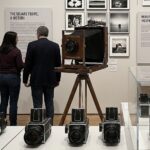
Photography

Photography, derived from the Greek words phos (“light”) and graphe (“drawing”), is the art and science of creating durable images by recording light. Unlike traditional plastic arts, photography began as a purely chemical and mechanical process. It has evolved through three major technological revolutions:

  • The Chemical Era (1839–1970s): Based on light-sensitive silver halides on metal, glass, or film.

  • The Analog/Film Era (1900s–Present): The democratization of the medium via roll film, leading to photojournalism and “The Decisive Moment.”

  • The Digital Revolution (1990s–Present): The transition to electronic sensors (CCD/CMOS) and algorithmic processing.

For researchers, photography is unique because it serves a dual purpose: it is a mechanical record of reality (evidence) and an expressive art form (interpretation). The style is defined by the photographer’s control over the “Exposure Triangle”: Aperture (depth of field), Shutter Speed (motion), and ISO (sensitivity/grain).

Victorian

The Victorian era (spanning Queen Victoria’s reign from 1837 to 1901) represents a transformative period in visual history, marked by rapid industrialization, imperial expansion, technological leaps, and intense social stratification. Visually, “Victorian Style” is not a single aesthetic, but an umbrella movement characterized by eclecticism, ornate historical revivals, high ornamental density, and narrative moralism.

Across various visual disciplines, the style manifests through distinct sub-movements and mediums:

  • Painting & Illustration: Ranging from narrative genre scenes of high society and moral dilemmas to the luminous, medievalist rebellion of the Pre-Raphaelite Brotherhood (PRB) and the mood-focused Aesthetic Movement.

  • Architecture: Characterized by dramatic historicism—predominantly Gothic Revival, Queen Anne Style, and Italianate, alongside structural iron-and-glass engineering (such as Joseph Paxton’s Crystal Palace).

  • Interior Design: Heavily layered and ornamental, featuring dark wood paneling, flock wallpaper (pioneered by William Morris), tufted velvet upholstery, brass, stained glass, and clashing floral patterns.

  • Fashion: Highly structured silhouettes reflecting social status; defined by tight corsetry, massive crinolines (later evolving into bustles), rich silks, lace collars, mourning wear, and early synthetic aniline dyes (mauveine).

  • Photography: The birthplace of early commercial and fine-art photography, evolving from daguerreotypes and salted paper prints to wet-plate collodion portraits, combination printing, and early photojournalism.

Expressionism

Expressionism is a modernist movement that originated in Northern Europe at the beginning of the 20th century. Its core principle is the prioritization of emotional experience over physical reality. Unlike Impressionism, which sought to capture the visual “impression” of light, Expressionism seeks to depict the “expression” of the artist’s inner world—often involving intense feelings of anxiety, fear, passion, or spiritual awakening.

For students and art centers, the style is defined by a radical distortion of form and the use of violent, non-naturalistic colors. It is not meant to be “beautiful” in the traditional sense; rather, it aims to be “honest” and “visceral.” The movement is typically divided into two influential German groups:

  • Die Brücke (The Bridge): Known for crude, jagged lines and a primitive, raw aesthetic.

  • Der Blaue Reiter (The Blue Rider): More abstract and focused on the spiritual and symbolic power of color.

Modern Architecture

Modern Architecture (or Modernism) is a revolutionary movement that rejected historical ornament and traditional “styles” in favor of functionalism and structural honesty. It emerged from the idea that the form of a building should be determined solely by its function and its materials. This marked a total departure from the stone-masonry traditions of the past, embracing the industrial potential of the 20th century.

Key technical pillars include the use of steel frames, reinforced concrete, and large expanses of glass. The movement popularized the “open floor plan” by shifting the load-bearing weight from thick walls to internal columns (the Dom-Ino House concept). For students and researchers, Modernism is often divided into sub-movements like the International Style, Bauhaus, and Brutalism, all unified by the mantra: “Form follows function.

Pop art

Pop Art was a revolutionary movement that blurred the line between “high art” and “low culture.” It emerged as a challenge to the elitism of Abstract Expressionism, choosing instead to find beauty and meaning in the mundane, the commercial, and the mass-produced.

For researchers and students, Pop Art is defined by its use of appropriation—taking existing imagery from advertisements, comic books, and celebrity culture and placing them in an art gallery context. This was often achieved through mechanical reproduction techniques rather than traditional hand-painting. While it looks “fun” and vibrant, it often carries a satirical or ironic subtext regarding consumerism, fame, and the “American Dream.”

Art Nouveau

Art Nouveau (“New Art”) was an intentional, avant-garde movement that aimed to dissolve the traditional hierarchy between the “fine arts” (like painting and sculpture) and the “decorative arts” (like furniture, jewelry, and graphic design). It emerged as a deliberate rebellion against the historicism and dry academic revivalism of the 19th century, as well as a creative answer to the industrial mass-production of the era.

The hallmark of Art Nouveau is its absolute synthesis of form and function based on nature. Rather than just drawing a plant on a flat surface, artists transformed the structural elements themselves into living organisms. Iron beams bent into undulating vines, staircases twisted like roots, and stone facades flowed like moving water.

For students and researchers, the style is globally recognized under various regional names that highlight its local evolutionary paths:

  • Jugendstil (Germany/Scandinavia): Often more graphic, balancing organic fluidity with geometric undercurrents.

  • Stile Liberty (Italy): Heavily focused on ornamental textiles, ceramics, and architectural ironwork.

  • Modernisme (Catalonia/Spain): A highly plastic, sculptural, and structural manifestation championed by Antoni Gaudí.

  • The Four Seasons decorative panels by artist Alphonse Mucha, showcasing women in a distinctly Art Nouveau style.

    The Glasgow Style (Scotland): A distinct, more minimalist variant that paired long, straight vertical lines with stylized organic accents.

Hybrid

Hybrid Art is a contemporary artistic paradigm defined by the deliberate convergence, blurring, and recursive looping of disparate media, techniques, and disciplines. It moves beyond the limitations of traditional, medium-specific practice, operating instead as a transdisciplinary system architecture: a methodology in which manual craftsmanship, digital execution, and generative AI processes are synthesized into a single, unified visual identity.

Unlike multimedia, which places different art forms side-by-side, Hybrid Art dissolves the boundary between them entirely. No individual medium operates in a silo; each becomes a stage within one continuous, iterative workflow.

Core Principles
  • Process-Oriented Methodology: Hybrid practice is defined less by a fixed medium than by the management of an integrated system of tools. The workflow itself, how the piece moves between hand, machine, and model, is as critical to the work as its final aesthetic output.
  • Synergetic Creation: The essence of Hybrid Art lies in producing qualities that exceed the sum of its parts. By integrating contrasting elements, human-driven design and AI-driven refinement, structural rigidity and generative fluidity, it achieves a complexity unattainable through any single tool in isolation.
  • Human–Machine Dialectic: At the center of contemporary Hybrid practice is the interplay between human intentionality (conceptual depth, compositional judgment, emotional and architectural intent) and machine agency (scale, computational complexity, and unpredictable generative potential). The artist remains the creative director; the machine is the highly efficient collaborator.
The Three Technical Domains

A Hybrid workflow typically moves across three interlocking domains, each contributing something the others cannot:

  1. The Physical Ground (Analog): Hand-drawn graphite sketches, raw textures, impasto oil layers, or physical artifacts carrying human-scale imperfection and resistance. This is the domain of the artist’s hand.
  2. The Virtual Framework (Digital 2D/3D): CGI assets, procedural meshes, and digital painting layers used to construct spatial depth, clean geometry, camera perspective, and lighting maps. In advanced pipelines, artists build basic geometry and lighting in software such as Blender, Maya, or 3ds Max to establish absolute structural control before any generative step begins.
  3. The Latent Layer (Generative AI): Machine learning models (diffusion models, custom-trained LoRAs, ControlNet-style adapters) deployed not as automated image generators, but as advanced “algorithmic brushes.” Using depth maps, normal maps, or wireframes from the digital stage as a strict blueprint, the AI synthesizes patterns, reinterprets brushstrokes, and maps stylistic textures, ensuring geometric integrity is preserved even as the look is explored and reimagined.
Why the Synergy Works

Pure AI generation alone tends to suffer from spatial inconsistency, unpredictable perspective, and a lack of precise control. Pure traditional 3D rendering, by contrast, is often slow, demanding hours of meticulous texturing, lighting, and heavy compute. The Hybrid workflow resolves both limitations at once:

  • Structural control comes from the 3D/analog foundation, anchoring the AI to a strict geometric blueprint.
  • Instant look development comes from AI exploration, letting an artist test dozens of aesthetic directions in seconds rather than days.
  • Pipeline optimization comes from shifting tedious detailing and atmospheric rendering to generative tools, compressing production timelines from days to minutes.
The Recursive Workflow

The defining hallmark of Hybrid Art is that it rarely moves linearly. A single piece may begin as a hand-drawn sketch, be upscaled and lit inside a 3D environment, reinterpreted through a text-to-image or image-to-image diffusion process, and finally be projected back onto physical canvas, where the artist applies glazes, oils, or further physical texture. The result is a dense, multi-layered visual fabric in which the boundaries between human hand, code, and neural network are completely dissolved.

From Technical Artist to Creative Director

Hybrid methodology does not replace human artistry; it elevates it. Core composition, architectural intent, and emotional lighting remain entirely artist-driven; the AI functions as an efficient collaborator handling scale and iteration, not authorship. As production pipelines across VFX, gaming, and concept art continue to adopt this approach, fluency in Hybrid methodology has become a defining competitive skill for the modern digital creator.

Historical Context and Significance

Rooted in the historical evolution of mixed-media and collage, Hybrid Art has emerged in the digital age as an independent expressive language: a philosophical and technical response to a complex, multi-layered world. It dissolves the traditional boundaries between reality and simulation, the handmade and the technological, the analog and the algorithmic.

Condensed Summary
Hybrid Art is the art of reconciling the disparate: a transdisciplinary, recursive workflow in which analog craft, digital construction, and generative AI collide, not as separate steps, but as one continuous system, to produce forms of expression unattainable through any single medium alone.

Baroque

The Baroque art movement represents a period of extreme visual exuberance, dramatic intensity, and monumental grandeur that swept across Europe following the Renaissance and Mannerist periods. Rooted initially in the Catholic Church’s Counter-Reformation efforts to inspire awe and devotion, Baroque art breaks the fourth wall, pulling the viewer directly into the emotional climax of the scene.

Narcissus by Caravaggio
arcissus by Caravaggio (Tenebrism)

Unlike the calm, balanced, and idealized compositions of the High Renaissance, Baroque art is characterized by tension, instability, and explosive movement. In painting, this is achieved through aggressive diagonals and deep, enveloping shadows piercing through brilliant, theatrical spotlights. In sculpture and architecture, it manifests through twisting forms, undulating facades, and the blurring of boundaries between different mediums—often combining painting, stucco, and sculpture into a single, overwhelming spatial experience (bel composto).

Art Movements 1

Quick Look

Fine Art Directory ( Highlight )

Leonora Carrington

Reset to Default
+ FAVORITES ✎
✕
⋮ ☆ Art Movements
✕
HELP AGENT
PLEASE WAIT, LOADING...
×
MCA

--
Analyzing image & extracting data...

Link Copied!

General Inquiry

Have a question or feedback regarding portfolios? Drop us a line.

Strictly plain English text structure only.

Attachments Inventory

Max 500KB per file. Max 10 images.

Delivery Confirmed

Thank you. Your message and data structural packages have been safely transferred to our desk.

Artist Name Artwork Details
Search with Google Lens
Print...