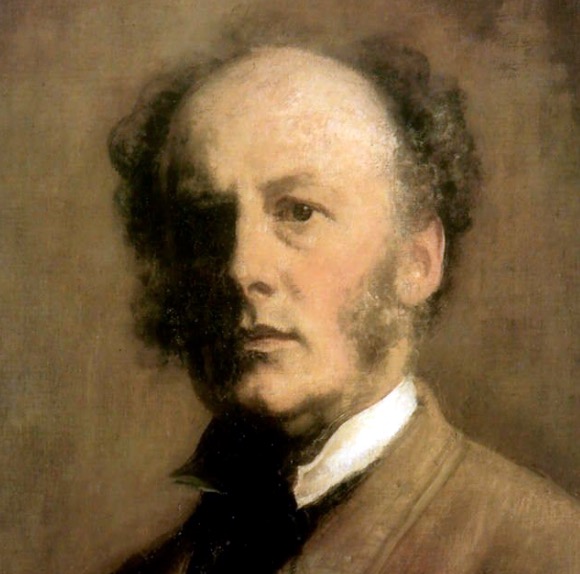


Themistokles von Eckenbrecher (Father: Gustav von Eckenbrecher, a physician; Spouse: Bertha von Eckenbrecher) was a highly prolific and celebrated German landscape painter, best known for his atmospheric depictions of rugged coastlines, majestic fjords, and exotic orientalist cityscapes. Born in Athens to a German physician father and a Greek mother, he spent his childhood surrounded by the Mediterranean light and culture that would later become a recurring theme in his work.
He moved to Germany as a youth and trained at the Düsseldorf Academy of Art, a hub of European landscape painting at the time. His talent for capturing dramatic, shifting light and the vastness of natural phenomena earned him significant acclaim. Eckenbrecher was a restless traveler, frequently venturing far beyond the borders of Germany. His extensive journeys took him across the fjords of Norway, the vibrant markets of the Middle East, the bustling ports of the Ottoman Empire, and even as far as the Philippines and South Africa.
His painting style was rooted in the Düsseldorf school of realism, focusing on meticulous detail, but he infused his landscapes with a romantic sensibility. He had a particular mastery of maritime scenes, often depicting ships navigating turbulent waters or tranquil harbors bathed in golden light. His work was extremely popular in his lifetime, and he was a recurring exhibitor at the Great Berlin Art Exhibition. He spent his final years in the Harz region of Germany, where he continued to paint the local landscapes with the same technical precision he had applied to his global travels.
Active in others filds :
Photography (as an aid for his landscape studies), Illustration.
Themistokles von Eckenbrecher Legacy :
Themistokles von Eckenbrecher died in 1921, leaving behind a massive body of work that serves as a vital visual record of late 19th-century geography and travel. He is remembered as one of the most accomplished German landscape painters of his generation, particularly for his ability to translate the exotic allure of the “Orient” and the stark grandeur of Nordic nature into compelling, atmospheric canvases. His works remain highly sought after by collectors of 19th-century European landscape art and are frequently highlighted in exhibitions focusing on Orientalism and early travel documentation through painting.