


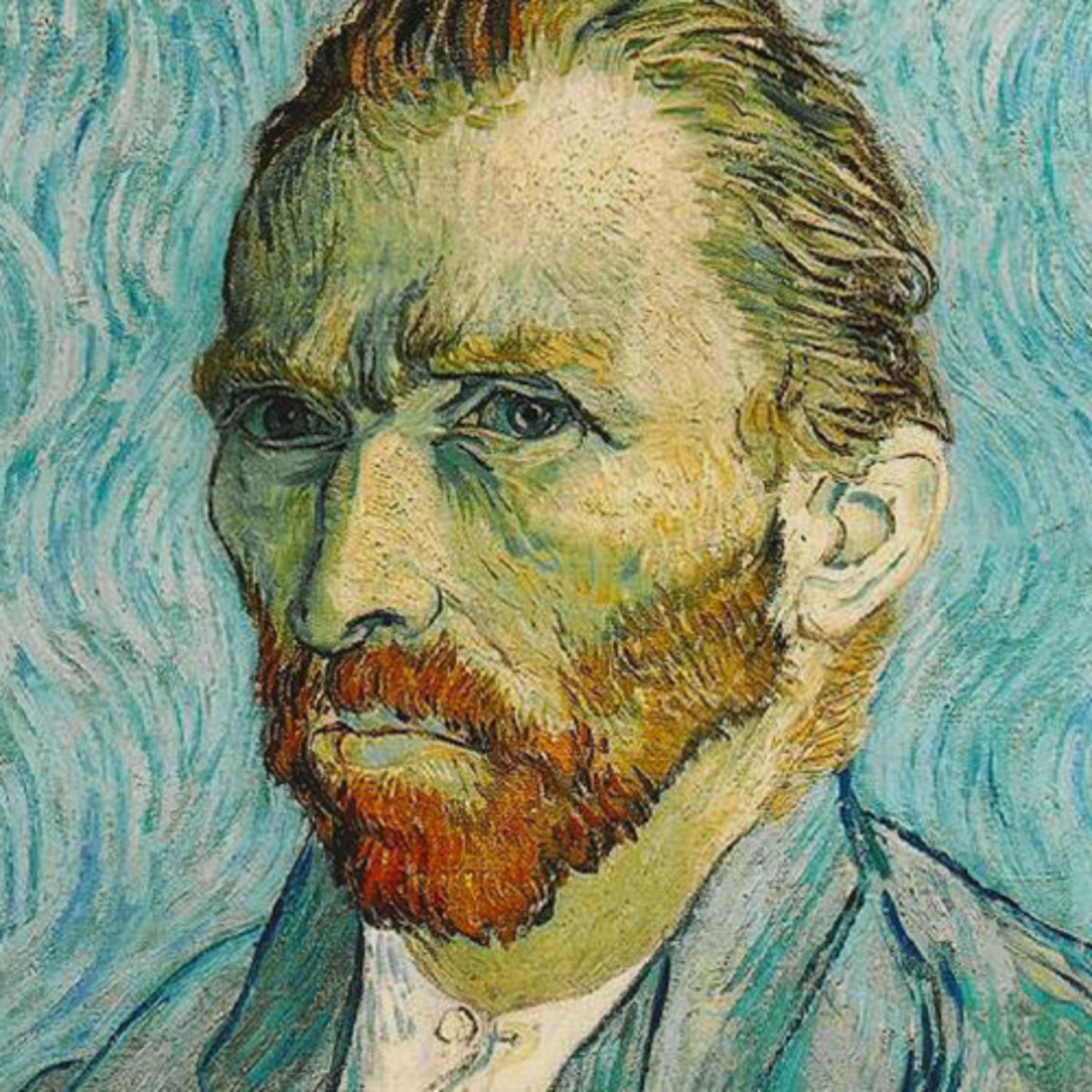



Vincent Willem van Gogh (Father: Theodorus van Gogh, a minister; Mother: Anna Cornelia Carbentus; Siblings: Most notably his lifelong confidant and art dealer, Theo van Gogh, as well as Wil, Cor, Elisabeth, and Anna van Gogh) was a Dutch Post-Impressionist painter who became one of the most famous, influential, and tragic figures in the history of Western art. In a remarkably brief artistic career spanning just a single decade, he produced approximately 2,100 artworks, including around 860 oil paintings—most of them executed during the final two years of his life. His signature style, marked by bold colors, dramatic brushstrokes, and emotional intensity, laid the foundations for much of modern art.

Born into an upper-middle-class family in the southern Netherlands, Van Gogh was a quiet, thoughtful, and deeply religious youth. Before committing to art, he attempted several career paths, working as an art dealer’s clerk in London and Paris, teaching in England, and serving as a passionate lay missionary in a destitute coal-mining region of Belgium. This deep empathy for the working class defined his early artistic period, characterized by dark, somber earth tones and gritty social realism, culminating in his first major masterpiece, The Potato Eaters (1885).
A pivotal turning point occurred in 1886 when Vincent moved to Paris to live with his supportive younger brother, Theo. Exposed to the light-infused canvases of the Impressionists and the vivid color theories of Pointillism, Vincent’s palette underwent a radical transformation. He abandoned his dark colors in favor of bright, unmixed pigments. Seeking the brilliant sunlight and artistic community of the south, he relocated to Arles in 1888. There, his style reached its zenith, resulting in iconic, sun-drenched works like The Yellow House, The Sunflowers, and The Night Café.
Vincent envisioned Arles as a collective colony for artists, inviting Paul Gauguin to join him. However, the two volatile personalities clashed severely. Following a devastating psychological breakdown in December 1888, during which he severed a portion of his own left ear, Vincent voluntarily checked himself into the Saint-Paul-de-Mausole asylum in Saint-Rémy-de-Provence. Despite his inner turmoil, this was his most prolific period; looking out his barred cell window, he painted his most legendary masterpiece, The Starry Night (1889), using swirling, turbulent brushstrokes to project his profound internal state onto the night sky.
In May 1890, Vincent moved to Auvers-sur-Oise under the care of Dr. Paul Gachet. Though he painted fervently during these final weeks, capturing the expansive, heavy wheat fields under troubled skies, his depression worsened. On July 27, 1890, Van Gogh is believed to have shot himself in the chest with a revolver, succumbing to his injuries two days later at the age of 37. Theo, completely heartbroken, passed away just six months later. Vincent’s sister-in-law, Jo van Gogh-Bonger, subsequently dedicated her life to collecting, translating, and publishing their correspondence, successfully introducing Vincent’s genius to the world.
Active in others filds :
Art Dealership, Epistolary Literature (Author of over 800 deeply philosophical letters, primarily to his brother Theo), Religious Ministry.
Vincent van Gogh Legacy :
Vincent van Gogh’s legacy completely redefined the purpose of painting, shifting the medium from a tool used to replicate external reality into an aggressive vehicle for subjective human emotion. Alongside Paul Cézanne and Paul Gauguin, he spearheaded Post-Impressionism, a direct bridge that fractured classical traditions. His revolutionary liberation of color—using arbitrary, high-contrast hues not as they appeared in nature, but to evoke psychological states—directly ignited early 20th-century Fauvism and German Expressionism. Furthermore, his thick, heavy use of impasto (applying paint thickly so it stands out from the canvas) transformed the physical surface into a sculptural landscape, deeply influencing modern action painters and abstract expressionists.



