Cgitems Logo
Entering
Art Movements
Loading Encyclopedia...
Connecting to Cgitems Server...
Thanks for your patience
Art Movements - CGItems
☆
  • UK - English UK - English
  • France - Français France - Français
  • Germany - Deutsch Germany - Deutsch
  • Netherlands - Nederlands Netherlands - Nederlands
  • Norway - Norsk Norway - Norsk
  • Denmark - Dansk Denmark - Dansk
  • Finland - Suomi Finland - Suomi
  • Vietnam - Tiếng Việt Vietnam - Tiếng Việt
  • Italy - Italiano Italy - Italiano
  • Sweden - Svenska Sweden - Svenska
  • Brazil - Português Brazil - Português
  • Greece - Ελληνικά Greece - Ελληνικά
  • Thailand - ไทย Thailand - ไทย
  • Iran - فارسی Iran - فارسی
  • Arab - العربية Arab - العربية
  • Spain - Español Spain - Español
  • China - 中文 China - 中文
  • Turkey - Türkçe Turkey - Türkçe
  • Russia - Русский Russia - Русский
  • South Korea - 한국어 South Korea - 한국어
  • Japan - 日本語 Japan - 日本語
  • India - हिन्दी India - हिन्दी

Visual Art Encyclopedia & Galleria

SUB CATEGORIES
×

Relief 

Available Art Style , Movement & Technique

The Art Movements section here is a comprehensive encyclopedia uniting movements, styles, execution techniques, related artists, artworks, and deep historical context into a single dynamic platform bridging classical art and modern digital creation. Every movement and style features a dedicated, comprehensive page, such as Impressionism, designed for thorough study and exploration.

Art Movements 1

Select Art Styles & Movements

Fashion Photography

Fashion photography is a dedicated genre of photography focused on displaying clothing, accessories, and beauty products in a way that generates desire, identity, and cultural narrative. It is a high-stakes intersection of commerce and fine art. Beyond merely “documenting” a garment, fashion photography creates a constructed reality or a “dream world.”

For researchers and students, it is analyzed through three primary lenses:

  • Editorial Photography: Narrative-driven images for magazines (like Vogue or Harper’s Bazaar) that tell a story or explore a concept, often prioritizing artistic expression over the clarity of the product.

  • Commercial/Catalogue: Clear, high-fidelity images designed for e-commerce and retail, focusing on the detail, fit, and texture of the material.

  • High-Fashion/Avant-Garde: Boundary-pushing imagery that uses extreme lighting, surreal compositions, and unconventional models to challenge social norms and aesthetic standards.

Technically, it has evolved from the stiff, studio-bound portraiture of the early 1900s to the “snapshot” realism of the 1990s (Heroin Chic) and today’s hyper-polished digital surrealism.

Hybrid

Hybrid Art is a contemporary artistic paradigm defined by the deliberate convergence, blurring, and recursive looping of disparate media, techniques, and disciplines. It moves beyond the limitations of traditional, medium-specific practice, operating instead as a transdisciplinary system architecture: a methodology in which manual craftsmanship, digital execution, and generative AI processes are synthesized into a single, unified visual identity.

Unlike multimedia, which places different art forms side-by-side, Hybrid Art dissolves the boundary between them entirely. No individual medium operates in a silo; each becomes a stage within one continuous, iterative workflow.

Core Principles
  • Process-Oriented Methodology: Hybrid practice is defined less by a fixed medium than by the management of an integrated system of tools. The workflow itself, how the piece moves between hand, machine, and model, is as critical to the work as its final aesthetic output.
  • Synergetic Creation: The essence of Hybrid Art lies in producing qualities that exceed the sum of its parts. By integrating contrasting elements, human-driven design and AI-driven refinement, structural rigidity and generative fluidity, it achieves a complexity unattainable through any single tool in isolation.
  • Human–Machine Dialectic: At the center of contemporary Hybrid practice is the interplay between human intentionality (conceptual depth, compositional judgment, emotional and architectural intent) and machine agency (scale, computational complexity, and unpredictable generative potential). The artist remains the creative director; the machine is the highly efficient collaborator.
The Three Technical Domains

A Hybrid workflow typically moves across three interlocking domains, each contributing something the others cannot:

  1. The Physical Ground (Analog): Hand-drawn graphite sketches, raw textures, impasto oil layers, or physical artifacts carrying human-scale imperfection and resistance. This is the domain of the artist’s hand.
  2. The Virtual Framework (Digital 2D/3D): CGI assets, procedural meshes, and digital painting layers used to construct spatial depth, clean geometry, camera perspective, and lighting maps. In advanced pipelines, artists build basic geometry and lighting in software such as Blender, Maya, or 3ds Max to establish absolute structural control before any generative step begins.
  3. The Latent Layer (Generative AI): Machine learning models (diffusion models, custom-trained LoRAs, ControlNet-style adapters) deployed not as automated image generators, but as advanced “algorithmic brushes.” Using depth maps, normal maps, or wireframes from the digital stage as a strict blueprint, the AI synthesizes patterns, reinterprets brushstrokes, and maps stylistic textures, ensuring geometric integrity is preserved even as the look is explored and reimagined.
Why the Synergy Works

Pure AI generation alone tends to suffer from spatial inconsistency, unpredictable perspective, and a lack of precise control. Pure traditional 3D rendering, by contrast, is often slow, demanding hours of meticulous texturing, lighting, and heavy compute. The Hybrid workflow resolves both limitations at once:

  • Structural control comes from the 3D/analog foundation, anchoring the AI to a strict geometric blueprint.
  • Instant look development comes from AI exploration, letting an artist test dozens of aesthetic directions in seconds rather than days.
  • Pipeline optimization comes from shifting tedious detailing and atmospheric rendering to generative tools, compressing production timelines from days to minutes.
The Recursive Workflow

The defining hallmark of Hybrid Art is that it rarely moves linearly. A single piece may begin as a hand-drawn sketch, be upscaled and lit inside a 3D environment, reinterpreted through a text-to-image or image-to-image diffusion process, and finally be projected back onto physical canvas, where the artist applies glazes, oils, or further physical texture. The result is a dense, multi-layered visual fabric in which the boundaries between human hand, code, and neural network are completely dissolved.

From Technical Artist to Creative Director

Hybrid methodology does not replace human artistry; it elevates it. Core composition, architectural intent, and emotional lighting remain entirely artist-driven; the AI functions as an efficient collaborator handling scale and iteration, not authorship. As production pipelines across VFX, gaming, and concept art continue to adopt this approach, fluency in Hybrid methodology has become a defining competitive skill for the modern digital creator.

Historical Context and Significance

Rooted in the historical evolution of mixed-media and collage, Hybrid Art has emerged in the digital age as an independent expressive language: a philosophical and technical response to a complex, multi-layered world. It dissolves the traditional boundaries between reality and simulation, the handmade and the technological, the analog and the algorithmic.

Condensed Summary
Hybrid Art is the art of reconciling the disparate: a transdisciplinary, recursive workflow in which analog craft, digital construction, and generative AI collide, not as separate steps, but as one continuous system, to produce forms of expression unattainable through any single medium alone.

Muralism

Muralism is a monumental, public-facing art movement defined by the creation of massive paintings directly executed on or permanently affixed to architectural surfaces (walls, ceilings, or structural facades). While mural-making dates back to prehistoric caves and Renaissance frescoes, “Modern Muralism”—sparked primarily by the Mexican Mural Movement in the 1920s—transformed the medium into a powerful vehicle for social, political, and historical narrative.

Unlike easel paintings, which are transportable and often treated as private commodities, modern muralism is intrinsically civic and democratic. It was designed to bypass the elite, exclusive spaces of museums and commercial galleries, taking art directly to the working-class public in municipal buildings, schools, and outdoor plazas.

For researchers, students, and CGI artists, Muralism must be understood as an architectural collaborator. A successful muralist does not merely use a wall as a flat canvas; they analyze the architectural volume, viewer sightlines, scale, and environmental lighting of the space.

Muralism Artwork By Diego Rivera,
“Dream of a Sunday Afternoon in Alameda Central Park” (Sueño de una tarde dominical en la Alameda Central) by Diego Rivera, created between 1946 and 1947.

Historically, the movement combined classical European fresco techniques with bold modernist styles like Cubism, Expressionism, and native indigenous folk art aesthetics to create highly legible, heroic, and dynamic visual spectacles.

Gothic

Gothic art was a medieval movement that revolutionized European aesthetics, transitioning from the heavy, dark, and earthbound Romanesque style to a form defined by height, light, and verticality. While often associated with “darkness” in modern pop culture, the original Gothic movement was obsessed with the divine quality of light (Lux Nova).

In architecture, the style solved the “weight problem” of stone buildings. By using pointed arches and ribbed vaults, builders could channel weight downward rather than outward, allowing walls to be thinner and replaced with massive stained-glass windows. In visual arts, Gothic style marked a move toward greater realism; figures became less stiff and more emotional compared to Byzantine or Romanesque predecessors, showing naturalistic drapery and human expressions.

Figurative Photography

Figurative Photography (or Figurative Portraiture and Body Photography) is a central discipline of photographic art where the human body—its form, gesture, anatomy, and psychological presence—serves as the primary visual and thematic subject. Unlike commercial fashion or standard studio headshots, figurative photography treats the human figure as an expressive canvas. It explores physical structure, contour, light interaction across skin, movement, vulnerability, identity, and the human condition.

The genre spans a broad spectrum: from classical nude studies that mirror Renaissance sculpture and hyper-detailed studio lighting to surreal, staged narratives, candid street documentation of human posture, and visceral, unedited photojournalism. Figurative photography relies heavily on the technical interplay between directional lighting, lens compression, depth of field, exposure dynamics, and print tonality to transform a living subject into a permanent visual composition.

VFX

Visual Effects (VFX) is the process by which imagery is created or manipulated outside the context of a live-action shot in filmmaking and video production. Unlike Special Effects (SFX), which are realized physically on set (explosions, prosthetics), VFX involves the integration of live-action footage and generated imagery (CGI) to create environments, objects, or creatures that would be dangerous, expensive, or impossible to capture on film.

CGI (Computer Generated Imagery) Correlation: While VFX is the umbrella term for the final result, CGI is the toolset. In the modern pipeline, VFX is divided into several specialized streams:

  • Modeling & Texturing: Creating 3D assets.

  • Rigging & Animation: Giving life and movement to 3D models.

  • FX Simulation: Using physics engines to create fire, water, smoke, and destruction.

  • Compositing: The final “glue” where layers of CGI and live-action are blended, matching lighting, grain, and lens flares to ensure a seamless “photoreal” result.

Minimalism

Minimalism emerged as a major movement in New York during the 1960s, acting as a direct rejection of the emotional intensity and “messiness” of Abstract Expressionism. It is characterized by extreme simplicity of form and a literal approach to materials. In Minimalism, the artwork does not refer to anything outside of itself; it is not a window into a dream or a landscape, but rather a physical object in a specific space.

For art centers and students, the hallmark of Minimalism is the reduction to essentials. This often involves the use of industrial materials, repetitive geometric structures (grids, stacks), and a total lack of decorative or expressive features. The viewer’s experience is shifted from “interpreting” a hidden meaning to “observing” the relationship between the object, the light, and the surrounding environment.

Neoclassicism

Neoclassicism was a Western cultural movement in the decorative and visual arts, literature, theater, music, and architecture that drew inspiration from the “classical” art and culture of Classical Antiquity. It emerged as a direct reaction against the excessive ornamentation of the Rococo style and the emotional intensity of the Baroque.

For researchers and students, the hallmark of Neoclassicism is restraint. In painting, this meant a return to sharp outlines, cool colors, and “invisible” brushwork, making the surface appear as smooth as marble. The compositions are typically symmetrical and organized, resembling a stage play. It prioritized “line” over “color,” believing that clear drawing represented intellectual clarity, whereas messy color represented base emotions.

Orientalism

Orientalism in the visual arts refers to a highly prominent 19th-century movement where Western European painters—primarily from France, Great Britain, Germany, and Austria—depicted the landscapes, cultures, people, and daily life of the Near East, Middle East, and North Africa. Far from a uniform genre, Orientalism operated on a vast spectrum between exacting, scientific ethnography and purely theatrical, romanticized fantasy.

For researchers, students, and art historians, understanding the dual nature of this style is critical:

  • The Realist / Documentary Approach: Artists like David Roberts and John Frederick Lewis traveled extensively, living within the communities they painted. They acted almost as visual archaeologists, documenting Islamic architecture, bustling bazaars, and ancient ruins with remarkable topographic precision. Because sketching crowds openly was often culturally sensitive or forbidden, these artists routinely relied on hidden cameras, clandestine rooftop vantage points, or staged private sittings to achieve hyper-accurate lighting and fabric drapery.

  • The Studio Studio / Fantasy Approach: Conversely, masters like Jean-Auguste-Dominique Ingres never set foot in the East. Instead, they relied heavily on published travelogues, photographs, and studios back in Paris or London that were packed with imported props (such as silks, carpets, hookahs, and weaponry). They created highly polished, Academic Realism scenes of harems, snake charmers, and baths—frequently blending Turkish, Egyptian, and Moroccan motifs into a generalized, exotic construct designed to satisfy Western curiosity and societal desires.

CGI

CGI (Computer-Generated Imagery) refers to the application of computer graphics to create or enhance images in art, printed media, simulators, videos, and video games. Unlike traditional photography or painting, CGI creates visual content from “scratch” or manipulates digital data to form 2D or 3D images.

VFX (Visual Effects) is the broader umbrella term. It is the process by which imagery is created or manipulated outside the context of a live-action shot.


  • The Relationship: CGI is a tool used within VFX. While VFX includes physical “Special Effects” (SFX) like explosions or prosthetics on set, modern VFX relies heavily on CGI to integrate digital elements into live-action footage.

  • The Pipeline: The CGI process involves several technical stages:

    1. Modeling: Creating a 3D mesh of an object.

    2. Texturing: Applying digital “skin” or surfaces.

    3. Rigging: Adding a digital skeleton for movement.

    4. Animation: Bringing the model to life.

    5. Rendering: The final computer calculation that produces the finished image, including light and shadow data.

    6. Compositing (VFX stage): Layering the CGI into the real-world footage so it looks seamless.


Chiaroscuro

Chiaroscuro (from the Italian chiaro “light” and scuro “dark”) is a technical term used to describe the use of strong contrasts between light and dark to give the illusion of three-dimensional volume on a two-dimensional surface. It is more than just “adding shadows”; it is a method of modeling form through the graduation of tone.

While Tenebrism (a sub-style popularized by Caravaggio) uses darkness as a dominant, “pitch-black” background for dramatic effect, classical Chiaroscuro is more focused on the soft transition of light across a form to create “solidity.” In the context of visual arts, it transformed the flat, symbolic paintings of the Middle Ages into the fleshy, realistic figures of the Renaissance.

Note on Modern Distinction: In this entry, we focus on the Classical/Painterly foundation. While “Film Noir” and “Comic Noir” use Chiaroscuro principles, they are distinct modern evolutions that prioritize stylized, high-contrast “hard” edges over the soft “atmospheric” transitions seen in classical oil painting.

Chiaroscuro Lighting & Style , Artwork By Caravaggio

Fashion Illustration

Fashion illustration is a specialized genre of art dedicated to the visual communication of clothing and the “mood” of style. Unlike photography, which captures a literal moment, fashion illustration translates the fantasy and silhouette of a design through an artist’s subjective lens.

For students and researchers, it is defined by Graphic Shorthand and 9-Head Proportions. While a natural human body is roughly 7.5 heads tall, fashion illustrators elongate the figure to 9 or even 10 heads to emphasize the drape and movement of fabric. The style is historically linked to the growth of high-fashion magazines like Vogue and Harper’s Bazaar. It is a discipline of efficiency: a single, perfectly placed brushstroke must often represent the weight of silk or the stiffness of wool.

Renaissance

The Renaissance (meaning “rebirth”) represents one of the most monumental eras in cultural history, marking the transition from the Middle Ages to modernity. Philosophically rooted in humanism, it revived the classical ideals of ancient Greece and Rome, emphasizing the dignity, potential, and reason of humanity. In the visual arts, this manifested as a profound shift toward anatomical realism, scientific observation, and mathematical harmony.

Instead of the flat, symbolic, and heavily stylized two-dimensional space of medieval art, Renaissance artists treated the canvas as a “window into the world.” They pioneered systematic methods to replicate how the human eye naturally perceives physical depth, form, and light.

For advanced students and researchers, the movement is systematically categorized into three distinct evolutionary phases:

  • Early Renaissance (c. 1400–1490): Centered primarily in Florence. This foundational period focused on establishing the mathematical rules of linear perspective, mastering basic human anatomy, and breaking away from Byzantine artistic rigidity.

  • High Renaissance (c. 1490–1527): Centered primarily in Rome and Venice. This period represents the absolute peak of visual harmony, monumental scale, and technical mastery. It is characterized by perfectly balanced, symmetrical compositions and an elevated social status for artists, who were now viewed as divinely inspired geniuses rather than mere tradesmen.

  • Northern Renaissance (c. 1430–1580): Developed concurrently in Flanders, Germany, and the Netherlands. Unlike the Italian obsession with geometry and classical antiquity, Northern masters focused intensely on empirical observation, domestic realism, and an unmatched, microscopic level of surface detail made possible by their early perfection of oil painting.

Abstract

Abstract art represents a pivotal departure from “mimesis” (the imitation of visible reality). Instead of depicting recognizable objects from the physical world, it uses a formal language of shape, form, color, and line to create a composition that may exist with a degree of independence from visual references in the world.

For researchers and art centers, it is categorized into two main movements:

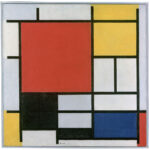
  • Non-Objective / Non-Representational: Work that does not take anything from the real world as a starting point. It is pure form and color (e.g., Mondrian).

  • Abstracted Reality: Work that begins with a real-world subject (like a figure or landscape) and simplifies or distorts it until the original source is nearly unrecognizable (e.g., early Kandinsky).

The movement evolved through various sub-genres, including Geometric Abstraction (logical and calculated) and Lyrical Abstraction (emotional and gestural). It challenged the viewer to “feel” the art rather than “identify” it.

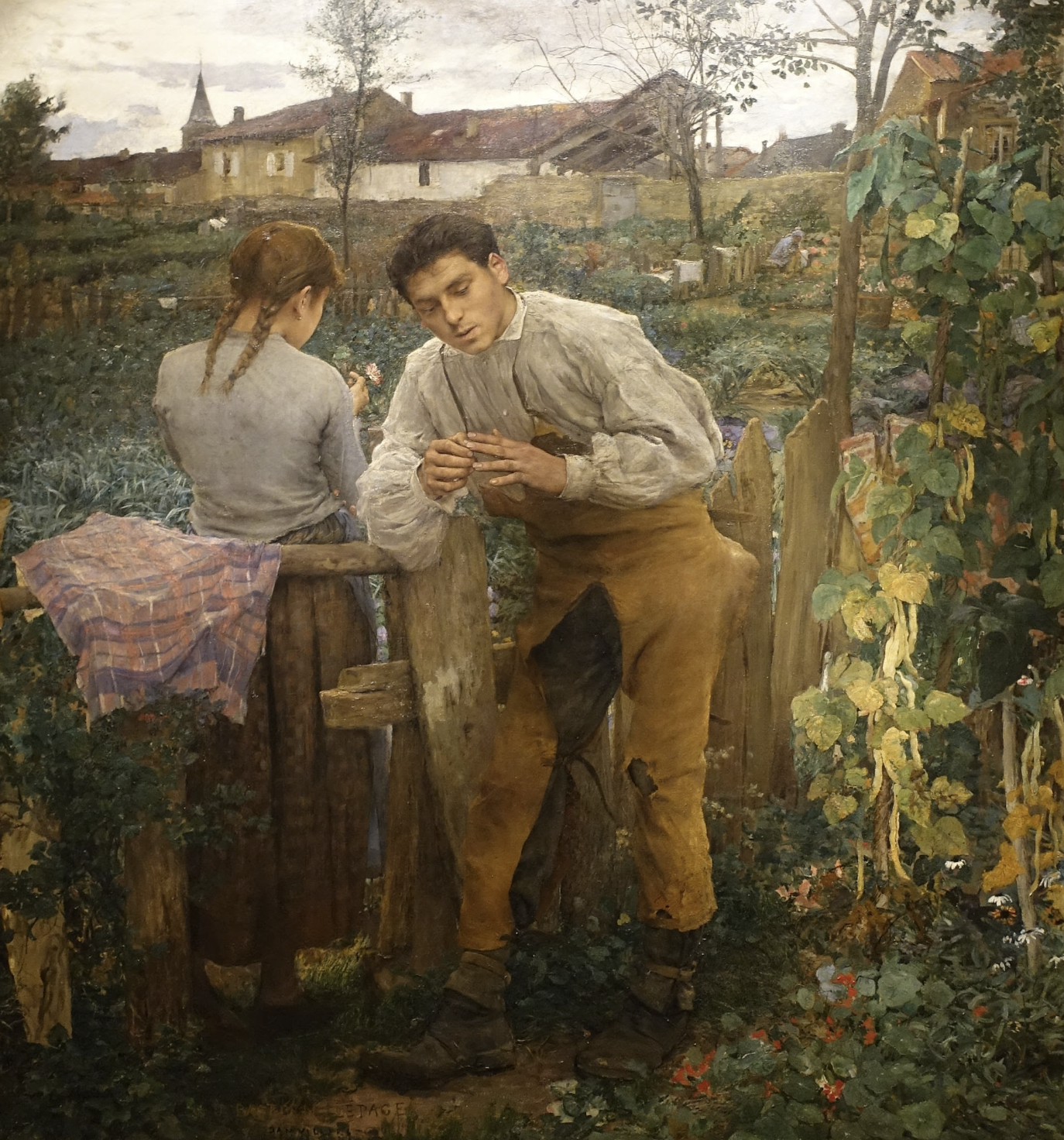
Naturalism

Naturalism in the fine arts refers to the accurate, un-idealized depiction of nature, human figures, and everyday environments as they appear in real life. Emerging prominently in the mid-to-late 19th century alongside the rise of empirical science and early photography, Naturalism bridged the gap between Romantic emotionalism and the radical fragmentation of early Modernism.

Naturalism art by Jules Bastien
Jules Bastien-Lepage: Naturalistic precision in rural light.

Unlike Neoclassicism (which idealized form according to classical Greco-Roman beauty standards) or Romanticism (which stylized form to express heightened emotional drama), Naturalism adheres strictly to careful observation. While closely intertwined with Realism, Naturalism often emphasizes a higher level of technical finesse, precise photographic values, diffuse outdoor daylight, and a deterministic view of human life—frequently recording subjects in their authentic social, rural, or working-class conditions without moralizing or romantic commentary.

Tonalism

Tonalism was an American artistic style that emerged in the late 19th century, characterized by soft, diffused light and a limited range of monochromatic or “tonal” colors. Unlike the bright, flickering light of French Impressionism, Tonalism focused on the mood and atmosphere of a landscape, often depicting it during “mystical” times of day—dawn, twilight, or under moonlight and mist.

For researchers and students, it is important to note that Tonalism was less about the physical details of a place and more about the emotional response it evoked. The paintings often have a “veiled” or “dreamlike” quality, achieved through multiple layers of thin glazes that make the surface appear to glow from within. It is considered a bridge between 19th-century Realism and 20th-century Abstraction.

Art Movements 1

Quick Look

Fine Art Directory ( Highlight )

Stan Lee

Reset to Default
+ FAVORITES ✎
✕
⋮ ☆ Art Movements
✕
HELP AGENT
PLEASE WAIT, LOADING...
×
MCA

--
Analyzing image & extracting data...

Link Copied!

General Inquiry

Have a question or feedback regarding portfolios? Drop us a line.

Strictly plain English text structure only.

Attachments Inventory

Max 500KB per file. Max 10 images.

Delivery Confirmed

Thank you. Your message and data structural packages have been safely transferred to our desk.

Artist Name Artwork Details
Search with Google Lens
Print...