Cgitems Logo
Entering
Art Movements
Loading Encyclopedia...
Connecting to Cgitems Server...
Thanks for your patience
Art Movements - CGItems
☆
  • UK - English UK - English
  • France - Français France - Français
  • Germany - Deutsch Germany - Deutsch
  • Netherlands - Nederlands Netherlands - Nederlands
  • Norway - Norsk Norway - Norsk
  • Denmark - Dansk Denmark - Dansk
  • Finland - Suomi Finland - Suomi
  • Vietnam - Tiếng Việt Vietnam - Tiếng Việt
  • Italy - Italiano Italy - Italiano
  • Sweden - Svenska Sweden - Svenska
  • Brazil - Português Brazil - Português
  • Greece - Ελληνικά Greece - Ελληνικά
  • Thailand - ไทย Thailand - ไทย
  • Iran - فارسی Iran - فارسی
  • Arab - العربية Arab - العربية
  • Spain - Español Spain - Español
  • China - 中文 China - 中文
  • Turkey - Türkçe Turkey - Türkçe
  • Russia - Русский Russia - Русский
  • South Korea - 한국어 South Korea - 한국어
  • Japan - 日本語 Japan - 日本語
  • India - हिन्दी India - हिन्दी

Visual Art Encyclopedia & Galleria

SUB CATEGORIES
×

Tenebrism

Available Art Style , Movement & Technique

The Art Movements section here is a comprehensive encyclopedia uniting movements, styles, execution techniques, related artists, artworks, and deep historical context into a single dynamic platform bridging classical art and modern digital creation. Every movement and style features a dedicated, comprehensive page, such as Impressionism, designed for thorough study and exploration.

Art Movements 1

Select Art Styles & Movements

Figurative Photography

Figurative Photography (or Figurative Portraiture and Body Photography) is a central discipline of photographic art where the human body—its form, gesture, anatomy, and psychological presence—serves as the primary visual and thematic subject. Unlike commercial fashion or standard studio headshots, figurative photography treats the human figure as an expressive canvas. It explores physical structure, contour, light interaction across skin, movement, vulnerability, identity, and the human condition.

The genre spans a broad spectrum: from classical nude studies that mirror Renaissance sculpture and hyper-detailed studio lighting to surreal, staged narratives, candid street documentation of human posture, and visceral, unedited photojournalism. Figurative photography relies heavily on the technical interplay between directional lighting, lens compression, depth of field, exposure dynamics, and print tonality to transform a living subject into a permanent visual composition.

Art Deco

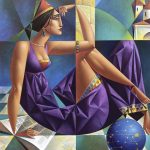
Art Deco, short for Arts Décoratifs, was a dominant international design movement that epitomized luxury, glamour, exuberance, and faith in social and technological progress. Emerging in the interwar period, it completely rejected the organic, flowing, asymmetrical curves of Art Nouveau in favor of symmetry, linear clean lines, and geometric purity. It was not just a movement for fine art painters; it was an all-encompassing style that unified architecture, interior design, industrial design, fashion, and the visual arts into a single cohesive modern aesthetic.

For researchers and students, Art Deco must be understood as a clever synthesis of various avant-garde styles. It borrowed its fragmented geometric shapes from Cubism, its sense of speed and dynamism from Futurism, and its structural focus from the Bauhaus. Simultaneously, it drew deep inspiration from ancient, non-Western cultures. The global media frenzy surrounding the discovery of King Tutankhamun’s tomb in 1922 injected Egyptian, Mesopotamian, and Mesoamerican zig-zag and step-pyramid motifs directly into the Art Deco visual vocabulary.

The movement is generally divided into two stylistic phases:

  • Zigzag Deco (1920s–Early 1930s): Highly lavish, colorful, and ornamental. It focused on surface decoration, expensive materials, and vertical geometric towers.

  • Streamline Moderne (1930s): A stripped-back, more industrial evolution influenced by the Great Depression. It emphasized horizontal clean lines, curved aerodynamic corners, nautical elements, and a machine-age utility.

Fauvism

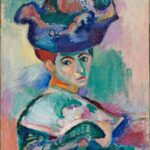
Fauvism was the first of the major avant-garde movements of the 20th century. Its name originated from the French word les Fauves (“the wild beasts”), a term coined by critic Louis Vauxcelles after he saw the shocking, non-naturalistic colors at the 1905 Salon d’Automne.

For researchers and students, the defining technical achievement of Fauvism was the liberation of color. Before this movement, color was used to describe an object (a tree is green); Fauvist artists used color to describe an emotion or a formal sensation (a tree can be bright red if it feels right to the artist). While the movement was short-lived (lasting barely a decade), it laid the groundwork for Expressionism and all subsequent abstract art by proving that art did not need to mimic the physical world to be “true.”

Bauhaus

The Bauhaus (literally “Construction House”) was the most influential modernist art school of the 20th century. Founded by Walter Gropius in Weimar, Germany, it aimed to bridge the gap between fine art and functional design. It wasn’t just a style; it was a radical pedagogical shift that sought to unify architecture, sculpture, and painting into a single creative expression suitable for the industrial age.

The Bauhaus curriculum was famous for its “Preliminary Course” (Vorkurs), which forced students to forget traditional art history and focus on the fundamental properties of materials, color theory, and geometry. The school evolved through three main phases:

  • Weimar Phase (1919–1924): More expressionist and craft-oriented.

  • Dessau Phase (1925–1932): The peak of the “Bauhaus Style,” focusing on industrial mass production and the iconic glass-and-concrete architecture.

  • Walter Gropius

    Berlin Phase (1932–1933): A brief period before the school was closed under political pressure from the Nazi regime.

Rococo

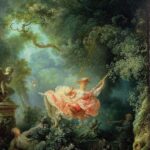
Rococo, also known as “Late Baroque,” is an 18th-century artistic movement and style that affected many aspects of the arts including painting, sculpture, architecture, interior design, decoration, literature, music, and theatre. It developed in the early 18th century in Paris as a reaction against the grandeur, symmetry, and strict regulations of the previous Baroque style.

While Baroque was heavy, masculine, and religious, Rococo was light, feminine, and secular. It is characterized by an abundance of curves, counter-curves, undulations, and elements modeled on nature—specifically shells (from which the name Rocaille is derived) and coral. In painting, Rococo moved away from the dramatic chiaroscuro of the 17th century toward a delicate, airy atmosphere where the “Fête Galante” (courtly scenes of outdoor amusement) became the primary subject matter, celebrating love, youth, and playfulness.

Aestheticism

Aestheticism—often encapsulated by the famous French rallying cry “L’art pour l’art” (“Art for Art’s Sake”)—was a revolutionary late-19th-century avant-garde movement. It shook the foundation of Victorian culture by aggressively rejecting the idea that art must serve a moral, didactic, social, or political purpose. To the Aesthete, art didn’t need to tell a story, teach a lesson, or reform society; its sole justification was the pursuit of pure, sensual beauty and visual pleasure.

William Blake Richmond Artwork

For researchers and art students, the movement is defined by its deep intellectualism and intense focus on formal qualities over narrative content. It treated composition as a purely musical arrangement where lines, colors, and textures interact to evoke a mood. The movement heavily rebelled against industrial mass production and the “gaudy” or “stuffy” interior designs of the high Victorian era, seeking instead to cultivate an entirely beautiful lifestyle. Rather than treating nature as the ultimate ideal, Aesthetes often viewed nature as crude, unfinished, and lacking design until refined by human artistic intelligence.


A major catalyst for this style was Japonisme (the late-19th-century craze for Japanese art). The sudden influx of Japanese woodblock prints and decorative screens provided artists with alternative design principles: flat planes of color, radical asymmetry, stylized natural motifs, and a refined sense of decorative spacing that bypassed traditional Western perspective.

Pre-Raphaelite

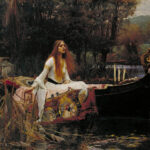
The Pre-Raphaelite movement was a secret society of young, rebellious British artists, poets, and critics founded in 1848, originally calling themselves the Pre-Raphaelite Brotherhood (PRB). The movement was an aggressive reaction against the mechanistic approach first adopted by Mannerist artists who succeeded Raphael and Michelangelo. The PRB believed the classical poses and elegant compositions of Raphael had been a corrupting influence on the academic teaching of art, particularly the formulas dictated by Sir Joshua Reynolds and the Royal Academy of Arts.

To researchers and students, the movement is a crucial bridge between the intense emotionalism of Romanticism and the meticulous detail of Realism. Pre-Raphaelite artists championed a return to the abundant detail, intense, luminous colors, and complex compositions of Quattrocento (15th-century) Italian and Flemish art. They achieved this by painting directly from nature (often outdoors, matching botanical accuracy to the leaf) and by developing a highly specific technique: painting with thin glazes of pigment over a wet white zinc ground. This technique gave their work a brilliant, jewel-like luminosity that had never been seen before in British art.

Subjects were heavily drawn from literature (Shakespeare, John Keats, Alfred Lord Tennyson), Arthurian legends, medieval romances, and biblical stories, all rendered with an uncompromising, almost photographic fidelity to nature.

Comic

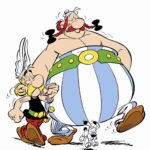
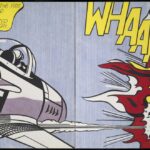
Comic Art is a sophisticated, highly structured system of visual storytelling that relies on sequential iconography to convey narratives across time and space. Unlike static fine art paintings, the structural unit of a comic is not a solitary canvas, but the relational tension between multiple images arranged in a deliberate progression.

The fundamental engine of the comic art medium is what theorist Will Eisner termed “Sequential Art” and Scott McCloud expanded upon as the management of “the gutter”—the blank space separating individual panels. Within these gutters, a psychological phenomenon known as closure occurs: the reader’s mind actively bridges the spatial gaps to construct a fluid progression of time, motion, and causality.

Historically, the aesthetic parameters of classic comic art were dictated by the severe limitations of industrial mass printing. Because early 20th-century comic strips and books were printed on cheap, highly absorbent newsprint using high-speed rotary presses, subtle color gradations and delicate linework were impossible to reproduce. To prevent ink bleeding (smudging), artists engineered a specialized graphic shorthand built upon three technical pillars:

  • Bold Ink Contours: Clear, heavy, black outlines defined silhouettes and separated figures from backgrounds, ensuring structural readability even if color registration shifted during printing.

  • High-Contrast Chiaroscuro & Hatching: Cross-hatching, feathering, and solid black fills (spotting blacks) were utilized to simulate depth, texture, and shadow using only pure black ink.

  • Ben-Day Dots & Halftones: To produce secondary colors and shading without paying for expensive multi-toned inks, printers overlaid small, spaced dots of primary colors (Cyan, Magenta, Yellow). The human eye optically blends these dots from a distance to perceive flesh tones, purples, and shadows.

As the medium matured, it diverged into major global traditions, each with distinct visual philosophies: Euro-French Ligne Claire (clean, unvarying line weights with flat color fields), American corporate superhero aesthetics (hyper-muscular anatomy, dynamic perspective shifts, and cinematic framing), and Japanese Manga (expressive, deconstructive anatomy, cinematic pacing, and highly stylized speed lines).


Impressionism

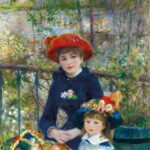
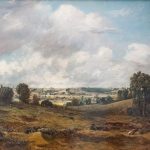
Impressionism was a radical 19th-century art movement that permanently altered the trajectory of visual arts and laid the foundations for modern art. Breaking away from the rigid, highly finished, and historically focused standards of the Académie des Beaux-Arts in Paris, Impressionists prioritized the immediate visual sensation of a scene over precise, detailed realism.

Instead of relying on idealized studio setups, they focused on capturing the fleeting, momentary effects of light and atmosphere, often painting en plein air (outdoors) to observe nature directly. Rather than mixing paints on a palette to create smooth, imperceptible gradients, they applied pure, unblended colors in short, visible brushstrokes directly onto the canvas. This technique allowed the viewer’s eye to optically blend the colors from a distance, creating a sense of vibrant, shimmering life.

Academic Art

Academic Art—also known as Academicism or Academism—refers to the style of painting and sculpture produced under the direct influence of European official art academies, most notably the Académie des Beaux-Arts in Paris. It represents the peak of institutionalized craftsmanship, where technical mastery, rigorous adherence to classical rules, and deep philosophical themes were valued above spontaneous emotional expression or raw realism.

For researchers and students, Academic Art is defined by its strict adherence to the Hierarchy of Genres, which placed History Painting (mythological, biblical, and historical narratives) at the absolute top, followed by portraiture, genre painting, landscape, and still life at the bottom. The creative process was methodical: students spent years drawing from plaster casts and live models, progressing from charcoal sketches (académies) to oil studies, and finally to the grand, highly polished final canvas (le fini) where all visible brushstrokes were meticulously smoothed away to create a seamless, quasi-photorealistic illusion.

Romanticism

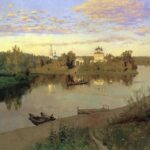
Romanticism was a sweeping intellectual, literary, and artistic movement that dominated European culture from the late 18th century to the mid-19th century. Emerging as a direct, passionate rebellion against the rigid rules, scientific rationalism, and calculated order of the Enlightenment and Neoclassicism, Romanticism shifted the focus entirely toward the subjective human experience. It championed the power of individual intuition, untamed emotion, and the overwhelming, terrifying majesty of the natural world—a concept known as “The Sublime.” Rather than seeking perfection and harmony, Romantic artists embraced chaos, mystery, the supernatural, and profound psychological states like terror, awe, and madness. In the visual arts, this translated to a dramatic departure from clean, invisible brushwork. Instead, paintings became energetic and highly expressive, utilizing dynamic compositions, intense contrasts of light and shadow, and sweeping, visible strokes that conveyed the artist’s inner turmoil and the raw power of nature .

Illustration

Illustration is a foundational discipline within the visual arts where imagery is created specifically to enhance, clarify, illuminate, or visually represent a companion text, concept, narrative, or message. Unlike fine art painting, which frequently functions as a self-contained, open-ended exploration, illustration is fundamentally purpose-driven and contextual. It acts as a bridge between direct literary text and universal visual perception.

For academic researchers, students, and professional studios, illustration must be analyzed through its critical historical and practical sub-categories:

    • Book and Narrative Illustration: Originating in illuminated manuscripts, this phase hit its peak during the “Golden Age of Illustration” (late 19th to early 20th century). It relies on intricate line work, cross-hatching, and rich tonal values to breathe life into fictional and historical worlds.

    • Editorial and Advertising Illustration: Emerged with the explosion of print journalism and magazines. It prioritizes conceptual clarity, often using metaphor, satire, flat vector dynamics, or heavy stylistic abstraction to distill complex political or cultural commentary into a single, punchy image.

    • Scientific, Technical, and Medical Illustration: A highly specialized domain requiring extreme physiological or mechanical accuracy. It utilizes distinct graphic protocols (exploded views, cross-sections, and callouts) to communicate data that a standard photograph cannot clearly isolate.

    • Concept Art & Commercial Design: The modern frontier of illustration used heavily in pre-production for video games, cinema, and brand design. It focuses on atmospheric depth, world-building blueprints, and iterative character design layouts.

Orientalism

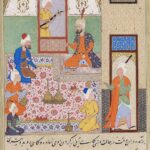
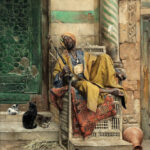
Orientalism in the visual arts refers to a highly prominent 19th-century movement where Western European painters—primarily from France, Great Britain, Germany, and Austria—depicted the landscapes, cultures, people, and daily life of the Near East, Middle East, and North Africa. Far from a uniform genre, Orientalism operated on a vast spectrum between exacting, scientific ethnography and purely theatrical, romanticized fantasy.

For researchers, students, and art historians, understanding the dual nature of this style is critical:

  • The Realist / Documentary Approach: Artists like David Roberts and John Frederick Lewis traveled extensively, living within the communities they painted. They acted almost as visual archaeologists, documenting Islamic architecture, bustling bazaars, and ancient ruins with remarkable topographic precision. Because sketching crowds openly was often culturally sensitive or forbidden, these artists routinely relied on hidden cameras, clandestine rooftop vantage points, or staged private sittings to achieve hyper-accurate lighting and fabric drapery.

  • The Studio Studio / Fantasy Approach: Conversely, masters like Jean-Auguste-Dominique Ingres never set foot in the East. Instead, they relied heavily on published travelogues, photographs, and studios back in Paris or London that were packed with imported props (such as silks, carpets, hookahs, and weaponry). They created highly polished, Academic Realism scenes of harems, snake charmers, and baths—frequently blending Turkish, Egyptian, and Moroccan motifs into a generalized, exotic construct designed to satisfy Western curiosity and societal desires.

Marvel

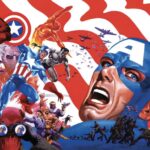
The “Marvel Style” is less a single aesthetic and more an evolutionary lineage of visual storytelling that prioritize dynamic energy, anatomical exaggeration, and emotional relatability. Unlike the “stiff” heroism of earlier eras, the Marvel style—pioneered in the 1960s—introduced characters with flaws, reflected through expressive “acting” in the drawings.

A core technical component is the “Marvel Method”: a collaborative process where the artist (not the writer) plots the visual pacing and action based on a brief synopsis, giving the artist primary control over the “cinematography” of the page. Visually, it is defined by “Kirby Krackle” (clusters of black dots representing cosmic energy), foreshortened limbs that seem to “pop” out of the panel, and high-velocity action lines. From the primary-colored 1960s to the hyper-detailed, painted realism of the 1990s and 2000s, the style consistently balances superheroic scale with human vulnerability.

Early Renaissance

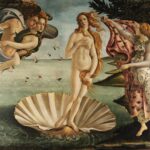
The Early Renaissance (Quattrocento) marks the transition from the symbolic, flat world of the Middle Ages to a revolutionary era of Humanism and Scientific Realism. This period was defined by the rediscovery of Classical antiquity and a desire to represent the physical world as it actually appeared to the human eye.

The most significant breakthrough of this era was the development of Linear Perspective, a mathematical system used to create the illusion of depth on a flat surface. Artists began to study human anatomy through dissection and observation, leading to figures that possessed “gravitas”—a sense of weight, volume, and three-dimensional presence. Unlike the later High Renaissance (which sought idealized perfection), Early Renaissance art often retains a crisp, clear, and almost analytical focus on detail and mathematical harmony.

Abstract

Abstract art represents a pivotal departure from “mimesis” (the imitation of visible reality). Instead of depicting recognizable objects from the physical world, it uses a formal language of shape, form, color, and line to create a composition that may exist with a degree of independence from visual references in the world.

For researchers and art centers, it is categorized into two main movements:

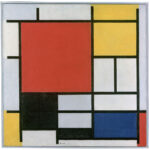
  • Non-Objective / Non-Representational: Work that does not take anything from the real world as a starting point. It is pure form and color (e.g., Mondrian).

  • Abstracted Reality: Work that begins with a real-world subject (like a figure or landscape) and simplifies or distorts it until the original source is nearly unrecognizable (e.g., early Kandinsky).

The movement evolved through various sub-genres, including Geometric Abstraction (logical and calculated) and Lyrical Abstraction (emotional and gestural). It challenged the viewer to “feel” the art rather than “identify” it.

Art Movements 1

Quick Look

Fine Art Directory ( Highlight )

Aydin Aghdashloo

Reset to Default
+ FAVORITES ✎
✕
⋮ ☆ Art Movements
✕
HELP AGENT
PLEASE WAIT, LOADING...
×
MCA

--
Analyzing image & extracting data...

Link Copied!

General Inquiry

Have a question or feedback regarding portfolios? Drop us a line.

Strictly plain English text structure only.

Attachments Inventory

Max 500KB per file. Max 10 images.

Delivery Confirmed

Thank you. Your message and data structural packages have been safely transferred to our desk.

Artist Name Artwork Details
Search with Google Lens
Print...