



Instagram Video : Here
The pain passes, but the beauty remains.” It is profoundly difficult to reconcile the fact that some of the most joyful, vibrant, and light-filled Impressionist paintings in history were born out of immense physical suffering. Pierre Auguste Renoir, one of the great French masters, spent his life capturing the warmth, leisure, and sun-dappled beauty of the world around him. Yet, behind the rosy cheeks and radiant landscapes of his later works lay a daily, agonizing battle.
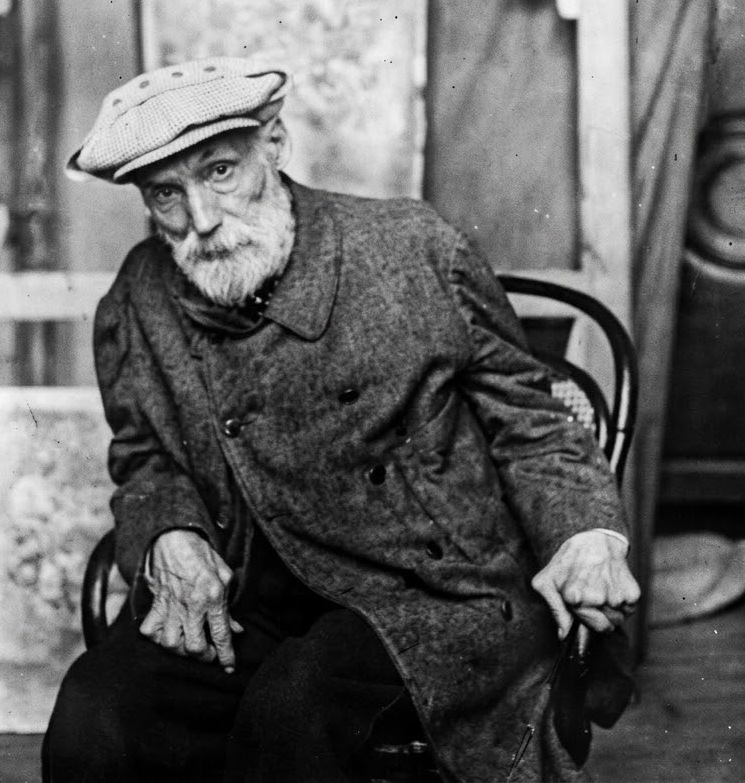
In the final decades of his life, Renoir developed severe rheumatoid arthritis. The progressive disease was merciless, eventually causing his hands to become painfully deformed and entirely paralyzed. His joints locked, and his fingers curled inward, making it physically impossible for him to even hold a paintbrush on his own. For most artists, this would have signaled a tragic and abrupt end to their career.
But Renoir’s passion for creation was an unstoppable force that simply refused to yield to his failing body. Unable to grasp his tools, he famously instructed his assistants and family members to wedge the paintbrushes between his crippled fingers or strap them directly to his wrists using bandages. Every single brushstroke became a grueling exertion of will, yet he continued to paint every day, refusing to let the darkness of his condition seep into the bright palettes of his canvases.
When a younger Henri Matisse visited the ailing master and asked why he continued to torture himself by painting in such agony, Renoir offered his legendary response: “The pain passes, but the beauty remains. True to his word, the suffering he endured has long since faded into history, but the magnificent, life-affirming beauty he fought so hard to capture continues to illuminate the world today.

