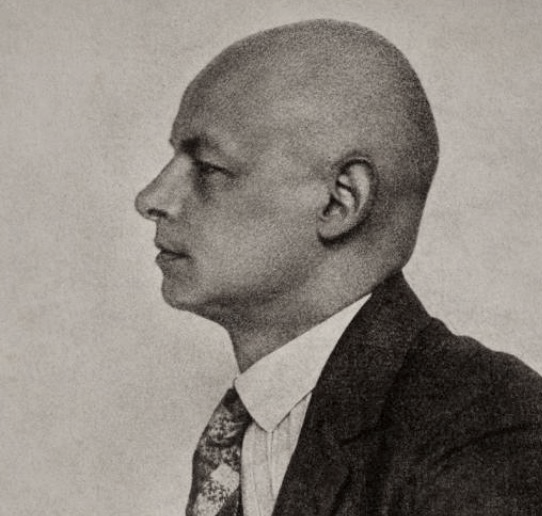




Oskar Schlemmer (Parents: Carl Leonhard Schlemmer and Lina Schlemmer; youngest of six children; Spouse: Helena Tutein)
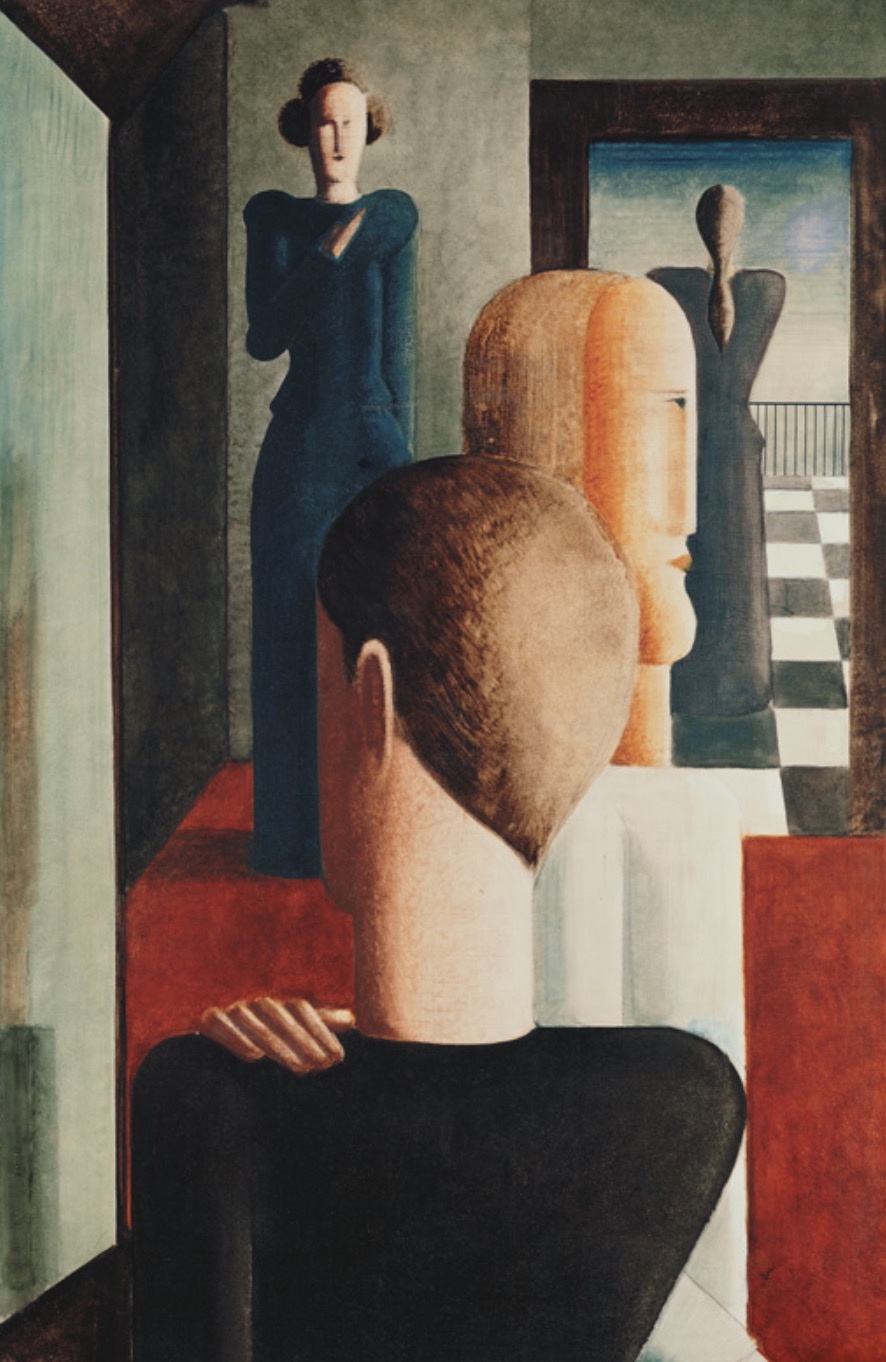
Oskar Schlemmer (1888–1943) was a German painter, sculptor, designer, and choreographer who famously sought to reconcile the human figure with the abstract, geometric logic of modern space. He is best remembered for his transformative role at the Bauhaus, where he served as Master of the Mural Painting and Sculpture workshops before heading the theater workshop.
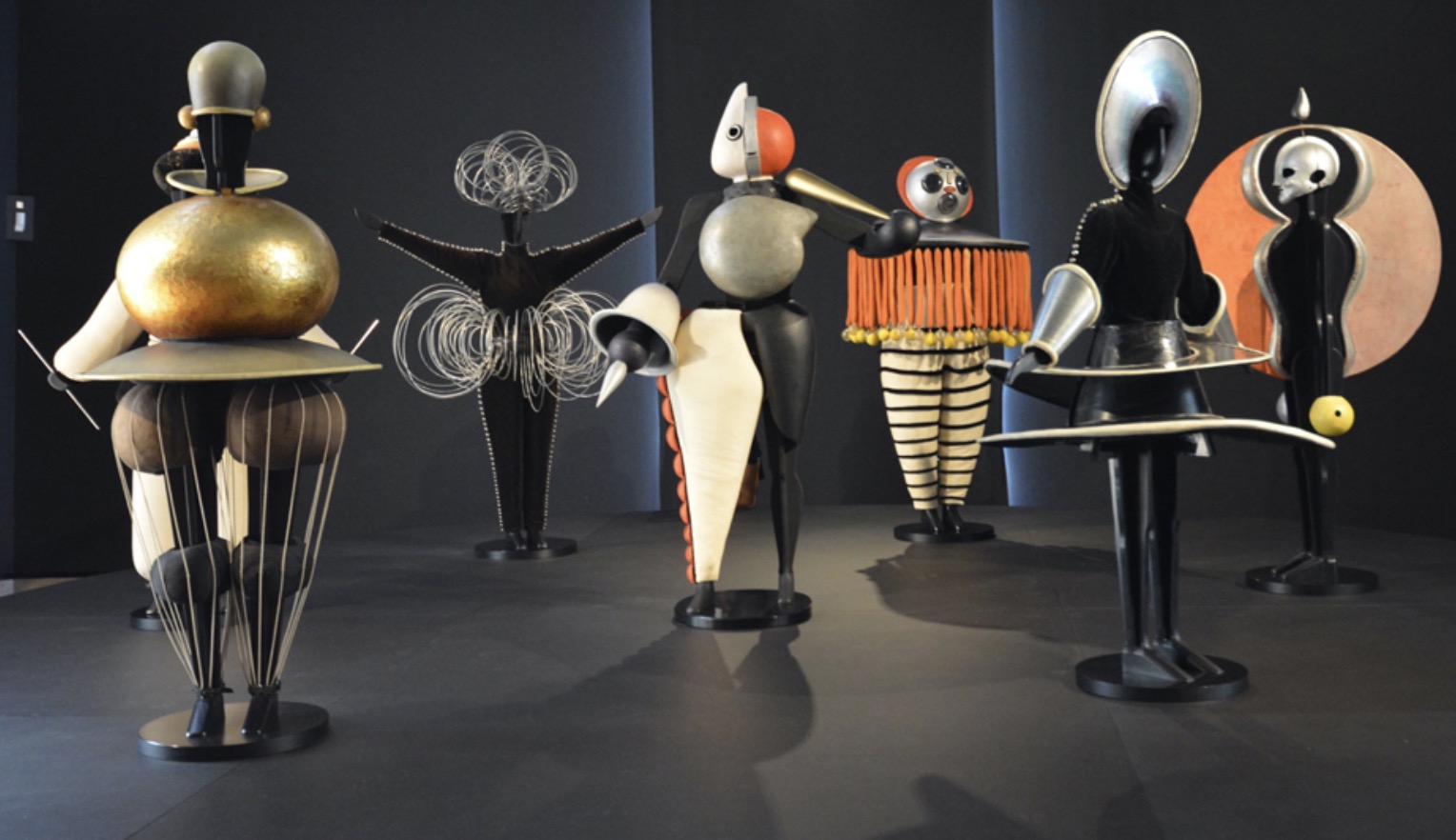
Schlemmer’s work revolved around the concept of “Man as Machine” and “Man as Figure in Space.” He viewed the human body as a mathematical system that could be broken down into geometric shapes—spheres, cones, and cylinders. This philosophy reached its peak in his 1922 masterpiece, the Triadic Ballet (Triadisches Ballett). In this performance, actors were dressed in rigid, sculptural costumes that restricted their movement, effectively turning them into “ambulatory architecture.”
His paintings, such as Bauhaus Stairway (1932), are iconic representations of the Bauhaus aesthetic, featuring stylized, anonymous figures arranged in rhythmic, architectural compositions. Schlemmer aimed to strip away the emotional “clutter” of expressionism to find a universal, objective harmony between humans and their environment.
With the rise of the Nazi regime, Schlemmer’s work was labeled “Degenerate Art” (Entartete Kunst). He was dismissed from his teaching positions and lived his final years in “inner emigration,” working in a lacquer factory in Wuppertal to survive. Despite the suppression of his work during his lifetime, Schlemmer’s theories on space and movement profoundly influenced 20th-century stage design, modern dance, and pop culture (notably influencing the aesthetic of artists like David Bowie).
Active in others filds : Choreography, Stage Design, Sculpture, Mural Painting, Art Theory. .