


Architectural Movements
A comprehensive guide to the visual principles, history, and pioneers of this movement. Curated for researchers and students seeking a structured analysis of artistic styles & Technique .
Available Art Style & Movement
Select Art Style...
 Abstract
 Abstract Expressionism
 Academic Art
 Aestheticism
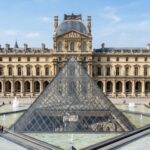 Architectural Movements
 Art Deco
 Art Nouveau
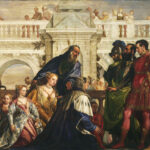 Baroque
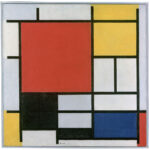 Bauhaus
 Byzantine
 Cartoon
 CGI
 Chiaroscuro
 Chiaroscuro Noir
 Classical Architecture
 Classicism
 Comic
 Conceptual
 Contemporary
 Cubism
 Dada
 Early Renaissance
 Expressionism
 Fantasy Art
 Fashion
 Fashion Design
 Fashion Illustration
 Fashion Photography
 Fauvism
 Figurative Art
 Figurative Photography
 Fresco
 Gothic
 Haute Couture
 High Renaissance
 Hybrid
 Illustration
 Impressionism
 Landscape
 Line art
 Manga
 Mannerism
 Marvel
 Matte Painting
 Miniature
 Minimalism
 Modern Architecture
 Modernism
 Muralism
 Naturalism
 Neoclassicism
 Orientalism
 Photography
 Pop Art
 Pre-Raphaelite
 Realism
 Regionalism
 Relief
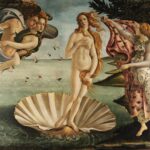 Renaissance
 Rococo
 Romanticism
 SCI-FI
 Sculpting
 Street Art
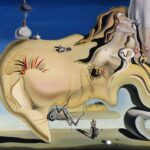 Surrealism
 Symbolism
 Tempera
 Tenebrism
 Tonalism
 VFX
 Victorian
General Specifcations for Architectural Movements
Architectural movements represent the evolution of human civilization through the lens of Form, Function, and Material. Unlike isolated art movements, architecture is bound by the laws of physics and the socio-economic needs of the time. A “Movement” in architecture is defined by a shared vocabulary of structural elements (how it stands up) and aesthetic ornamentation (how it looks).
For the Cgitems database, architectural movements are analyzed through three primary lenses:
-
Structural Innovation: The transition from Post-and-Lintel (Ancient) to Arches/Vaults (Medieval) to Steel Frames (Modern) and finally to Computational/Parametric design.
-
Spatial Philosophy: How a building treats the person inside—from the intimidating “divine scale” of the Gothic era to the “human-centric” ergonomics of Modernism.
-
The Facade & Envelope: The “skin” of the building, which reflects the artistic trends of the era, such as the intricate carvings of the Baroque or the “Glass Curtain Walls” of the International Style.
Related to Architectural Movements
Note : The images below might not strictly correspond to the style and technique of Architectural Movements, but rather represent an artist who also includes this approach in their portfolio.

Arnolfo di Cambio


Christopher Wren

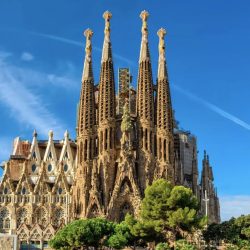
Antoni Gaudí


Victor Horta


francesco borromini


Jørn Utzon


Francesco Bartolomeo Rastrelli


Nicola Pisano


Oscar Niemeyer

Classification
-
Category: Architecture, Urban Planning, Interior Design, Environmental Design.
-
Era/Period: Prehistoric to Contemporary (Approx. 10,000 BCE – Present).
-
Origin Location: Global (with major historical nodes in Mesopotamia, Greece, Italy, France, and the USA).
Visual & Technical Specs
-
Key Visual Characteristics: Massing (volume), Symmetry vs. Asymmetry, Fenestration (window patterns), and the “Order” of columns or structural supports.
-
Color Palette: Traditionally dictated by local materials (Limestone, Brick, Marble). In the Modern era, defined by the “Truth to Materials” (Grey concrete, Black steel, Clear glass).
-
Mediums & Tools:
-
Historical: Stone masonry, timber framing, lime mortar.
-
Industrial: Reinforced concrete (Béton armé), I-beams, plate glass.
-
Digital: BIM (Building Information Modeling), Rhino/Grasshopper (Parametricism).
-
Pioneers & Key Works
-
Founders/Key Figures: Vitruvius (Ancient Theory), Andrea Palladio (Renaissance), Le Corbusier (Modernism), Zaha Hadid (Parametricism).
-
Masterpieces:
-
The Parthenon (Classical perfection).
-
The Sagrada Família (Art Nouveau/Gothic hybrid).
-
The Villa Savoye (Modernist manifesto).
-
The Burj Khalifa (Neo-Futurism/Contemporary engineering).
-
-
Influential Schools: The Bauhaus (Germany), École des Beaux-Arts (France), Vkhutemas (Russia).
Artists Related Architectural Movements







Philosophy & Context
-
The “Why”: Architecture is the “Will of an epoch translated into space.” It aims to solve the fundamental conflict between Beauty (Venustas), Utility (Utilitas), and Stability (Firmitas).
-
Historical Context: Movements are usually reactions. Modernism was a reaction to the “clutter” of the 19th century; Post-Modernism was a reaction to the “boring” boxes of Modernism.
Modern Influence: Cinema, TV & CGI
-
2D, 3D, CGI, VFX: Architecture provides the “Stage” for all visual storytelling. In CGI, “Procedural Architecture” allows for the instant creation of cities (like in Cyberpunk 2077 or Inception). Knowledge of architectural styles is essential for believable Environment Design.
-
Modern Legacy: Digital twin technology and Metaverse “Virtual Architecture” where gravity no longer limits form.
Modern Influence: AI & Hybrid Media
-
Modern Legacy: AI is currently used for “Generative Design,” where an algorithm optimizes a building’s shape for sunlight or wind based on historical style prompts.
-
AI Prompting Keywords: Architectural photography, [Style Name], isometric view, floor plan, brutalist concrete, neoclassical symmetry, parametric curves, photorealistic, Unreal Engine 5 render, global illumination, Ray-traced shadows.
Explore More

Art Styles by random seed
Fresco
Fresco is an ancient and highly durable mural painting technique executed upon freshly laid, or “wet,” lime plaster. The term translates directly from the Italian word for “fresh.” In true fresco (buon fresco), water is used as the binding vehicle for dry-powder pigment. As the plaster dries and sets through a chemical reaction with the air (carbonation), the pigment becomes completely fused with the wall itself, rather than resting on top of it as a surface layer. This integration makes fresco one of the most permanent forms of wall decoration, capable of surviving for centuries.
Because the plaster dries relatively quickly, the artist must work in small, daily sections known as giornate (a day’s work). It requires immense precision, speed, and confident brushwork, as mistakes cannot simply be painted over—the section must be chiseled out and re-plastered.
The monumental scale of the Sistine Chapel ceiling demonstrates the physical and artistic demands of the fresco technique.
Gothic
Gothic art was a medieval movement that revolutionized European aesthetics, transitioning from the heavy, dark, and earthbound Romanesque style to a form defined by height, light, and verticality. While often associated with “darkness” in modern pop culture, the original Gothic movement was obsessed with the divine quality of light (Lux Nova).
In architecture, the style solved the “weight problem” of stone buildings. By using pointed arches and ribbed vaults, builders could channel weight downward rather than outward, allowing walls to be thinner and replaced with massive stained-glass windows. In visual arts, Gothic style marked a move toward greater realism; figures became less stiff and more emotional compared to Byzantine or Romanesque predecessors, showing naturalistic drapery and human expressions.
Renaissance
The Renaissance (meaning “rebirth”) represents one of the most monumental eras in cultural history, marking the transition from the Middle Ages to modernity. Philosophically rooted in humanism, it revived the classical ideals of ancient Greece and Rome, emphasizing the dignity, potential, and reason of humanity. In the visual arts, this manifested as a profound shift toward anatomical realism, scientific observation, and mathematical harmony.
Instead of the flat, symbolic, and heavily stylized two-dimensional space of medieval art, Renaissance artists treated the canvas as a “window into the world.” They pioneered systematic methods to replicate how the human eye naturally perceives physical depth, form, and light.
For advanced students and researchers, the movement is systematically categorized into three distinct evolutionary phases:
-
Early Renaissance (c. 1400–1490): Centered primarily in Florence. This foundational period focused on establishing the mathematical rules of linear perspective, mastering basic human anatomy, and breaking away from Byzantine artistic rigidity.
-
High Renaissance (c. 1490–1527): Centered primarily in Rome and Venice. This period represents the absolute peak of visual harmony, monumental scale, and technical mastery. It is characterized by perfectly balanced, symmetrical compositions and an elevated social status for artists, who were now viewed as divinely inspired geniuses rather than mere tradesmen.
-
Northern Renaissance (c. 1430–1580): Developed concurrently in Flanders, Germany, and the Netherlands. Unlike the Italian obsession with geometry and classical antiquity, Northern masters focused intensely on empirical observation, domestic realism, and an unmatched, microscopic level of surface detail made possible by their early perfection of oil painting.
Surrealism
Surrealism was a 20th-century avant-garde movement in art and literature that sought to release the creative potential of the unconscious mind. Emerging in the aftermath of World War I and heavily influenced by the psychoanalytic theories of Sigmund Freud, Surrealism aimed to resolve the previously contradictory conditions of dream and reality into an absolute reality, a “surreality.”
The movement fundamentally split into two distinct visual methodologies. Automatism (Abstract Surrealism) relied on spontaneous, unedited expression to bypass the conscious mind, using techniques like doodling, dripping, and frottage to let the subconscious dictate the form. Veristic Surrealism (Representational Surrealism), on the other hand, used highly meticulous, academic realism to paint impossible, dream-like scenes. These artists rendered objects with photographic precision but stripped them of their normal context, juxtaposing unrelated elements to shock the viewer’s rational mind.
Conceptual Art
Conceptual Art (or Conceptualism) is a movement that prizes the idea or concept behind the work over the finished physical object or the technical skill required to make it. In this style, the “art” is the mental process and the proposition rather than the painting, sculpture, or installation itself. It was a radical shift that essentially argued that if an artist “thinks” of a work, it exists, whether or not it is physically executed.
For researchers and students, it is characterized by its “dematerialization” of the art object. It often utilizes everyday materials, text, photography, and performance to document an idea. The aesthetic is frequently “anti-visual” or clinical, mimicking the appearance of information, data, or instructional manuals to distance the work from traditional notions of beauty or craftsmanship.
Fantasy art
Fantasy Art is a broad, highly influential visual genre characterized by the depiction of mythic, supernatural, magical, or speculative themes that exist outside the boundaries of our consensus reality. It is an art form rooted in world-building, where the impossible is rendered with enough structural and material logic to suspend the viewer’s disbelief. Unlike abstract art, Fantasy Art typically relies on Representational Realism or Academic Realism to ground its impossible subjects—such as mythical creatures, ancient sorcery, invented landscapes, and legendary heroes—in a tangible, believable environment.
For researchers, historians, and digital artists, Fantasy Art is understood through several distinct sub-movements and technical evolutions:
-
The Mythological & Romantic Roots: Early foundations heavily borrowed from the Pre-Raphaelites and Symbolists, focusing on folklore, Arthurian legends, and classical mythology with a soft, idealized, and romanticized lens.
-
The Pulp & Sword-and-Sorcery Era (Mid-20th Century): Dominated by paperback book covers and magazines. This phase introduced hyper-muscular anatomy, dynamic kinetic energy, and raw, visceral action compositions.
-
Contemporary High Fantasy & Imaginative Realism: The modern phase blends classical oil painting techniques with advanced digital tools, emphasizing complex ecosystem designs, cultural anthropology for fictional races, and highly sophisticated atmospheric lighting.

