SUB CATEGORIES
×

Art Movement & Style

Comic

A comprehensive guide to the visual principles, history, and pioneers of this movement. Curated for researchers and students seeking a structured analysis of artistic styles.

Full General Specifications

Comic art is a sophisticated visual language that combines sequential imagery with textual elements (word balloons, onomatopoeia, and captions) to deliver a narrative. Unlike a single painting, comic art relies on the “gutter”—the space between panels—where the reader’s imagination bridges the gap between actions, a concept known as closure.

Technically, it is defined by its use of graphic shorthand. Because comics were historically printed on cheap newsprint, artists developed a style using high-contrast black inks and limited color palettes (like the Ben-Day dots process) to ensure clarity. Modern comic art has evolved into various sub-genres:

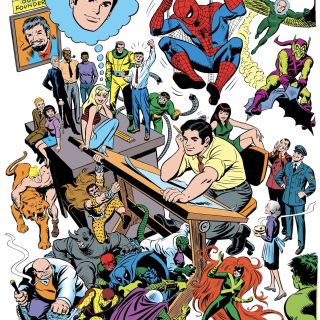
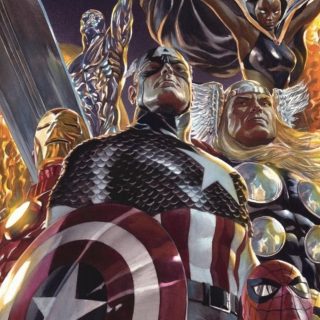
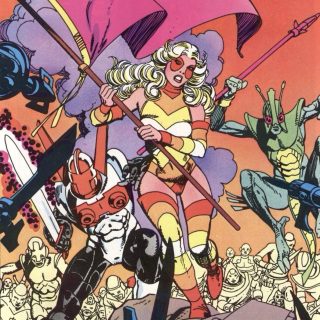
  • The Silver/Golden Age Style: Characterized by heroic proportions, bold primary colors, and heavy “Kirby Krackle” energy signatures.

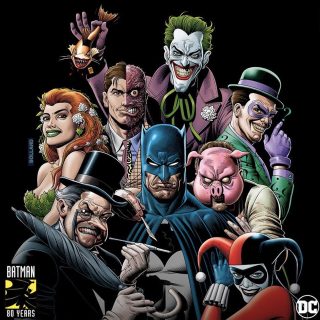
  • Noir/Dark Age: Focused on heavy chiaroscuro (extreme light and shadow) and gritty realism.

  • Clear Line (Ligne Claire): Popularized by Franco-Belgian creators, emphasizing strong, continuous outlines and vivid, flat colors without hatching.

Related Random Comic Artwork

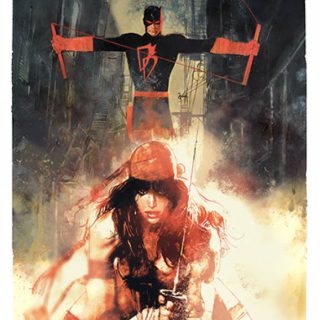
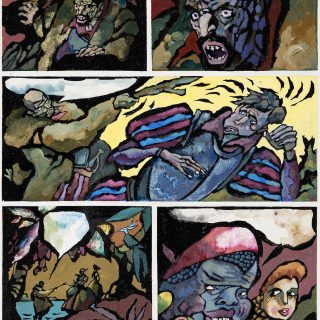
Bill Sienkiewicz

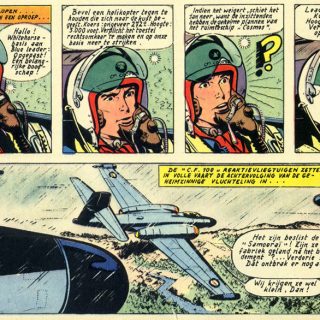
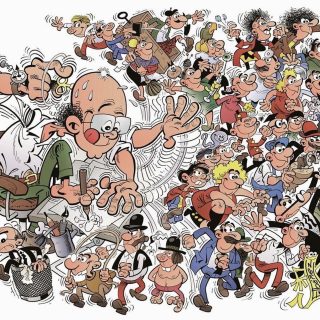
Francisco Ibáñez

Classification

  • Category: Painting (Illustration), Digital/AI Art, Fashion (Pop Art influence).

  • Era/Period: Late 19th Century (Modern form) to Present.

  • Origin Location: International (Parallel development in the USA, Europe/Belgium, and Japan).

Visual & Technical Specs

  • Key Visual Characteristics: Solid black outlines (Inking), dynamic “action lines” to indicate motion, exaggerated anatomy, stylized facial expressions, and narrative panels.

  • Color Palette: Traditionally limited to CMYK (Cyan, Magenta, Yellow, Black). Modern styles use full-spectrum digital gradients but often maintain high saturation and “flat” coloring techniques.

  • Mediums & Tools: * Traditional: Bristol board, India ink, G-pens, Crowquill nibs, and markers.

    • Digital: Wacom/Cintiq tablets, Clip Studio Paint (industry standard), Adobe Photoshop.

Pioneers & Key Works

  • Founders/Key Artists: Jack Kirby (The King), Will Eisner (The Spirit), Hergé (Tintin), Osamu Tezuka (Astro Boy), Moebius (Jean Giraud).

  • Masterpieces:

    1. The Spirit (Will Eisner) – Revolutionized page layout.

    2. Watchmen (Dave Gibbons/Alan Moore) – Masterclass in grid structure.

    3. The Incal (Moebius) – Peak sci-fi comic surrealism.

    4. Akira (Katsuhiro Otomo) – Perfection of cinematic detail and scale.

  • Influential Schools/Groups: Marvel/DC Bullpens, Image Comics, L’Association (France).

Philosophy & Context

  • The “Why”: The goal is accessibility and rhythm. Comic art seeks to democratize storytelling, making complex narratives digestible through the “Show, Don’t Just Tell” philosophy. It bridges the gap between literature and film.

  • Historical Context: Originally sold as “funny pages” in newspapers to boost circulation during the Great Depression. It evolved through the WWII era as a form of patriotic propaganda and later transitioned into a medium for counter-culture and complex social commentary in the 1960s-80s.

Modern Influence: Cinema, TV & CGI

  • 2D, 3D, CGI, VFX: The “Comic Book Aesthetic” has become a massive trend in CGI. Movies like Spider-Man: Into the Spider-Verse use 3D models but apply 2D techniques like hand-drawn “smear frames,” halftone patterns, and line work over the 3D renders.

  • Modern Legacy: The Marvel Cinematic Universe (MCU) is the most prominent commercial legacy, but the “Comic Style” is also heavily used in UI/UX design (gamification) and high-end streetwear fashion.

Modern Influence: AI & Hybrid Media

  • Modern Legacy: AI art tools are exceptionally good at replicating comic styles because of the clear, high-contrast data available in training sets. It is frequently used for “Concept Ideation” for character designs.

  • AI Prompting Keywords: Comic book art, bold black outlines, cel-shaded, ink illustration, high contrast, dynamic action pose, Kirby Krackle, halftone dots, vibrant flat colors, 90s comic style, graphic novel aesthetic.

Shopping Cart

Need Help?

Questions ! Comments ? You Tell Us We Listen .

Feel free to contact us

Add Your Heading Text Here

Login

Shopping Cart