


Art Style & Movement

SUB CATEGORIES
×

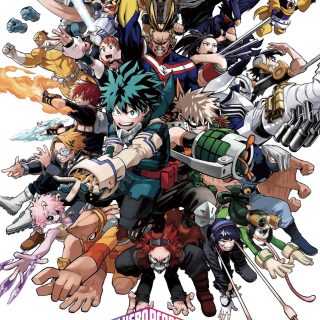
Manga

A comprehensive guide to the visual principles, history, and pioneers of this movement. Curated for researchers and students seeking a structured analysis of artistic styles.

Full General Specifcations for Manga

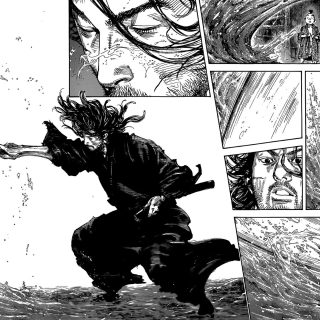
Manga (漫画) is a sophisticated Japanese sequential art form that evolved from 12th-century scrolls into a global cultural phenomenon. Unlike Western comics, Manga is a multi-generational medium with specific demographic classifications: Shonen (young males), Shojo (young females), Seinen (adult men), and Josei (adult women).

Technically, Manga is defined by its “cinematic” pacing. While Western comics often focus on action-to-action transitions, Manga frequently uses aspect-to-aspect transitions—lingering on a falling leaf or a background detail to establish mood or “Ma” (the interval of empty space). The style relies heavily on a specialized vocabulary of visual symbols, such as “sweat drops” for anxiety or “popping veins” for anger. For researchers, the core of Manga’s power lies in its Iconic Abstraction: characters are drawn with simplified, expressive features (large eyes, minimal noses) to allow the reader to project themselves onto the character more easily.

Related Random Manga Artwork

Naoki Urasawa

Classification

  • Category: Digital/AI Art, Painting (Illustration), Fashion.

  • Era/Period: Modern Manga began post-WWII (1945–Present), rooted in Edo-period woodblock prints.

  • Origin Location: Japan.

Visual & Technical Specs

  • Key Visual Characteristics: Large, expressive eyes (the “windows to the soul”), stylized hair, varied line weights (G-pen pressure), speed lines (Screentone), and exaggerated physical reactions.

  • Color Palette: Historically Monochromatic (Black & White) due to printing costs, utilizing “Screentones” (dot patterns) to create grey gradients. Modern digital manga often uses vibrant, high-contrast cel-shading.

  • Mediums & Tools: * Traditional: G-pens, Maru-pens, Copic markers, India ink, Kent paper.

    • Digital: Clip Studio Paint (formerly Manga Studio), Procreate, and specialized screen-tone brushes.

Pioneers & Key Works

  • Founders/Key Artists: Osamu Tezuka (The “God of Manga”), Akira Toriyama (Dragon Ball), Katsuhiro Otomo (Akira), Naoko Takeuchi (Sailor Moon), Junji Ito (Horror icon).

  • Masterpieces:

    1. Astro Boy (Tezuka) – The foundation of modern style.

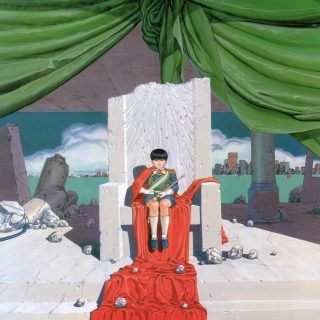
    2. Akira (Otomo) – The pinnacle of technical detail and perspective.

    3. Berserk (Kentaro Miura) – Masterclass in cross-hatching and dark fantasy.

    4. Uzumaki (Junji Ito) – Structural horror through linework.

  • Influential Schools/Groups: Weekly Shonen Jump, Year 24 Group (pioneers of modern Shojo).

Philosophy & Context

  • The “Why”: To create an immersive, emotional experience where the reader “lives” through the character. Manga prioritizes internal monologue and emotional resonance over purely external plot progression.

  • Historical Context: Emerged from a fusion of traditional Japanese art (Ukiyo-e) and Western Disney-style animation brought to Japan during the post-war occupation. It served as an affordable escape and a tool for national rebuilding through storytelling.

Modern Influence: Cinema, TV & CGI

  • 2D, 3D, CGI, VFX: Manga’s influence is seen in the “Sakuga” (high-quality animation) style of modern VFX. Films like The Matrix and Inception borrowed their framing and kinetic energy directly from Manga storyboards.

  • Modern Legacy: The rise of Cel-Shading in video games (like Genshin Impact or Zelda: Breath of the Wild) is a direct attempt to translate the 2D Manga/Anime look into 3D spaces.

Modern Influence: AI & Hybrid Media

  • Modern Legacy: AI art models are heavily “weighted” toward Manga styles due to the massive volume of high-quality digital illustration data. It is currently the most popular style for AI-assisted character design (LoRA training).

  • AI Prompting Keywords: Manga style, cel-shaded, monochrome ink, screentone, fine linework, expressive eyes, speed lines, 90s retro manga, high-contrast black and white, detailed hatching.

Some Other Art Styles by Random Seed

Art Styles by random seed

Manga

Manga (漫画) is a sophisticated Japanese sequential art form that evolved from 12th-century scrolls into a global cultural phenomenon. Unlike Western comics, Manga is a multi-generational medium with specific demographic classifications: Shonen (young males), Shojo (young females), Seinen (adult men), and Josei (adult women).

Technically, Manga is defined by its “cinematic” pacing. While Western comics often focus on action-to-action transitions, Manga frequently uses aspect-to-aspect transitions—lingering on a falling leaf or a background detail to establish mood or “Ma” (the interval of empty space). The style relies heavily on a specialized vocabulary of visual symbols, such as “sweat drops” for anxiety or “popping veins” for anger. For researchers, the core of Manga’s power lies in its Iconic Abstraction: characters are drawn with simplified, expressive features (large eyes, minimal noses) to allow the reader to project themselves onto the character more easily.

Fauvism

Fauvism was the first of the major avant-garde movements of the 20th century. Its name originated from the French word les Fauves (“the wild beasts”), a term coined by critic Louis Vauxcelles after he saw the shocking, non-naturalistic colors at the 1905 Salon d’Automne.

For researchers and students, the defining technical achievement of Fauvism was the liberation of color. Before this movement, color was used to describe an object (a tree is green); Fauvist artists used color to describe an emotion or a formal sensation (a tree can be bright red if it feels right to the artist). While the movement was short-lived (lasting barely a decade), it laid the groundwork for Expressionism and all subsequent abstract art by proving that art did not need to mimic the physical world to be “true.”

Gothic

Gothic art was a medieval movement that revolutionized European aesthetics, transitioning from the heavy, dark, and earthbound Romanesque style to a form defined by height, light, and verticality. While often associated with “darkness” in modern pop culture, the original Gothic movement was obsessed with the divine quality of light (Lux Nova).

In architecture, the style solved the “weight problem” of stone buildings. By using pointed arches and ribbed vaults, builders could channel weight downward rather than outward, allowing walls to be thinner and replaced with massive stained-glass windows. In visual arts, Gothic style marked a move toward greater realism; figures became less stiff and more emotional compared to Byzantine or Romanesque predecessors, showing naturalistic drapery and human expressions.

Renaissance

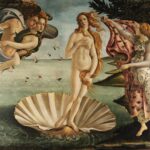
The Renaissance (meaning “Rebirth”) was a fervent period of European cultural, artistic, political, and economic “rebirth” following the Middle Ages. It marked the transition from medievalism to modernity. Artistically, it moved away from the flat, symbolic iconography of the Gothic period toward a profound Naturalism based on the observation of the physical world.

For researchers and students, the Renaissance is typically analyzed in three distinct phases:

  • Early Renaissance (1400–1490): The discovery of linear perspective and the revival of classical Roman forms.

  • High Renaissance (1490–1527): The peak of technical mastery, focusing on “Divine Proportion,” harmony, and the genius of the “Universal Man” (Polymath).

  • Northern Renaissance: Occurring in the Netherlands and Germany, focusing on extreme detail, oil painting techniques, and domestic realism rather than the idealized forms of Italy.

Surrealism

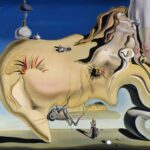
Surrealism is one of the most influential avant-garde movements of the 20th century, seeking to bridge the gap between dreams and reality. It emerged as a reaction to the “rationalism” that many artists believed had led to the horrors of World War I. Surrealism isn’t just a visual style; it is a means of exploring the unconscious mind.

Researchers and students should identify the two main stylistic branches:

  • Veristic (Representational) Surrealism: Uses academic, realistic techniques to depict “impossible” scenes with photographic precision (e.g., Dalí, Magritte). The shock comes from the illogical juxtaposition of recognizable objects.

  • Absolute (Automatic) Surrealism: Focuses on Automatism—allowing the hand to move randomly across the canvas without conscious control. This results in more abstract, biomorphic shapes (e.g., Joan Miró, André Masson).

Orientalism

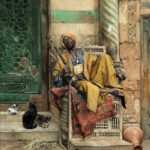
Orientalism in the visual arts refers to a specific movement in the 19th century where Western painters—primarily from France, Britain, and Germany—depicted the landscapes, people, and cultures of the Near East, Middle East, and North Africa. It is characterized by an Academic Realism so precise it often feels photographic, though the subjects were frequently romanticized or staged.

For researchers and students, it is vital to understand that Orientalism functioned as both an artistic style and a cultural lens. The movement is divided into two main artistic approaches:

  • The Ethnographic/Documentary Style: Artists who traveled extensively (like David Roberts) and sought to capture the architecture and ruins of Egypt and the Levant with archaeological accuracy.

  • The Romantic/Imaginary Style: Artists (like Jean-Léon Gérôme) who created highly detailed, “hyper-real” scenes of harems, bazaars, and desert life, often blending various cultures into a singular, exotic “Orient” that appealed to European fantasies.

Need Help?

Questions ! Comments ? You Tell Us We Listen .

Feel free to contact us

Add Your Heading Text Here

Login