

Art Style & Movement

SUB CATEGORIES
×

Rococo

A comprehensive guide to the visual principles, history, and pioneers of this movement. Curated for researchers and students seeking a structured analysis of artistic styles.

Full General Specifications

Cubism represents the most radical break from traditional Western pictorial representation since the Renaissance. Developed primarily in Paris, it abandoned the single-viewpoint perspective that had dominated art for centuries. Instead, Cubist artists analyzed subjects from multiple angles, breaking them into geometric fragments and reassembling them within a shallow, ambiguous space.

For researchers and students, it is essential to distinguish between its two primary phases:

  • Analytic Cubism (1907–1912): Focused on breaking down forms into monochromatic, overlapping planes.

  • Synthetic Cubism (1912–1914): Introduced collage, vibrant colors, and simpler shapes, emphasizing the construction of new forms rather than the deconstruction of existing ones.

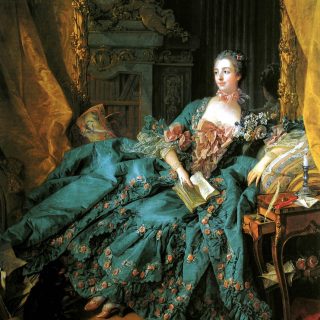
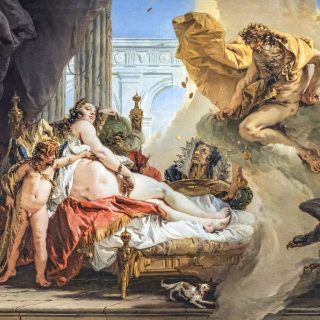
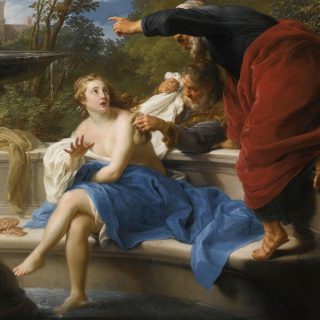
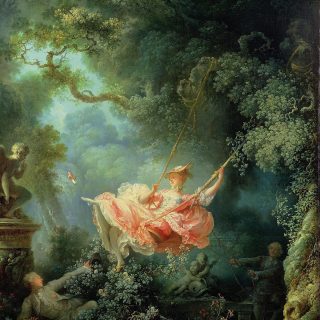
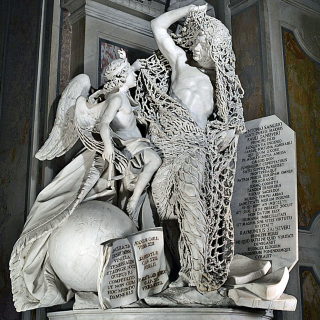
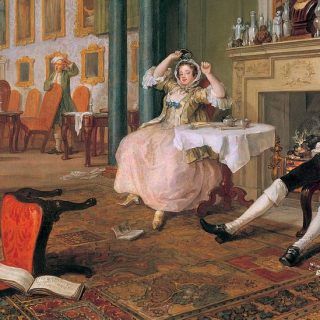
Related Random Rococo Artwork

Élisabeth Vigée Le Brun

Classification

  • Category: Painting, Sculpture, Architecture.

  • Era/Period: 1907–1914 (Early 20th Century).

  • Origin Location: Paris, France (Montmartre and Montparnasse).

Visual & Technical Specs

  • Key Visual Characteristics: Multi-faceted surfaces, geometric simplification (cubes, spheres, cones), simultaneous viewpoints, flattened pictorial space, and “passage” (the bleeding of edges between planes).

  • Color Palette: * Analytic: Subdued earth tones (ochre, grey, brown, black).

    • Synthetic: Brighter, more decorative palettes including primary colors.

  • Mediums & Tools: Oil on canvas, charcoal, wood, bronze (sculpture), and found materials (newspaper, oilcloth, rope) for early assemblages.

Pioneers & Key Works

  • Founders/Key Artists: Pablo Picasso, Georges Braque, Juan Gris, Fernand Léger.

  • Masterpieces:

    1. Les Demoiselles d’Avignon (Picasso, 1907)

    2. The Portuguese (Braque, 1911)

    3. Portrait of Picasso (Juan Gris, 1912)

    4. Ma Jolie (Picasso, 1911–12)

  • Influential Schools/Groups: Section d’Or (Puteaux Group), Le Bateau-Lavoir.

Philosophy & Context

  • The “Why”: To challenge the “illusion” of three-dimensional space on a two-dimensional surface. Cubists believed that the mind perceives objects over time and from various angles; therefore, a “true” representation must include all these facets simultaneously.

  • Historical Context: Occurred during the Second Industrial Revolution. It was influenced by the rise of photography (which freed painting from being literal), Einstein’s Theory of Relativity (rethinking time/space), and the discovery of African and Oceanic tribal masks.

Modern Influence: Cinema, TV & CGI

  • 2D, 3D, CGI, VFX: Cubist principles are foundational to low-poly 3D modeling and abstract motion graphics. In VFX, “fragmentation” effects often draw from Cubist deconstruction.

  • Modern Legacy: Visible in the fractured editing of avant-garde cinema and the set designs of German Expressionist films (like The Cabinet of Dr. Caligari), which evolved into modern psychological thrillers.

Modern Influence: AI & Hybrid Media

  • Modern Legacy: Cubism serves as a primary “stress test” for latent diffusion models, as it requires the AI to ignore the laws of physics and perspective while maintaining structural integrity.

  • AI Prompting Keywords: Cubism, multi-faceted, fractured planes, geometric abstraction, overlapping geometric shapes, simultaneous perspective, analytic cubism style, palette of ochre and grey, Juan Gris lighting.

Shopping Cart

Need Help?

Questions ! Comments ? You Tell Us We Listen .

Feel free to contact us

Add Your Heading Text Here

Login

Shopping Cart