



Art Style & Movement
Symbolism
A comprehensive guide to the visual principles, history, and pioneers of this movement. Curated for researchers and students seeking a structured analysis of artistic styles.
Full General Specifcations for Symbolism
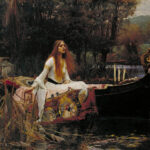
Symbolism was a late 19th-century movement that rejected the literal representation of the world (Realism and Impressionism) in favor of the inner life of the mind. Symbolist artists did not aim to paint a tree or a person as they appeared to the eye, but rather as symbols of a deeper, often darker, psychological or spiritual reality.
It is characterized by an interest in the occult, dreams, melancholy, and the macabre. For researchers, it is the bridge between the Romanticism of the early 1800s and the Surrealism of the 20th century. The art is intentionally ambiguous; it uses “private” symbols—motifs that might mean something specific to the artist but remain mysterious to the viewer—to evoke a mood or a “state of soul” rather than a clear narrative.
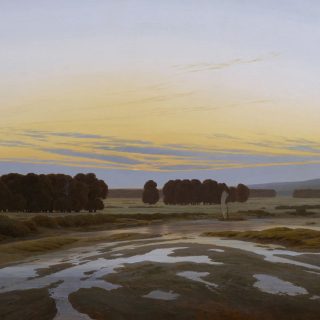
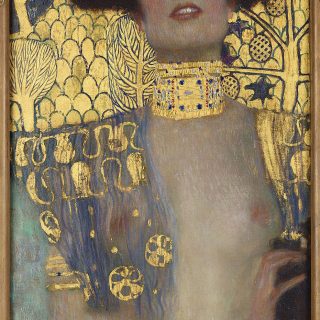
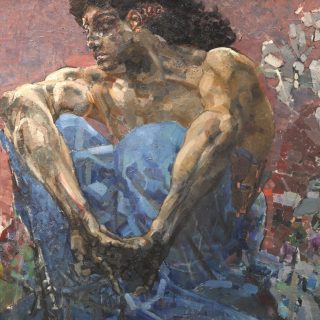
Related Random Symbolism Artwork
Classification
-
Category: Painting, Sculpture, Literature (Poetry), Illustration.
-
Era/Period: Late 19th Century (c. 1880–1910).
-
Origin Location: France and Belgium.
Visual & Technical Specs
-
Key Visual Characteristics: Dreamlike atmospheres, stylized and often distorted figures, use of mythological or biblical motifs (the femme fatale, the Orpheus myth), and a sense of stillness or “hushed” mystery.
-
Color Palette: Often heavy and saturated to evoke emotion. It features deep purples, midnight blues, blood reds, and pale, ghostly whites. In the works of Gustave Moreau, colors appear like glowing jewels or “enamelled” surfaces.
-
Mediums & Tools: Oil on canvas, charcoal, pastels (preferred for their soft, ethereal blending), and lithography.
Pioneers & Key Works
-
Founders/Key Artists: Gustave Moreau, Odilon Redon, Pierre Puvis de Chavannes, Fernand Khnopff, Edvard Munch (Early period).
-
Masterpieces:
-
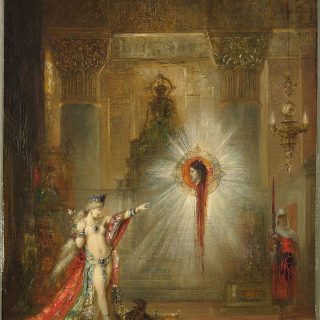
The Apparition (Gustave Moreau, 1876)
-
The Cyclops (Odilon Redon, 1914)
-
The Island of the Dead (Arnold Böcklin, 1880)
-
The Caress (Fernand Khnopff, 1896)
-
-
Influential Schools/Groups: Les Nabis, The Rose + Croix Salon.
Philosophy & Context
-
The “Why”: The goal was to “clothe the Idea in a perceptible form.” Symbolists believed that the material world was merely a “mask” for the spiritual world. They were reacting against the perceived soullessness of the Industrial Age and the rigid logic of science.
-
Historical Context: Occurred during the Fin de siècle (end of the century), a time characterized by both technological progress and a deep sense of cultural anxiety, decadence, and fascination with death.
Modern Influence: Cinema, TV & CGI
N/A
Modern Influence: AI & Hybrid Media
-
Modern Legacy: Symbolism is a high-performing style in AI because it thrives on “dream logic.” AI excels at the ambiguous blending of figures and environments that Symbolism requires.
-
AI Prompting Keywords: Symbolism style, dreamlike atmosphere, psychological allegory, ethereal lighting, midnight blue and gold leaf, mythological motifs, mysterious stillness, Odilon Redon charcoal style, haunting and macabre, Gustave Moreau intricate details.
Some Other Art Styles by Random Seed
Art Styles by random seed
Marvel
The “Marvel Style” is less a single aesthetic and more an evolutionary lineage of visual storytelling that prioritize dynamic energy, anatomical exaggeration, and emotional relatability. Unlike the “stiff” heroism of earlier eras, the Marvel style—pioneered in the 1960s—introduced characters with flaws, reflected through expressive “acting” in the drawings.
A core technical component is the “Marvel Method”: a collaborative process where the artist (not the writer) plots the visual pacing and action based on a brief synopsis, giving the artist primary control over the “cinematography” of the page. Visually, it is defined by “Kirby Krackle” (clusters of black dots representing cosmic energy), foreshortened limbs that seem to “pop” out of the panel, and high-velocity action lines. From the primary-colored 1960s to the hyper-detailed, painted realism of the 1990s and 2000s, the style consistently balances superheroic scale with human vulnerability.
Architectural
Architectural movements represent the evolution of human civilization through the lens of Form, Function, and Material. Unlike isolated art movements, architecture is bound by the laws of physics and the socio-economic needs of the time. A “Movement” in architecture is defined by a shared vocabulary of structural elements (how it stands up) and aesthetic ornamentation (how it looks).
For the Cgitems database, architectural movements are analyzed through three primary lenses:
-
Structural Innovation: The transition from Post-and-Lintel (Ancient) to Arches/Vaults (Medieval) to Steel Frames (Modern) and finally to Computational/Parametric design.
-
Spatial Philosophy: How a building treats the person inside—from the intimidating “divine scale” of the Gothic era to the “human-centric” ergonomics of Modernism.
-
The Facade & Envelope: The “skin” of the building, which reflects the artistic trends of the era, such as the intricate carvings of the Baroque or the “Glass Curtain Walls” of the International Style.
Romanticism
Romanticism was an intellectual and artistic movement that emerged as a reaction against the scientific rationalism of the Enlightenment and the industrialization of the 18th century. It shifted the focus of art from objective “reason” to subjective emotion, the power of the individual, and the overwhelming awe of nature (The Sublime).
In visual arts, Romanticism is characterized by a move away from the rigid, “clean” lines of Neoclassicism toward a more painterly, expressive approach. Artists sought to capture the “uncontrollable”—stormy seas, misty mountains, ruins, and intense human psychological states (horror, passion, and insanity). It wasn’t about “romance” in the modern sense of dating; it was about the “romance” of the soul’s struggle against the infinite.
Bauhaus
Orientalism in the visual arts refers to a specific movement in the 19th century where Western painters—primarily from France, Britain, and Germany—depicted the landscapes, people, and cultures of the Near East, Middle East, and North Africa. It is characterized by an Academic Realism so precise it often feels photographic, though the subjects were frequently romanticized or staged.
For researchers and students, it is vital to understand that Orientalism functioned as both an artistic style and a cultural lens. The movement is divided into two main artistic approaches:
-
The Ethnographic/Documentary Style: Artists who traveled extensively (like David Roberts) and sought to capture the architecture and ruins of Egypt and the Levant with archaeological accuracy.
-
The Romantic/Imaginary Style: Artists (like Jean-Léon Gérôme) who created highly detailed, “hyper-real” scenes of harems, bazaars, and desert life, often blending various cultures into a singular, exotic “Orient” that appealed to European fantasies.
Dada
Dada was not just an art style; it was a “protest” and a “state of mind.” Emerging as a direct response to the horrors of World War I, Dadaists argued that if a “rational” society could produce such irrational slaughter, then reason and logic themselves were invalid. Consequently, Dada sought to destroy traditional aesthetics through anti-art.
For researchers and art centers, Dada is critical because it introduced the concept of the “Readymade”—taking ordinary, manufactured objects and declaring them art simply by placing them in a gallery. It broke the “sacred” bond between the artist’s hand and the final work. Dada is the ancestor of Surrealism, Pop Art, and Conceptual Art. It utilized nonsense, irony, and “chance” as its primary creative tools, often using “cut-up” techniques in both poetry and visual collage.
Byzantine
Byzantine art refers to the body of Christian Greek artistic products of the Eastern Roman Empire. This style is the bridge between Classical Antiquity and the Middle Ages, shifting away from the 3D realism of the Greeks and Romans toward a highly symbolic, two-dimensional, and spiritual aesthetic.
For researchers and art centers, the defining characteristic is the “Eternal Presence.” Figures are depicted frontally with large, soul-searching eyes, existing in a timeless space represented by a flat gold background. This was not due to a lack of skill, but a deliberate theological choice: art was meant to be a “window to heaven” (Icon), not a reflection of the physical world. The architecture is equally revolutionary, perfecting the Pendentive—a constructive device permitting the placing of a circular dome over a square room.


