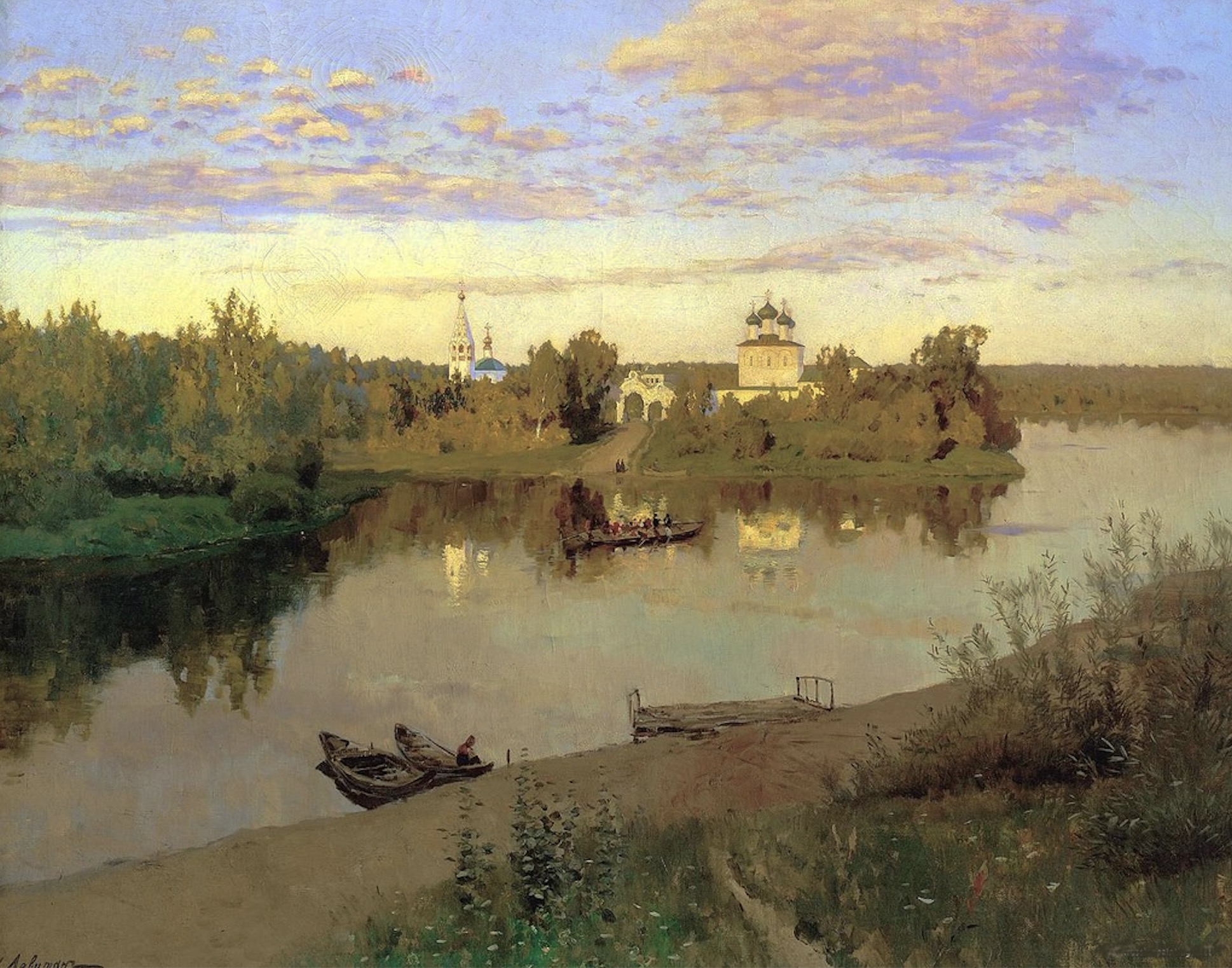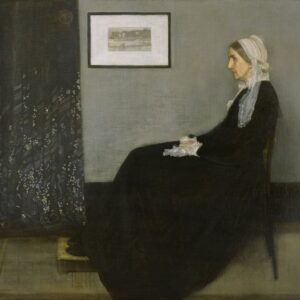
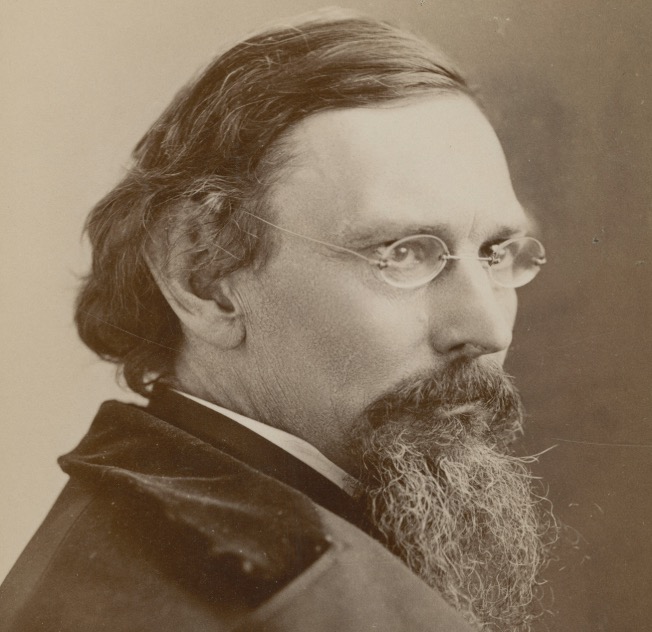

George Inness (Father: John William Inness; Mother: Clarissa Baldwin; Spouses: Delia Miller, Elizabeth Hart; Son: George Inness Jr., who also became a landscape painter) | (1825–1894) was a profoundly influential American landscape painter, frequently referred to as the “father of American landscape painting.” His career is a fascinating journey through the evolution of 19th-century American art, moving from the objective realism of his early years to a highly subjective, emotional, and spiritual approach in his later works.
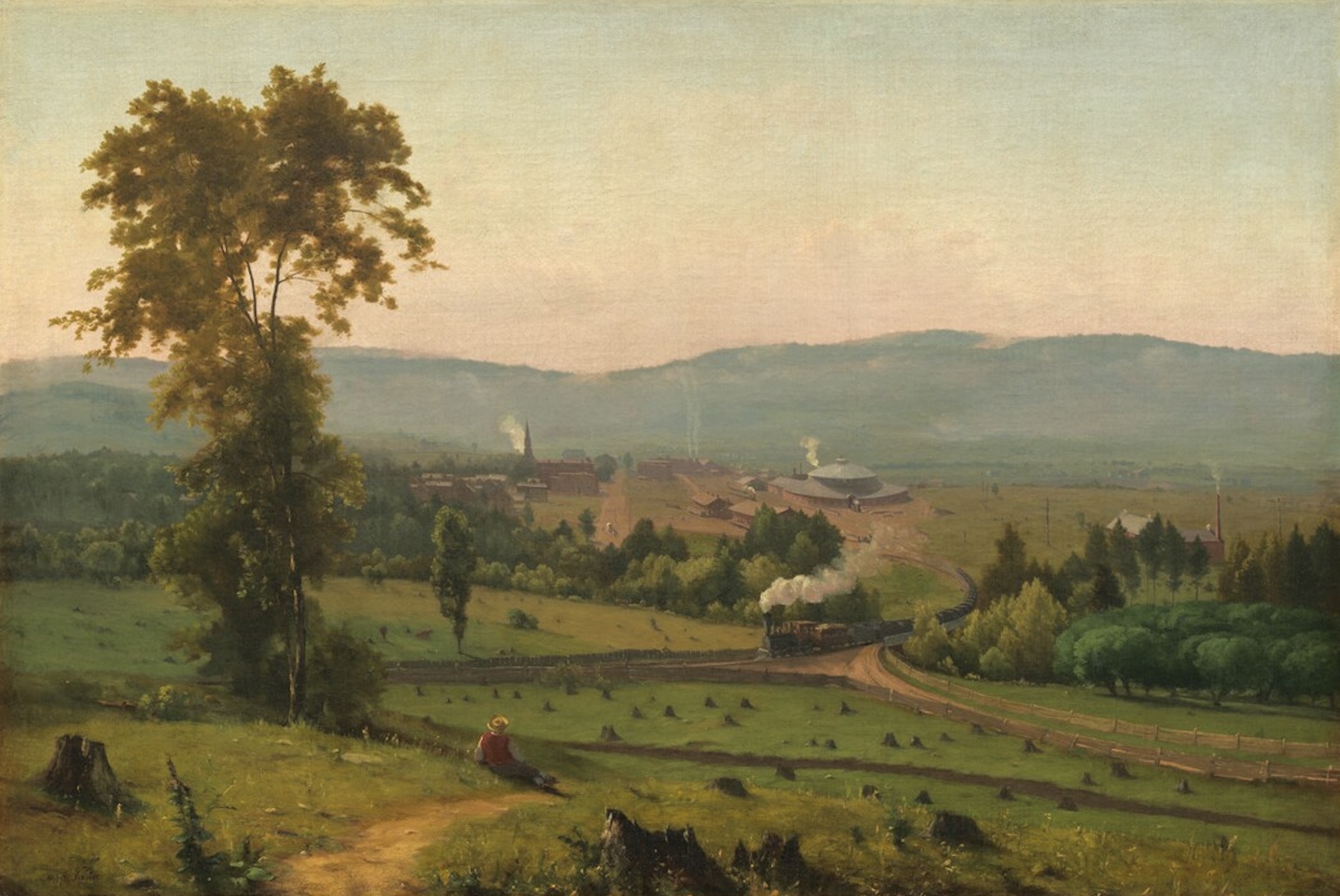
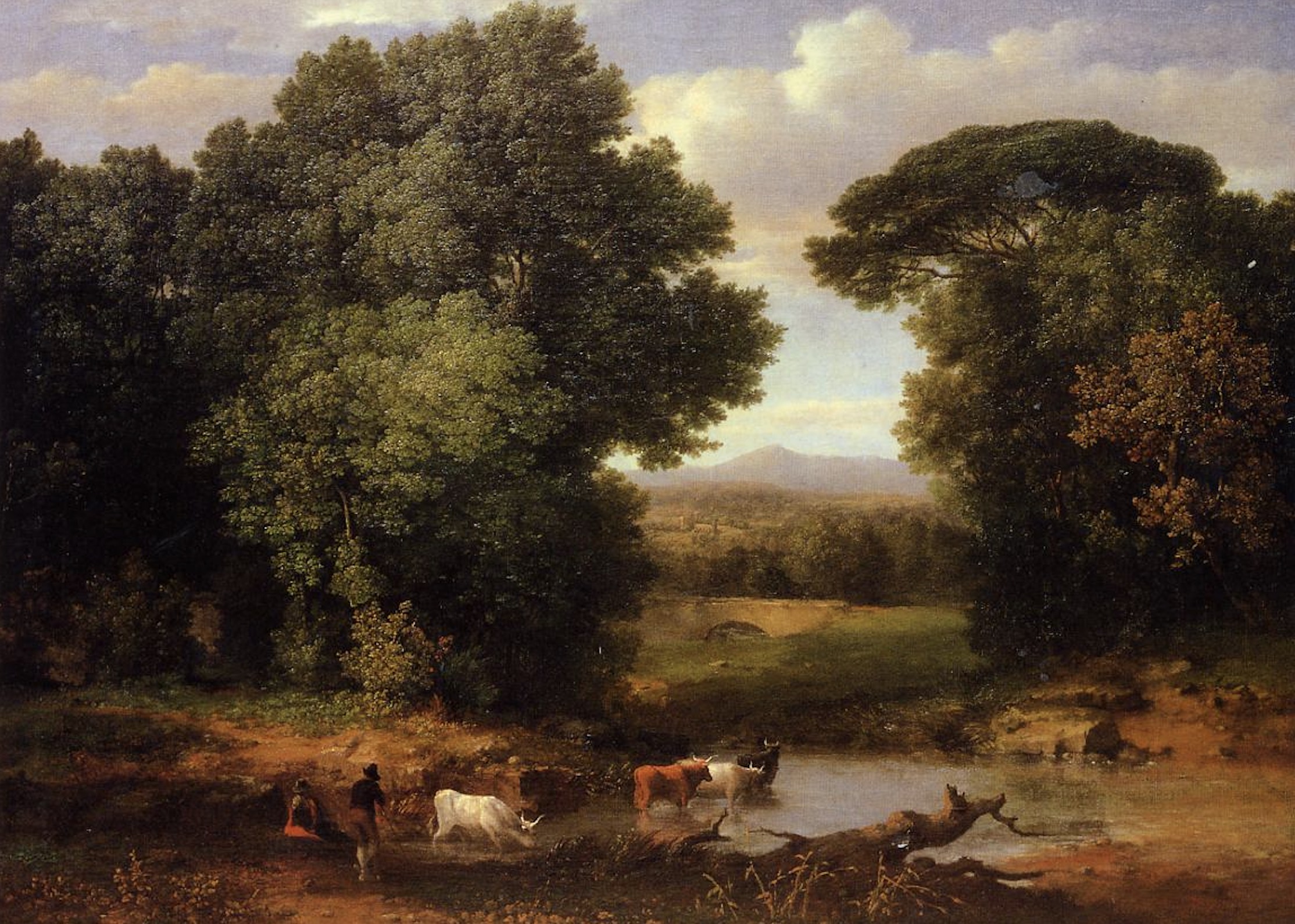
Largely self-taught, Inness began his career working in the detailed, literal style of the Hudson River School, heavily influenced by artists like Thomas Cole and Asher B. Durand. One of his most famous early works, The Lackawanna Valley (1855), was commissioned by a railroad company and, while incorporating modern industrial elements into the landscape, still adhered to traditional, tight brushwork and clear composition.
However, Inness’s style underwent a radical transformation following several trips to Europe in the 1850s and 1870s. In France, he was deeply moved by the artists of the Barbizon School, particularly Jean-Baptiste-Camille Corot and Théodore Rousseau. They taught him to favor mood, atmosphere, and loose brushwork over precise topographical detail.
His mature period was ultimately defined by his deep devotion to Swedenborgianism, a spiritual philosophy developed by Emanuel Swedenborg, which posited that everything in the material world has a spiritual correspondence. To capture this spiritual essence on canvas, Inness pioneered the American Tonalism movement. His late masterpieces are characterized by soft, blurred edges, hazy atmospheres, muted palettes, and an overwhelming sense of tranquility and mystical emotion. Rather than painting a specific place, Inness aimed to paint the feeling that the landscape evoked.
He remained highly successful and critically acclaimed throughout his life. He died in 1894 while viewing a sunset in Scotland, reportedly throwing his hands into the air and exclaiming, “My God! oh, how beautiful!” before collapsing.
Active in others filds : Spiritual Philosophy (Swedenborgian theology), Art Theory.