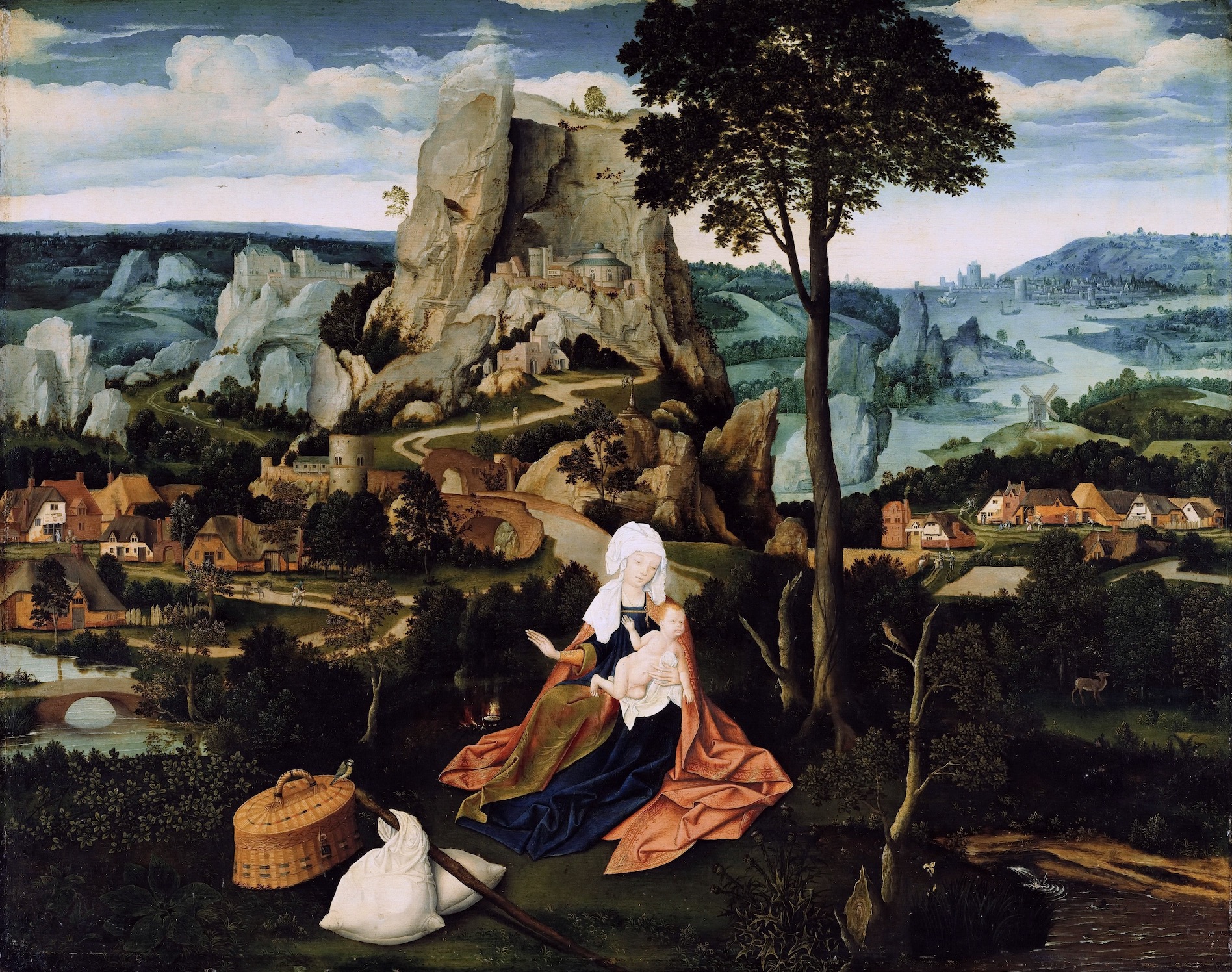
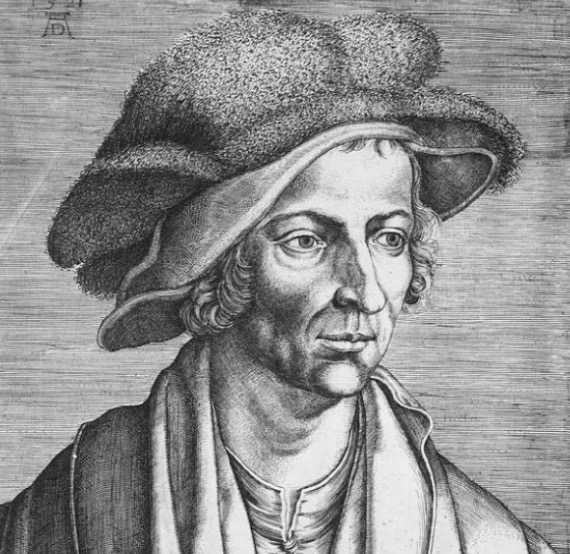
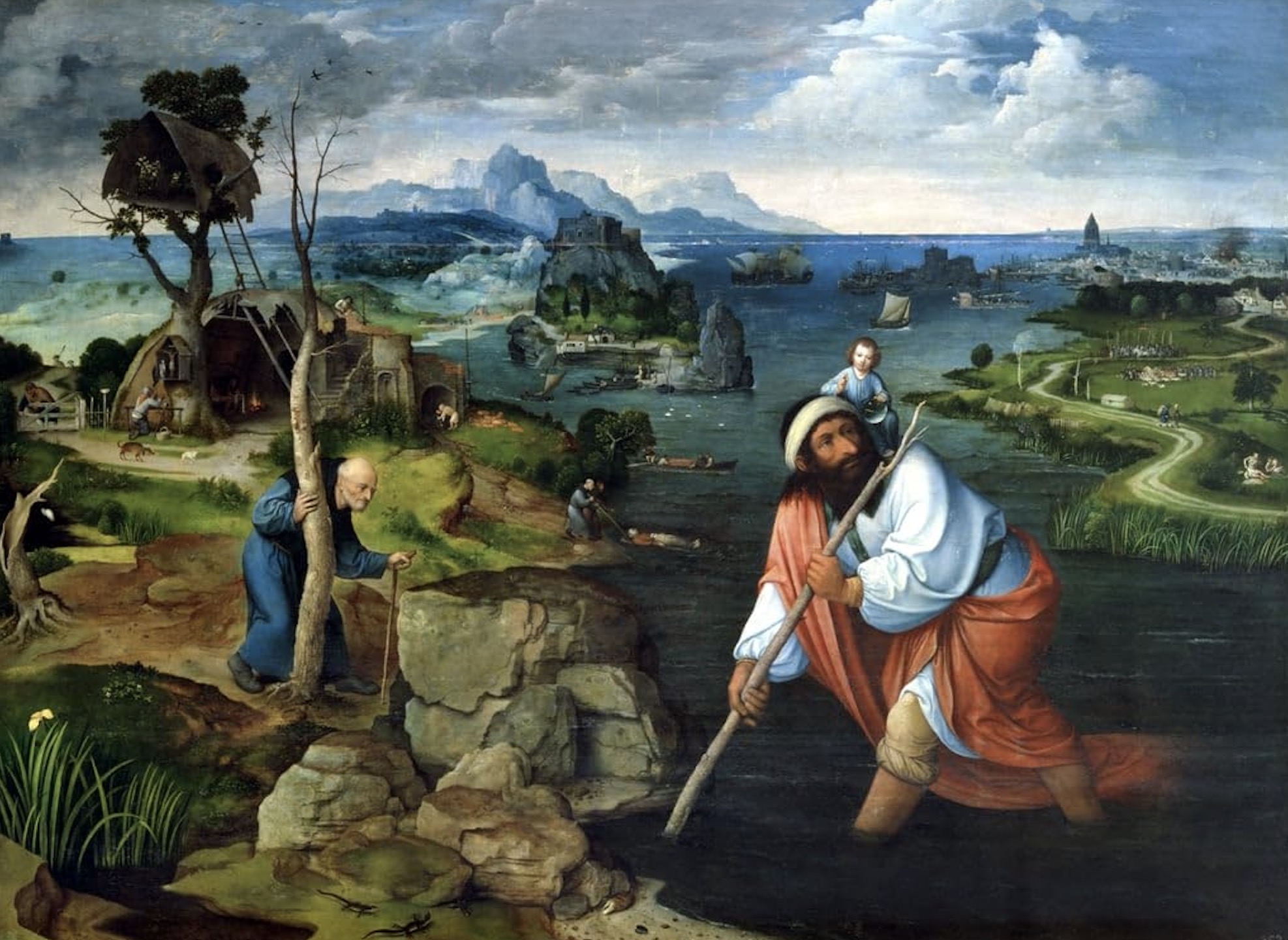





Joachim Patinir (Possibly the uncle of painter Herri met de Bles) (c. 1480–1524) was a Flemish Renaissance painter and a revolutionary figure in Western art history, widely regarded as the first “true” landscape specialist. Before Patinir, landscapes were almost exclusively used as secondary backgrounds for religious or portrait subjects; Patinir reversed this hierarchy, making the vast, sweeping natural world the primary subject of his canvases.
Patinir became a master in the Guild of Saint Luke in Antwerp in 1515. His style is defined by the “World Landscape” (Weltlandschaft)—a panoramic, bird’s-eye view of an imaginary terrain characterized by jagged blue mountains, dense forests, winding rivers, and distant, atmospheric horizons. He utilized a distinct three-color scheme to create depth: brownish tones for the foreground, green for the middle ground, and a pale, ethereal blue for the far distance.
While his paintings almost always included small religious figures (such as the Rest on the Flight into Egypt or St. Jerome), these characters are dwarfed by the immense scale of the environment. His work was so highly regarded that his close friend Albrecht Dürer, who visited him in Antwerp and painted his portrait, described him as “der gute Landschaftsmaler” (the good landscape painter), effectively coining the term for the genre.
His meticulous attention to detail and ability to blend fantasy with realistic observation influenced generations of Northern artists, most notably Pieter Bruegel the Elder. Patinir’s legacy remains foundational to the development of landscape as an independent and respected branch of fine art.
Active in others filds : Collaborative Painting (often worked with artists like Quentin Matsys, who painted the figures in Patinir’s landscapes).