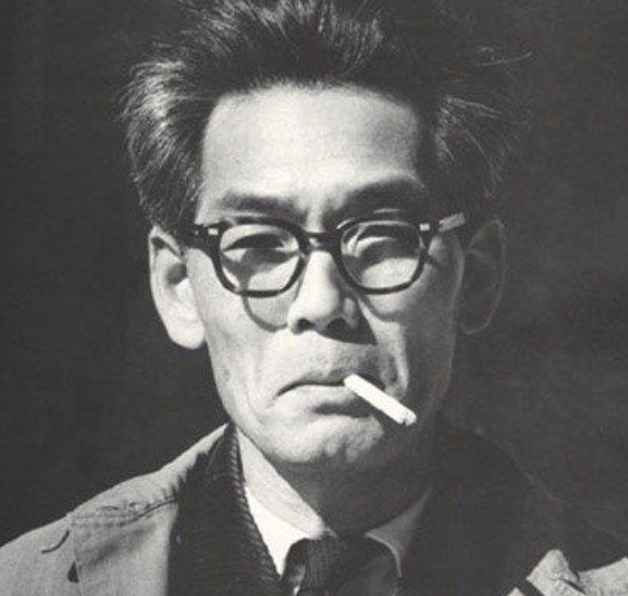




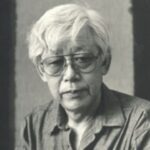
Kim Whan-ki (Pen name: Suhwa; Spouse: Kim Hyang-an, a writer and essayist who later established the Whanki Museum)
Kim Whanki (1913–1974) was a pioneering figure in modern Korean art and is widely celebrated as the principal founder of Korean abstract painting. His work seamlessly bridged traditional Korean aesthetics and natural motifs with Western avant-garde movements, ultimately culminating in his iconic and deeply philosophical “dot paintings.”
Born into a wealthy landowning family on an island in South Jeolla Province, Kim moved to Tokyo in the 1930s to study at Nihon University. There, he was exposed to European modernism—such as Cubism, Constructivism, and Fauvism—becoming one of the first Korean artists to deeply engage with abstract art. After returning to Korea, he formed the Neo Realism Group (Sinsasilpa) to promote non-figurative art in a heavily conservative artistic climate.
His artistic evolution is generally divided into three major periods:
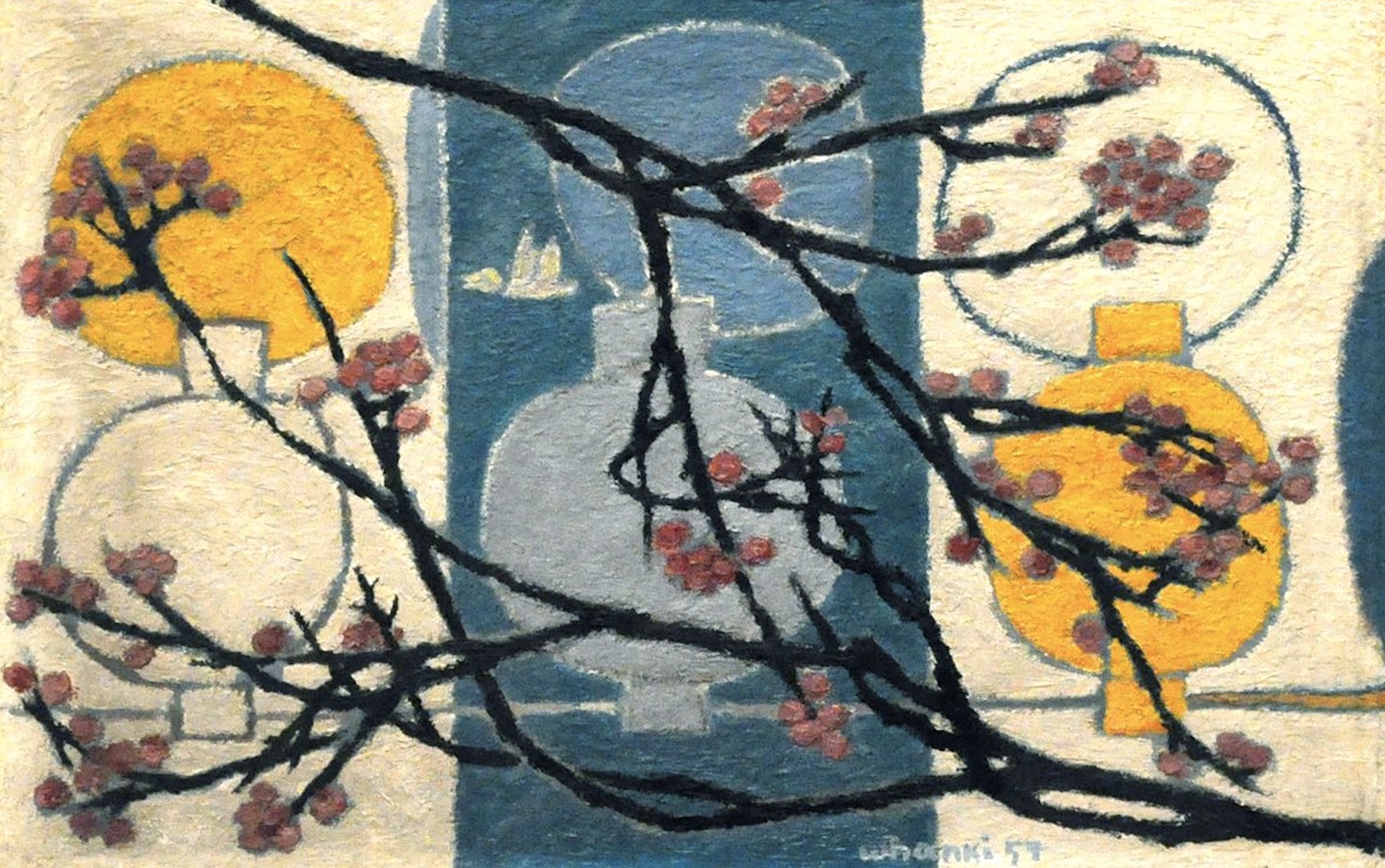
The Seoul and Paris Years (1930s–1959): During this era, his work featured stylized, semi-abstract depictions of traditional Korean subjects. He frequently painted white porcelain moon jars, cranes, mountains, plum blossoms, and the moon, seeking to express the poetic and lyrical spirit of Korean nature through thick textures and vibrant blues.
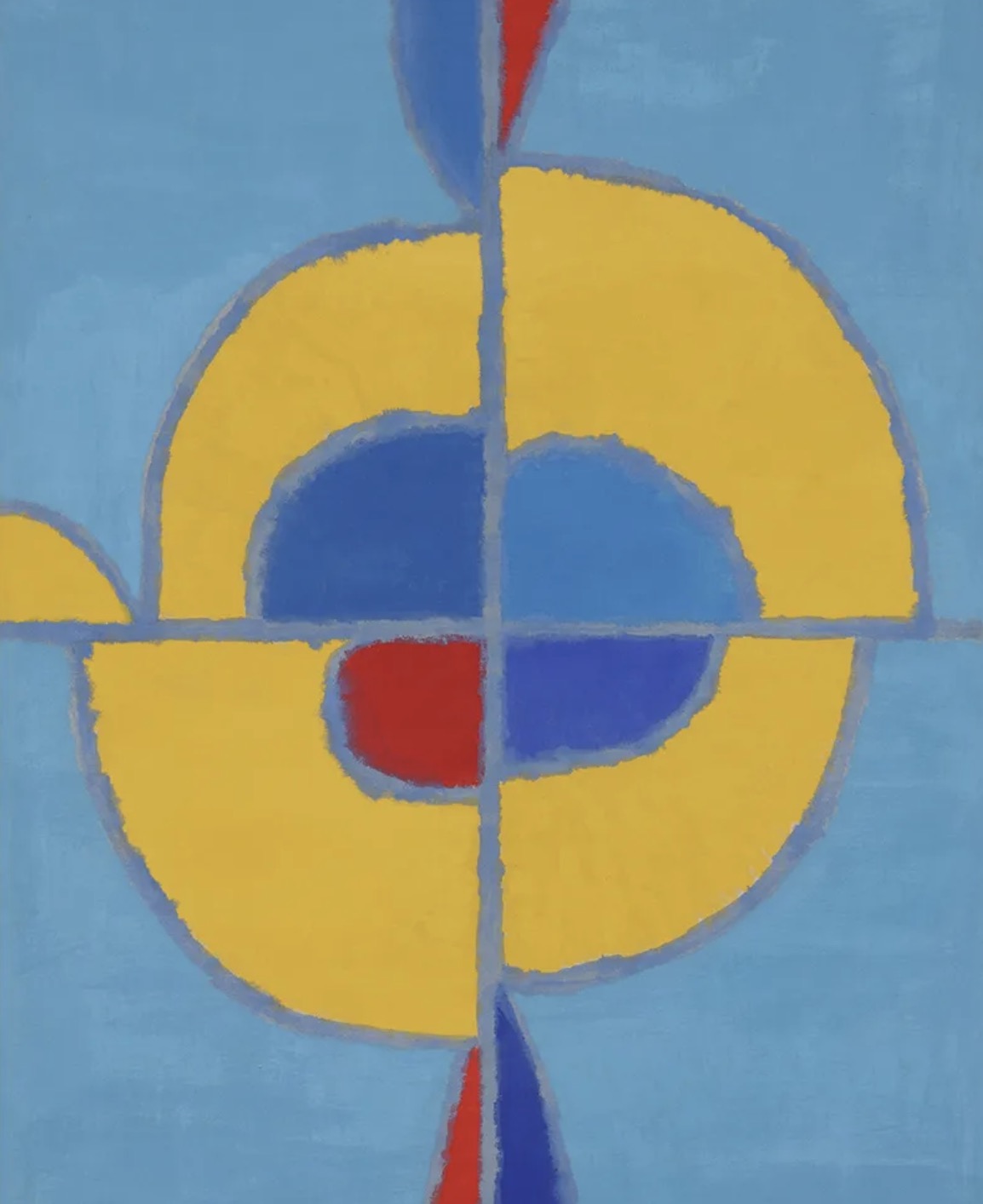
The Early New York Years (1963–1969): Driven by a desire to challenge himself on the global stage, Kim moved to New York. In this new environment, the distinct natural shapes of his earlier work dissolved into simplified lines, planes, and pure color fields.
The Late New York Years / Dot Paintings (1970–1974): Kim’s final and most celebrated phase gave rise to his monumental “dot paintings” (often referred to as all-over canvases). Adapting the traditional Asian technique of ink wash painting on hanji (Korean mulberry paper) to Western mediums, he applied heavily thinned oil paint onto raw, unprimed canvas. He meticulously painted thousands of dots, often enclosing each within a small square to create an echoing, cosmic pattern. These dots represented the stars in the night sky and his profound longing for his homeland and distant friends. His 1970 masterpiece, Where, in What Form, Shall We Meet Again?, perfectly captured this philosophical melancholy.
Kim Whanki passed away in New York in 1974. Today, he remains one of the most commercially successful and critically revered Korean artists in history, with his masterpieces consistently setting auction records for Korean art.
Active in others filds : Art Education (Professor at Seoul National University and Hongik University), Essayist.