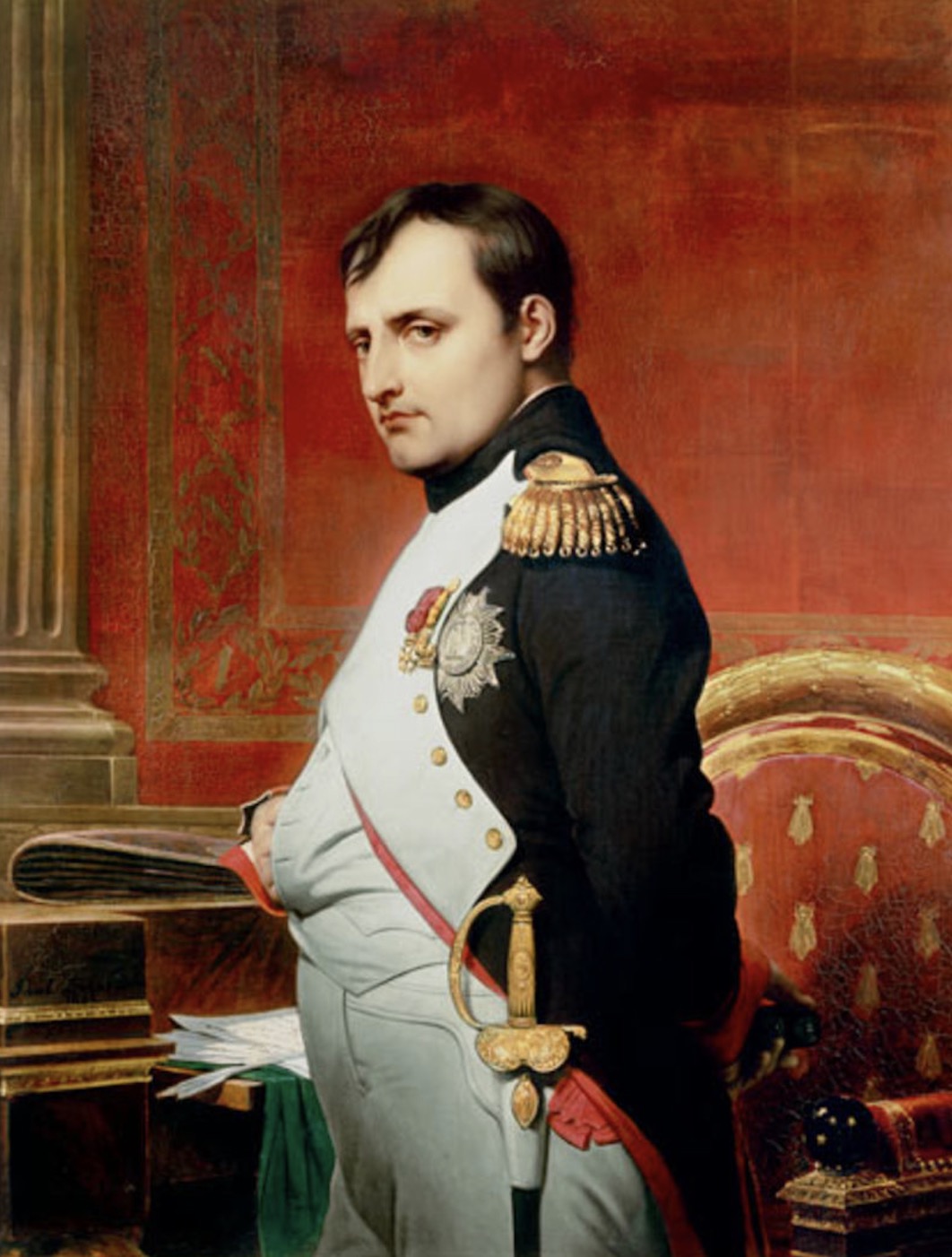
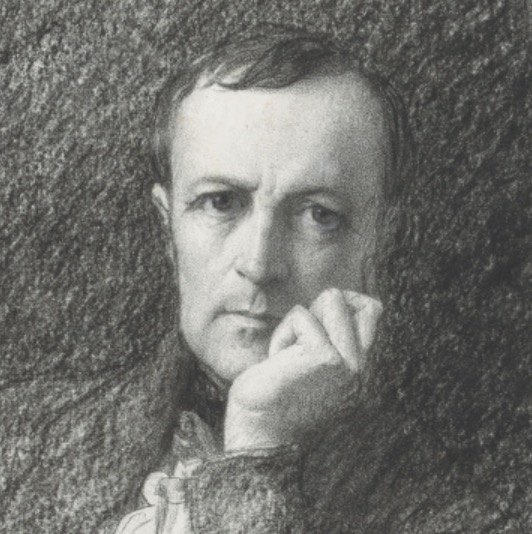

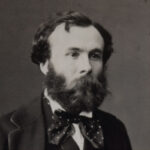

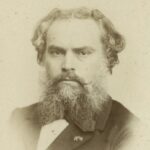

Hippolyte Delaroche (Father: Grégoire-Hippolyte Delaroche, an art expert and dealer; Brother: Jules-Hippolyte Delaroche; Spouse: Louise Vernet, daughter of the famous painter Horace Vernet) (1797–1856), born Hippolyte Delaroche, was one of the most commercially successful and internationally celebrated French academic painters of the early 19th century. He is best known as the leading figure of the juste-milieu (the “middle way”), an artistic approach that successfully bridged the severe, idealized draftsmanship of Neoclassicism with the emotional intensity and rich color palettes of Romanticism.
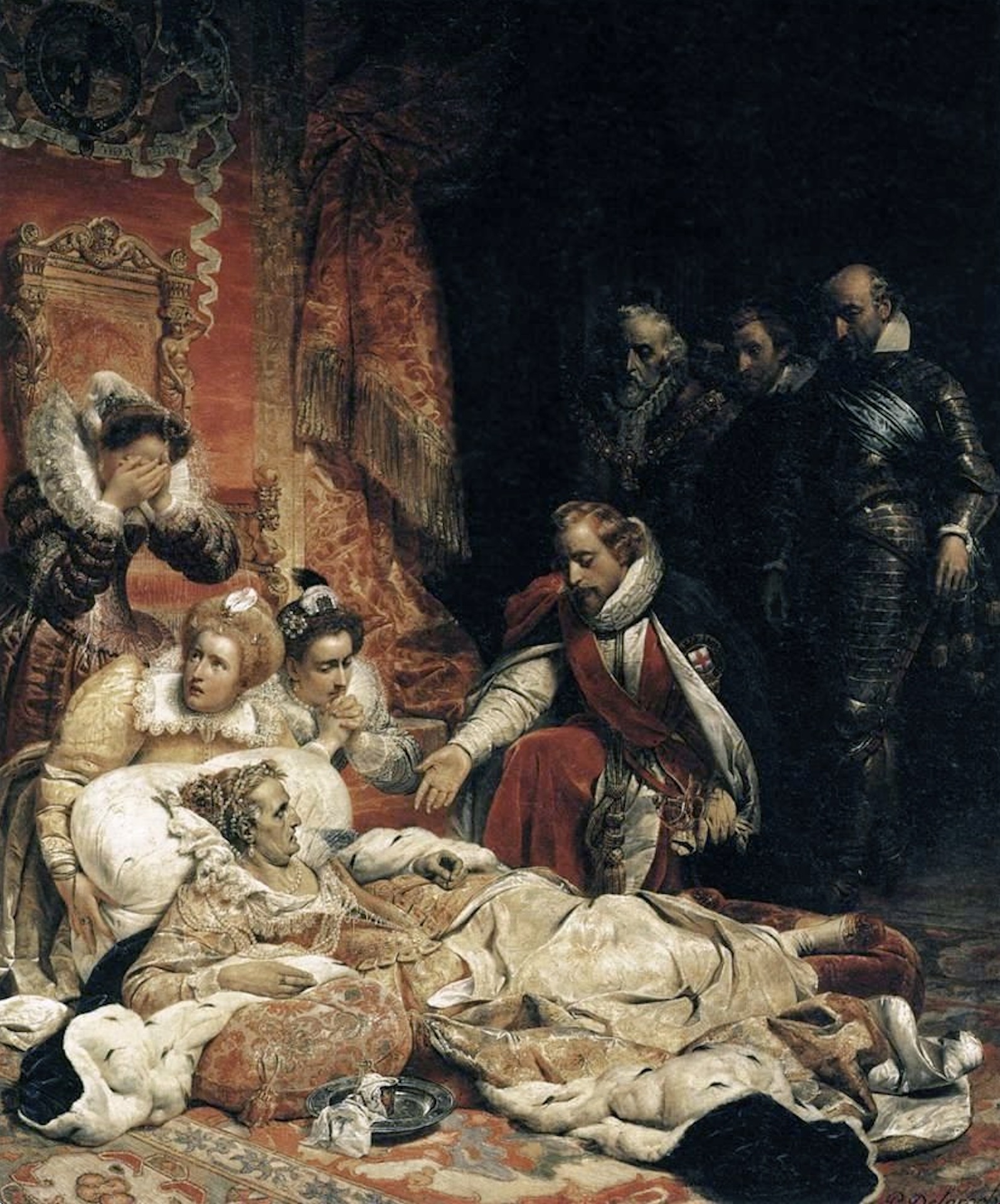
Born into a wealthy and artistic Parisian family, Delaroche initially studied landscape painting before entering the studio of Baron Antoine-Jean Gros, a renowned Romantic painter. Delaroche quickly found his niche in highly finished, theatrically staged historical narratives, often focusing on the tragic fates of English and French royalty. His meticulous attention to historical accuracy in costumes, props, and settings made his work highly accessible and wildly popular with the rising middle class.
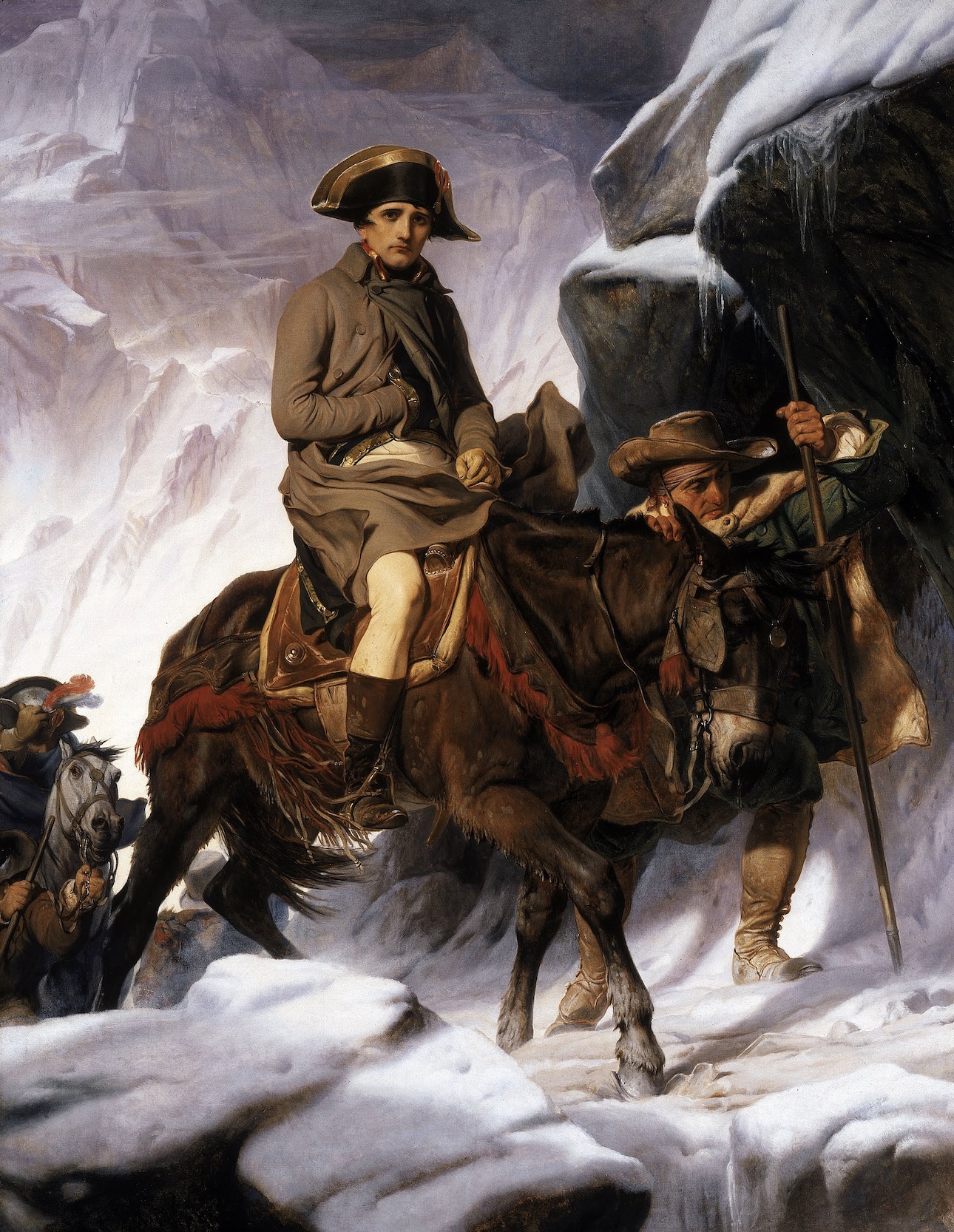
His undisputed masterpiece, The Execution of Lady Jane Grey (1833), became a sensation at the Paris Salon. The painting exemplifies his style: it is deeply melodramatic, brilliantly lit, and rendered with a smooth, photographic realism that pulls the viewer directly into the tragedy. Because his paintings were so easily read and dramatically composed, they were widely reproduced through engravings, making Delaroche one of the first truly “mass media” artists.
In 1832, he became the youngest member ever elected to the Académie des Beaux-Arts and was soon appointed a professor at the École des Beaux-Arts. There, he spent four years painting the monumental Hemicycle (1837–1841), a massive panoramic mural in the school’s lecture theatre featuring 75 larger-than-life portraits of the greatest artists, philosophers, and architects in history.
Delaroche was also a highly influential teacher. His independent studio (atelier) trained a remarkable generation of artists who would go on to shape late 19th-century art, including Jean-Léon Gérôme, Jean-François Millet, and Thomas Couture. Interestingly, Delaroche is also historically famous for a quote he supposedly made upon seeing the first Daguerreotype photograph in 1839: “From today, painting is dead!”—a testament to his deep interest in realism.
Active in others filds : Art Education (Professor at the École des Beaux-Arts), Mural Painting.