Cgitems Logo
Entering
Manga
Loading Encyclopedia...
Connecting to Cgitems Server...
Thanks for your patience
Manga - CGItems
☆
  • UK - English UK - English
  • France - Français France - Français
  • Germany - Deutsch Germany - Deutsch
  • Netherlands - Nederlands Netherlands - Nederlands
  • Norway - Norsk Norway - Norsk
  • Denmark - Dansk Denmark - Dansk
  • Finland - Suomi Finland - Suomi
  • Vietnam - Tiếng Việt Vietnam - Tiếng Việt
  • Italy - Italiano Italy - Italiano
  • Sweden - Svenska Sweden - Svenska
  • Brazil - Português Brazil - Português
  • Greece - Ελληνικά Greece - Ελληνικά
  • Thailand - ไทย Thailand - ไทย
  • Iran - فارسی Iran - فارسی
  • Arab - العربية Arab - العربية
  • Spain - Español Spain - Español
  • China - 中文 China - 中文
  • Turkey - Türkçe Turkey - Türkçe
  • Russia - Русский Russia - Русский
  • South Korea - 한국어 South Korea - 한국어
  • Japan - 日本語 Japan - 日本語
  • India - हिन्दी India - हिन्दी

Visual Art Encyclopedia & Galleria

Art Movement , Style & Technique

Manga

SUB CATEGORIES
×

Manga

Manga

A comprehensive guide to the visual principles, history, and pioneers of this movement. Curated for researchers and students seeking a structured analysis of artistic styles & Technique .

Available Art Style & Movement

Select Art Style...
  • Abstract
  • Abstract Expressionism
  • Academic Art
  • Aestheticism
  • Architectural Movements
  • Art Deco
  • Art Nouveau
  • Baroque
  • Bauhaus
  • Byzantine
  • Cartoon
  • CGI
  • Chiaroscuro
  • Chiaroscuro Noir
  • Classical Architecture
  • Classicism
  • Comic
  • Conceptual
  • Contemporary
  • Cubism
  • Dada
  • Early Renaissance
  • Expressionism
  • Fantasy Art
  • Fashion
  • Fashion Design
  • Fashion Illustration
  • Fashion Photography
  • Fauvism
  • Figurative Art
  • Figurative Photography
  • Fresco
  • Gothic
  • Haute Couture
  • High Renaissance
  • Hybrid
  • Illustration
  • Impressionism
  • Landscape
  • Line art
  • Manga
  • Mannerism
  • Marvel
  • Matte Painting
  • Miniature
  • Minimalism
  • Modern Architecture
  • Modernism
  • Muralism
  • Naturalism
  • Neoclassicism
  • Orientalism
  • Photography
  • Pop Art
  • Pre-Raphaelite
  • Realism
  • Regionalism
  • Relief 
  • Renaissance
  • Rococo
  • Romanticism
  • SCI-FI
  • Sculpting
  • Street Art
  • Surrealism
  • Symbolism
  • Tempera
  • Tenebrism
  • Tonalism
  • VFX
  • Victorian

General Specifcations for Manga

Manga (漫画) is a sophisticated Japanese sequential art form that evolved from 12th-century scrolls into a global cultural phenomenon. Unlike Western comics, Manga is a multi-generational medium with specific demographic classifications: Shonen (young males), Shojo (young females), Seinen (adult men), and Josei (adult women).

Technically, Manga is defined by its “cinematic” pacing. While Western comics often focus on action-to-action transitions, Manga frequently uses aspect-to-aspect transitions—lingering on a falling leaf or a background detail to establish mood or “Ma” (the interval of empty space). The style relies heavily on a specialized vocabulary of visual symbols, such as “sweat drops” for anxiety or “popping veins” for anger. For researchers, the core of Manga’s power lies in its Iconic Abstraction: characters are drawn with simplified, expressive features (large eyes, minimal noses) to allow the reader to project themselves onto the character more easily.

Related to Manga

Note : The images below might not strictly correspond to the style and technique of Manga, but rather represent an artist who also includes this approach in their portfolio.

Kentaro Miura

Classification

  • Category: Digital/AI Art, Painting (Illustration), Fashion.

  • Era/Period: Modern Manga began post-WWII (1945–Present), rooted in Edo-period woodblock prints.

  • Origin Location: Japan.

Visual & Technical Specs

  • Key Visual Characteristics: Large, expressive eyes (the “windows to the soul”), stylized hair, varied line weights (G-pen pressure), speed lines (Screentone), and exaggerated physical reactions.

  • Color Palette: Historically Monochromatic (Black & White) due to printing costs, utilizing “Screentones” (dot patterns) to create grey gradients. Modern digital manga often uses vibrant, high-contrast cel-shading.

  • Mediums & Tools: * Traditional: G-pens, Maru-pens, Copic markers, India ink, Kent paper.

    • Digital: Clip Studio Paint (formerly Manga Studio), Procreate, and specialized screen-tone brushes.

Pioneers & Key Works

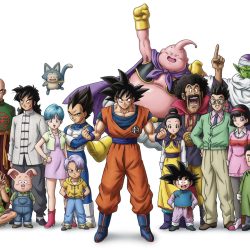
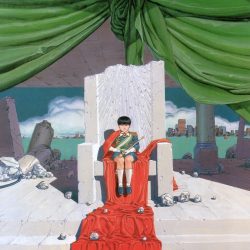
  • Founders/Key Artists: Osamu Tezuka (The “God of Manga”), Akira Toriyama (Dragon Ball), Katsuhiro Otomo (Akira), Naoko Takeuchi (Sailor Moon), Junji Ito (Horror icon).

  • Masterpieces:

    1. Astro Boy (Tezuka) – The foundation of modern style.

    2. Akira (Otomo) – The pinnacle of technical detail and perspective.

    3. Berserk (Kentaro Miura) – Masterclass in cross-hatching and dark fantasy.

    4. Uzumaki (Junji Ito) – Structural horror through linework.

  • Influential Schools/Groups: Weekly Shonen Jump, Year 24 Group (pioneers of modern Shojo).

Philosophy & Context

  • The “Why”: To create an immersive, emotional experience where the reader “lives” through the character. Manga prioritizes internal monologue and emotional resonance over purely external plot progression.

  • Historical Context: Emerged from a fusion of traditional Japanese art (Ukiyo-e) and Western Disney-style animation brought to Japan during the post-war occupation. It served as an affordable escape and a tool for national rebuilding through storytelling.

Modern Influence: Cinema, TV & CGI

  • 2D, 3D, CGI, VFX: Manga’s influence is seen in the “Sakuga” (high-quality animation) style of modern VFX. Films like The Matrix and Inception borrowed their framing and kinetic energy directly from Manga storyboards.

  • Modern Legacy: The rise of Cel-Shading in video games (like Genshin Impact or Zelda: Breath of the Wild) is a direct attempt to translate the 2D Manga/Anime look into 3D spaces.

Modern Influence: AI & Hybrid Media

  • Modern Legacy: AI art models are heavily “weighted” toward Manga styles due to the massive volume of high-quality digital illustration data. It is currently the most popular style for AI-assisted character design (LoRA training).

  • AI Prompting Keywords: Manga style, cel-shaded, monochrome ink, screentone, fine linework, expressive eyes, speed lines, 90s retro manga, high-contrast black and white, detailed hatching.

Explore More

Minimalism 1

Some Other Art Styles

Art Styles by random seed

Photography

Photography, derived from the Greek words phos (“light”) and graphe (“drawing”), is the art and science of creating durable images by recording light. Unlike traditional plastic arts, photography began as a purely chemical and mechanical process. It has evolved through three major technological revolutions:

  • The Chemical Era (1839–1970s): Based on light-sensitive silver halides on metal, glass, or film.

  • The Analog/Film Era (1900s–Present): The democratization of the medium via roll film, leading to photojournalism and “The Decisive Moment.”

  • The Digital Revolution (1990s–Present): The transition to electronic sensors (CCD/CMOS) and algorithmic processing.

For researchers, photography is unique because it serves a dual purpose: it is a mechanical record of reality (evidence) and an expressive art form (interpretation). The style is defined by the photographer’s control over the “Exposure Triangle”: Aperture (depth of field), Shutter Speed (motion), and ISO (sensitivity/grain).

Matte painting

Matte painting is a foundational visual effects technique used to create the illusion of environments, landscapes, or structures that would be too expensive, dangerous, or physically impossible to build or visit. For researchers, students, and digital artists, Matte Painting is distinct because it is applied fine art masquerading as absolute reality. It relies on photorealism, precise linear perspective, atmospheric rendering, and perfect continuity of light.

Historically, the art form evolved through three technological eras:

  • The Glass & Cutout Era (1907–1980s): Artists painted directly onto massive sheets of optical glass using oils or acrylics. Areas where live-action footage would appear were left completely clear or blacked out (matted). The camera filmed through the glass, combining the live actors and the painting in a single camera take or via subsequent optical printer passes.

  • The Digital 2D Era (1990s–2000s): The transition to computers allowed artists to trade physical brushes for digital tablets. Software like Adobe Photoshop enabled artists to blend real photographic elements with digital paint (photo-bashing) to achieve unprecedented realism, though shots remained mostly flat, static plates.

  • The Modern 2.5D / 3D Digital Environment Era (2000s–Present): Modern Digital Matte Painters (DMPs) do not just paint flat backgrounds; they project their 2D assets onto simplified 3D geometry (projection mapping). This allows the virtual camera to move, tilt, and pan within the painting, creating realistic parallax (where closer objects move faster than distant ones).

Fantasy art

Fantasy Art is a broad, highly influential visual genre characterized by the depiction of mythic, supernatural, magical, or speculative themes that exist outside the boundaries of our consensus reality. It is an art form rooted in world-building, where the impossible is rendered with enough structural and material logic to suspend the viewer’s disbelief. Unlike abstract art, Fantasy Art typically relies on Representational Realism or Academic Realism to ground its impossible subjects—such as mythical creatures, ancient sorcery, invented landscapes, and legendary heroes—in a tangible, believable environment.

For researchers, historians, and digital artists, Fantasy Art is understood through several distinct sub-movements and technical evolutions:

  • The Mythological & Romantic Roots: Early foundations heavily borrowed from the Pre-Raphaelites and Symbolists, focusing on folklore, Arthurian legends, and classical mythology with a soft, idealized, and romanticized lens.

  • The Pulp & Sword-and-Sorcery Era (Mid-20th Century): Dominated by paperback book covers and magazines. This phase introduced hyper-muscular anatomy, dynamic kinetic energy, and raw, visceral action compositions.

  • Contemporary High Fantasy & Imaginative Realism: The modern phase blends classical oil painting techniques with advanced digital tools, emphasizing complex ecosystem designs, cultural anthropology for fictional races, and highly sophisticated atmospheric lighting.

Muralism

Muralism is a monumental, public-facing art movement defined by the creation of massive paintings directly executed on or permanently affixed to architectural surfaces (walls, ceilings, or structural facades). While mural-making dates back to prehistoric caves and Renaissance frescoes, “Modern Muralism”—sparked primarily by the Mexican Mural Movement in the 1920s—transformed the medium into a powerful vehicle for social, political, and historical narrative.

Unlike easel paintings, which are transportable and often treated as private commodities, modern muralism is intrinsically civic and democratic. It was designed to bypass the elite, exclusive spaces of museums and commercial galleries, taking art directly to the working-class public in municipal buildings, schools, and outdoor plazas.

For researchers, students, and CGI artists, Muralism must be understood as an architectural collaborator. A successful muralist does not merely use a wall as a flat canvas; they analyze the architectural volume, viewer sightlines, scale, and environmental lighting of the space.

Muralism Artwork By Diego Rivera,
“Dream of a Sunday Afternoon in Alameda Central Park” (Sueño de una tarde dominical en la Alameda Central) by Diego Rivera, created between 1946 and 1947.

Historically, the movement combined classical European fresco techniques with bold modernist styles like Cubism, Expressionism, and native indigenous folk art aesthetics to create highly legible, heroic, and dynamic visual spectacles.

Fashion Photography

Fashion photography is a dedicated genre of photography focused on displaying clothing, accessories, and beauty products in a way that generates desire, identity, and cultural narrative. It is a high-stakes intersection of commerce and fine art. Beyond merely “documenting” a garment, fashion photography creates a constructed reality or a “dream world.”

For researchers and students, it is analyzed through three primary lenses:

  • Editorial Photography: Narrative-driven images for magazines (like Vogue or Harper’s Bazaar) that tell a story or explore a concept, often prioritizing artistic expression over the clarity of the product.

  • Commercial/Catalogue: Clear, high-fidelity images designed for e-commerce and retail, focusing on the detail, fit, and texture of the material.

  • High-Fashion/Avant-Garde: Boundary-pushing imagery that uses extreme lighting, surreal compositions, and unconventional models to challenge social norms and aesthetic standards.

Technically, it has evolved from the stiff, studio-bound portraiture of the early 1900s to the “snapshot” realism of the 1990s (Heroin Chic) and today’s hyper-polished digital surrealism.

Cartoon

The “Cartoon” style is a broad artistic language defined by simplification, exaggeration, and symbolism. Unlike realism, which seeks to mimic the physical world, cartooning captures the essence of a subject through “The Principle of Amplification through Simplification.” By stripping away non-essential details, the artist directs the viewer’s attention to specific emotions, actions, or personality traits.

Technically, the style relies on visual shorthand. A lightbulb over a head signifies an idea; stars around a head signify dizziness. This “language of symbols” allows for rapid storytelling. Within the professional sphere, cartooning is divided into several major aesthetic movements:

  • Rubber Hose (1920s-30s): Characters with limbs that lack elbows or knees, moving like noodles (e.g., Early Mickey Mouse).

  • Limited Animation (1950s-60s): A stylistic choice (often driven by budget) that uses static backgrounds and only moves specific parts of a character, creating a graphic, “flat” look (e.g., Hanna-Barbera).

  • Modern CalArts/Bean Mouth: A contemporary trend focusing on soft, rounded shapes and expressive, elastic facial features.

Reset to Default
+ FAVORITES ✎
✕
⋮ ☆ Manga
✕
HELP AGENT
PLEASE WAIT, LOADING...
×
MCA

--
Analyzing image & extracting data...

Link Copied!

General Inquiry

Have a question or feedback regarding portfolios? Drop us a line.

Strictly plain English text structure only.

Attachments Inventory

Max 500KB per file. Max 10 images.

Delivery Confirmed

Thank you. Your message and data structural packages have been safely transferred to our desk.

Artist Name Artwork Details
Search with Google Lens
Print...