Naturalism
A comprehensive guide to the visual principles, history, and pioneers of this movement. Curated for researchers and students seeking a structured analysis of artistic styles & Technique .
Available Art Style & Movement
Abstract
Abstract Expressionism
Academic Art
Aestheticism
Architectural Movements
Art Deco
Art Nouveau
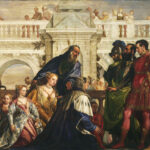
Baroque
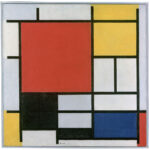
Bauhaus

Byzantine
Cartoon
CGI
Chiaroscuro
Chiaroscuro Noir
Classical Architecture
Classicism

Comic
Conceptual
Contemporary
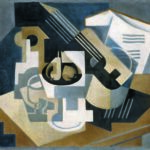
Cubism

Dada
Early Renaissance
Expressionism

Fantasy Art
Fashion
Fashion Design
Fashion Illustration
Fashion Photography
Fauvism
Figurative Art
Figurative Photography
Fresco

Gothic
Haute Couture
High Renaissance
Hybrid
Illustration
Impressionism
Landscape
Line art

Manga
Mannerism

Marvel
Matte Painting

Miniature
Minimalism
Modern Architecture
Modernism

Muralism
Naturalism
Neoclassicism

Orientalism
Photography

Pop Art
Pre-Raphaelite
Realism
Regionalism
Relief
Renaissance
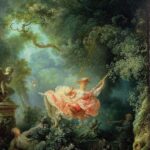
Rococo
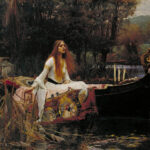
Romanticism

SCI-FI

Sculpting
Street Art
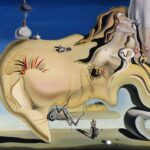
Surrealism
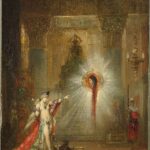
Symbolism
Tempera
Tenebrism
Tonalism
VFX
Victorian
General Specifcations for Naturalism
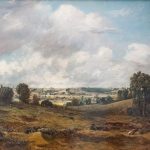
Naturalism in the fine arts refers to the accurate, un-idealized depiction of nature, human figures, and everyday environments as they appear in real life. Emerging prominently in the mid-to-late 19th century alongside the rise of empirical science and early photography, Naturalism bridged the gap between Romantic emotionalism and the radical fragmentation of early Modernism.
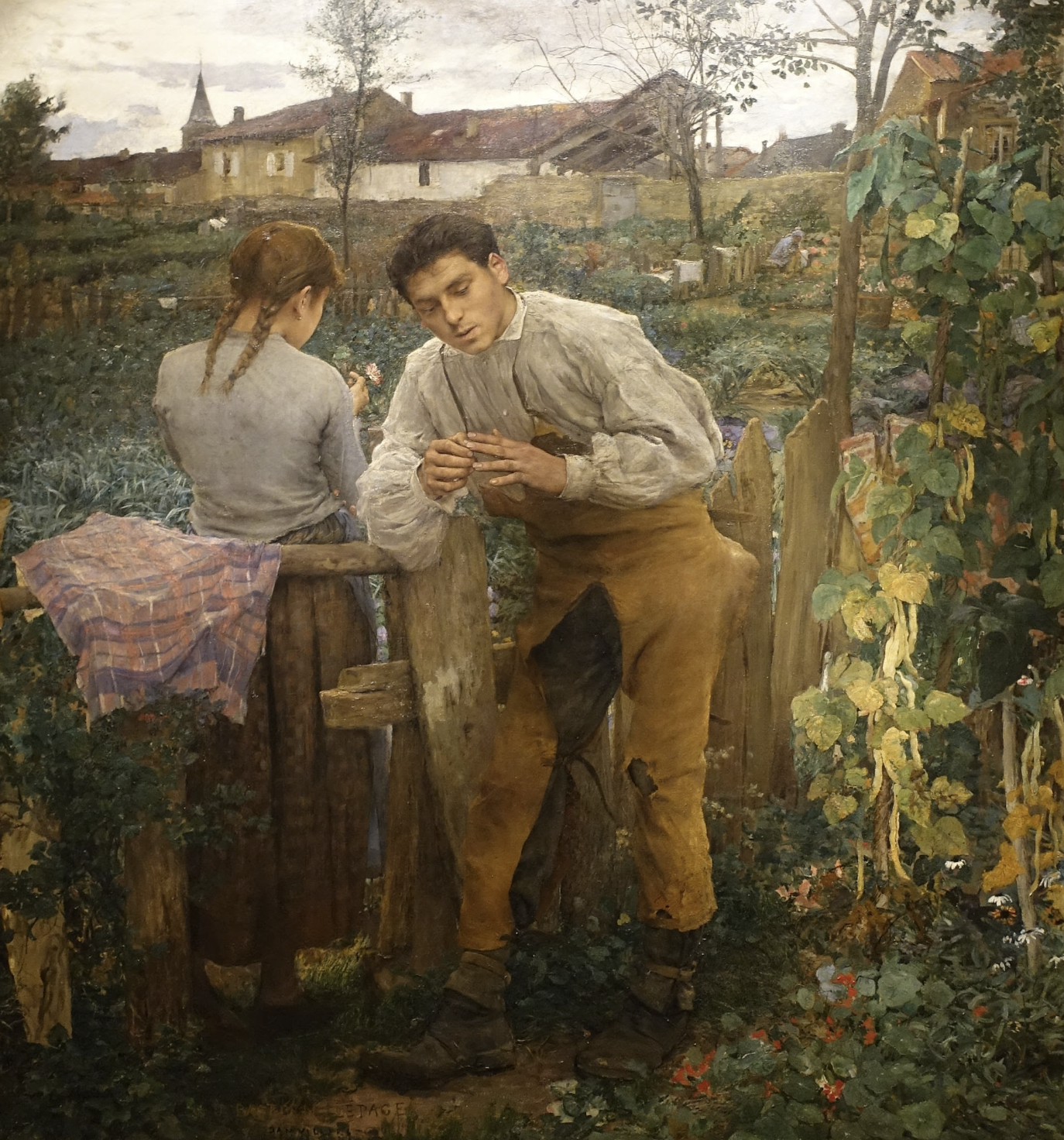
Unlike Neoclassicism (which idealized form according to classical Greco-Roman beauty standards) or Romanticism (which stylized form to express heightened emotional drama), Naturalism adheres strictly to careful observation. While closely intertwined with Realism, Naturalism often emphasizes a higher level of technical finesse, precise photographic values, diffuse outdoor daylight, and a deterministic view of human life—frequently recording subjects in their authentic social, rural, or working-class conditions without moralizing or romantic commentary.
Related to Naturalism
Note : The images below might not strictly correspond to the style and technique of Naturalism, but rather represent an artist who also includes this approach in their portfolio.
Classification
-
Category: Fine Arts, Visual Arts (Painting, Sculpture, Illustration).
-
Era/Period: Late 18th to Late 19th Century (Peak: 1870–1900); periodic 20th-century revivals.
-
Origin Location: Western Europe (France, Great Britain, Germany, Russia, and Scandinavia).
Visual & Technical Specs
Key Visual Characteristics: High optical fidelity, natural anatomical proportions, diffused outdoor daylight (Plein Air execution), neutral values, unposed subject placement, accurate atmospheric depth, and unembellished textures (cloth, soil, skin, foliage).
Color Palette: Earthy, subdued tones dominated by raw ochre, burnt umber, viridian green, slate gray, muted cobalt, and soft atmospheric whites. High-contrast theatrical lighting (chiaroscuro) is replaced by cool, diffuse ambient daylight.
Mediums & Tools: Oil on heavy linen canvas, charcoal, gouache, graphite pencil, plein air field easel boxes, and early photographic plates used for anatomical reference.
Pioneers & Key Works
-
Jules Bastien-Lepage (France) – Pioneer of late 19th-century Naturalism
-
Émile Friant (France)
-
Jean-François Millet (France) – Barbizon School pioneer
-
Camille Corot (France)
-
Gustave Courbet (France)
-
Léon Lhermitte (France)
-
Pascal Dagnan-Bouveret (France)
-
Ilya Repin (Russia) – Peredvizhniki / Itinerants movement
-
Ivan Shishkin (Russia)
-
Vasily Polenov (Russia)
-
George Clausen (United Kingdom) – New English Art Club
-
Henry Herbert La Thangue (United Kingdom)
-
Stanhope Forbes (United Kingdom) – Newlyn School founder
-
Peder Severin Krøyer (Denmark) – Skagen Painters
-
Michael Ancher (Denmark)
-
Anna Ancher (Denmark)
-
Max Liebermann (Germany)
-
Wilhelm Leibl (Germany)
-
Winslow Homer (United States)
-
Thomas Eakins (United States)
10 20th-Century Revivalists & Modern Realist Masters
-
Andrew Wyeth (United States) – American Regionalist Naturalism
-
Edward Hopper (United States) – Urban Naturalism
-
Norman Rockwell (United States) – Narrative figurative Naturalism
-
Lucian Freud (United Kingdom) – Un-idealized anatomical Naturalism
-
Antonio López García (Spain) – Hyper-observed urban Naturalism
-
Claudio Bravo (Chile) – Classical precision Naturalism
-
Pietro Annigoni (Italy)
-
Robert Henri (United States) – Ashcan School
-
George Bellows (United States)
-
Bo Bartlett (United States) – Contemporary figurative Naturalism
Masterpieces
-
Haymaking (Les Foins) – Jules Bastien-Lepage (1877)
-
All Saints’ Day (Toussaint) – Émile Friant (1888)
-
Barge Haulers on the Volga – Ilya Repin (1870–1873)
-
The Gleaners – Jean-François Millet (1857)
-
The Gross Clinic – Thomas Eakins (1875)
-
Summer Day on Skagen’s Southern Beach – P.S. Krøyer (1884)
-
A Hop-Pickers’ Feast – George Clausen (1884)
-
Christina’s World – Andrew Wyeth (1948)
Philosophy & Context
-
The “Why”: Naturalism sought to record truth as observed through empirical experience rather than elevated through heroic idealization. Influenced by Charles Darwin’s theories of evolution, Emile Zola’s literary naturalism, and scientific determinism, artists believed that human beings are shaped fundamentally by their environment, genetics, and working conditions.
-
Historical Context: Naturalism rose during the height of the Industrial Revolution and the growth of empirical science. As cities expanded and photographic technology matured, visual artists rejected classical mythology and historical idealization in favor of documenting genuine human labor, rural life, and unadorned nature.
Modern Influence: Cinema, TV & CGI
-
2D, 3D, CGI, VFX: Naturalism forms the foundational bedrock of photorealistic 3D rendering, modern VFX composition, and cinematic lighting design. Physically Based Rendering (PBR) workflows—which simulate real-world material properties like roughness, subsurface scattering, and index of refraction (IOR)—are direct technical extensions of Naturalist visual principles.
-
Modern Legacy: Cinematic directors and cinematographers rely on Naturalist aesthetics to ground fantasy or historical narratives in physical reality (e.g., Roger Deakins’ natural light compositions in 1917 or The Revenant‘s reliance on natural overcast daylight and wide focal lenses).
Modern Influence: AI & Hybrid Media
-
Modern Legacy: In AI generative systems (Midjourney, Stable Diffusion, Flux), Naturalism prompts act as a anchor to suppress stylized “digital art” finishes, oversaturated glow effects, or exaggerated proportions. Prompting with Naturalist references produces physically plausible textures, authentic subsurface skin scatter, and believable ambient illumination.
-
AI Prompting Keywords: Naturalism art style, Jules Bastien-Lepage lighting, un-idealized detail, diffuse daylight, soft ambient occlusion, natural color palette, raw textures, photo-accurate proportions, overcast sky, earth tones, plein air realism, 19th-century oil painting.
-
Explore More
Art Styles by random seed
Pop art
Pop Art was a revolutionary movement that blurred the line between “high art” and “low culture.” It emerged as a challenge to the elitism of Abstract Expressionism, choosing instead to find beauty and meaning in the mundane, the commercial, and the mass-produced.
For researchers and students, Pop Art is defined by its use of appropriation—taking existing imagery from advertisements, comic books, and celebrity culture and placing them in an art gallery context. This was often achieved through mechanical reproduction techniques rather than traditional hand-painting. While it looks “fun” and vibrant, it often carries a satirical or ironic subtext regarding consumerism, fame, and the “American Dream.”
Naturalism
Naturalism in the fine arts refers to the accurate, un-idealized depiction of nature, human figures, and everyday environments as they appear in real life. Emerging prominently in the mid-to-late 19th century alongside the rise of empirical science and early photography, Naturalism bridged the gap between Romantic emotionalism and the radical fragmentation of early Modernism.

Unlike Neoclassicism (which idealized form according to classical Greco-Roman beauty standards) or Romanticism (which stylized form to express heightened emotional drama), Naturalism adheres strictly to careful observation. While closely intertwined with Realism, Naturalism often emphasizes a higher level of technical finesse, precise photographic values, diffuse outdoor daylight, and a deterministic view of human life—frequently recording subjects in their authentic social, rural, or working-class conditions without moralizing or romantic commentary.
Realism
Realism was a pivotal 19th-century movement that acted as a “truth-telling” force in art. It emerged as a direct rejection of Romanticism (which exaggerated emotion) and Neoclassicism (which idealized history). Realism insisted on depicting the world exactly as it was—warts and all—focusing on the mundane, the gritty, and the everyday lives of the working class.
For researchers and students, it is crucial to distinguish between Artistic Realism (the movement) and Photorealism (the technical ability to mimic a photo). Realism wasn’t just about “looking real”; it was about “being honest.” Realist painters refused to paint angels or Greek gods because, as Gustave Courbet famously said, “I have never seen an angel. Show me an angel, and I will paint one.” This movement laid the essential groundwork for Impressionism and all subsequent modern art by breaking the rules of what was considered “worthy” of being painted.
Modern Architecture
Modern Architecture (or Modernism) is a revolutionary movement that rejected historical ornament and traditional “styles” in favor of functionalism and structural honesty. It emerged from the idea that the form of a building should be determined solely by its function and its materials. This marked a total departure from the stone-masonry traditions of the past, embracing the industrial potential of the 20th century.
Key technical pillars include the use of steel frames, reinforced concrete, and large expanses of glass. The movement popularized the “open floor plan” by shifting the load-bearing weight from thick walls to internal columns (the Dom-Ino House concept). For students and researchers, Modernism is often divided into sub-movements like the International Style, Bauhaus, and Brutalism, all unified by the mantra: “Form follows function.
Fashion Photography
Fashion photography is a dedicated genre of photography focused on displaying clothing, accessories, and beauty products in a way that generates desire, identity, and cultural narrative. It is a high-stakes intersection of commerce and fine art. Beyond merely “documenting” a garment, fashion photography creates a constructed reality or a “dream world.”
For researchers and students, it is analyzed through three primary lenses:
-
Editorial Photography: Narrative-driven images for magazines (like Vogue or Harper’s Bazaar) that tell a story or explore a concept, often prioritizing artistic expression over the clarity of the product.
-
Commercial/Catalogue: Clear, high-fidelity images designed for e-commerce and retail, focusing on the detail, fit, and texture of the material.
-
High-Fashion/Avant-Garde: Boundary-pushing imagery that uses extreme lighting, surreal compositions, and unconventional models to challenge social norms and aesthetic standards.
Technically, it has evolved from the stiff, studio-bound portraiture of the early 1900s to the “snapshot” realism of the 1990s (Heroin Chic) and today’s hyper-polished digital surrealism.
Impressionism
Impressionism was a radical 19th-century art movement that permanently altered the trajectory of visual arts and laid the foundations for modern art. Breaking away from the rigid, highly finished, and historically focused standards of the Académie des Beaux-Arts in Paris, Impressionists prioritized the immediate visual sensation of a scene over precise, detailed realism.
Instead of relying on idealized studio setups, they focused on capturing the fleeting, momentary effects of light and atmosphere, often painting en plein air (outdoors) to observe nature directly. Rather than mixing paints on a palette to create smooth, imperceptible gradients, they applied pure, unblended colors in short, visible brushstrokes directly onto the canvas. This technique allowed the viewer’s eye to optically blend the colors from a distance, creating a sense of vibrant, shimmering life.