Cgitems Logo
Entering
Naturalism
Loading Encyclopedia...
Connecting to Cgitems Server...
Thanks for your patience
Naturalism - CGItems
☆
  • UK - English UK - English
  • France - Français France - Français
  • Germany - Deutsch Germany - Deutsch
  • Netherlands - Nederlands Netherlands - Nederlands
  • Norway - Norsk Norway - Norsk
  • Denmark - Dansk Denmark - Dansk
  • Finland - Suomi Finland - Suomi
  • Vietnam - Tiếng Việt Vietnam - Tiếng Việt
  • Italy - Italiano Italy - Italiano
  • Sweden - Svenska Sweden - Svenska
  • Brazil - Português Brazil - Português
  • Greece - Ελληνικά Greece - Ελληνικά
  • Thailand - ไทย Thailand - ไทย
  • Iran - فارسی Iran - فارسی
  • Arab - العربية Arab - العربية
  • Spain - Español Spain - Español
  • China - 中文 China - 中文
  • Turkey - Türkçe Turkey - Türkçe
  • Russia - Русский Russia - Русский
  • South Korea - 한국어 South Korea - 한국어
  • Japan - 日本語 Japan - 日本語
  • India - हिन्दी India - हिन्दी

Visual Art Encyclopedia & Galleria

Art Movement , Style & Technique

Naturalism

SUB CATEGORIES
×

Naturalism

Naturalism

A comprehensive guide to the visual principles, history, and pioneers of this movement. Curated for researchers and students seeking a structured analysis of artistic styles & Technique .

Available Art Style & Movement

Select Art Style...
  • Abstract
  • Abstract Expressionism
  • Academic Art
  • Aestheticism
  • Architectural Movements
  • Art Deco
  • Art Nouveau
  • Baroque
  • Bauhaus
  • Byzantine
  • Cartoon
  • CGI
  • Chiaroscuro
  • Chiaroscuro Noir
  • Classical Architecture
  • Classicism
  • Comic
  • Conceptual
  • Contemporary
  • Cubism
  • Dada
  • Early Renaissance
  • Expressionism
  • Fantasy Art
  • Fashion
  • Fashion Design
  • Fashion Illustration
  • Fashion Photography
  • Fauvism
  • Figurative Art
  • Figurative Photography
  • Fresco
  • Gothic
  • Haute Couture
  • High Renaissance
  • Hybrid
  • Illustration
  • Impressionism
  • Landscape
  • Line art
  • Manga
  • Mannerism
  • Marvel
  • Matte Painting
  • Miniature
  • Minimalism
  • Modern Architecture
  • Modernism
  • Muralism
  • Naturalism
  • Neoclassicism
  • Orientalism
  • Photography
  • Pop Art
  • Pre-Raphaelite
  • Realism
  • Regionalism
  • Relief 
  • Renaissance
  • Rococo
  • Romanticism
  • SCI-FI
  • Sculpting
  • Street Art
  • Surrealism
  • Symbolism
  • Tempera
  • Tenebrism
  • Tonalism
  • VFX
  • Victorian

General Specifcations for Naturalism

Naturalism in the fine arts refers to the accurate, un-idealized depiction of nature, human figures, and everyday environments as they appear in real life. Emerging prominently in the mid-to-late 19th century alongside the rise of empirical science and early photography, Naturalism bridged the gap between Romantic emotionalism and the radical fragmentation of early Modernism.
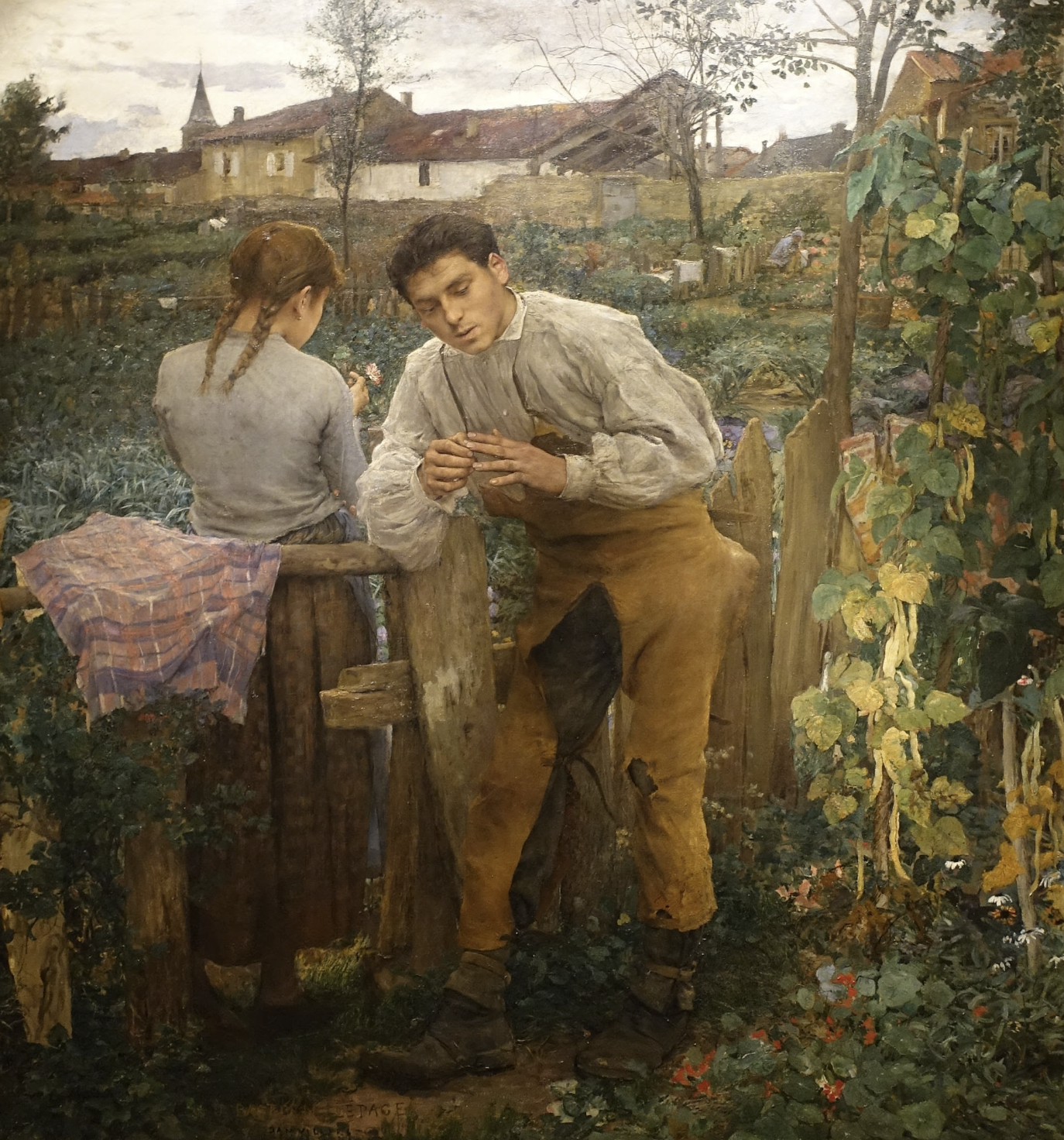
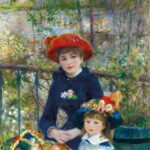
Naturalism art by Jules Bastien
Jules Bastien-Lepage: Naturalistic precision in rural light.

Unlike Neoclassicism (which idealized form according to classical Greco-Roman beauty standards) or Romanticism (which stylized form to express heightened emotional drama), Naturalism adheres strictly to careful observation. While closely intertwined with Realism, Naturalism often emphasizes a higher level of technical finesse, precise photographic values, diffuse outdoor daylight, and a deterministic view of human life—frequently recording subjects in their authentic social, rural, or working-class conditions without moralizing or romantic commentary.
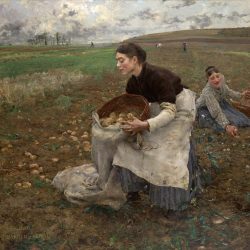
Related to Naturalism

Note : The images below might not strictly correspond to the style and technique of Naturalism, but rather represent an artist who also includes this approach in their portfolio.

Jules Bastien-Lepage

Classification

  • Category: Fine Arts, Visual Arts (Painting, Sculpture, Illustration).

  • Era/Period: Late 18th to Late 19th Century (Peak: 1870–1900); periodic 20th-century revivals.

  • Origin Location: Western Europe (France, Great Britain, Germany, Russia, and Scandinavia).

Visual & Technical Specs

Key Visual Characteristics: High optical fidelity, natural anatomical proportions, diffused outdoor daylight (Plein Air execution), neutral values, unposed subject placement, accurate atmospheric depth, and unembellished textures (cloth, soil, skin, foliage).

Color Palette: Earthy, subdued tones dominated by raw ochre, burnt umber, viridian green, slate gray, muted cobalt, and soft atmospheric whites. High-contrast theatrical lighting (chiaroscuro) is replaced by cool, diffuse ambient daylight.
Mediums & Tools: Oil on heavy linen canvas, charcoal, gouache, graphite pencil, plein air field easel boxes, and early photographic plates used for anatomical reference.

Pioneers & Key Works

  1. Jules Bastien-Lepage (France) – Pioneer of late 19th-century Naturalism

  2. Émile Friant (France)

  3. Jean-François Millet (France) – Barbizon School pioneer

  4. Camille Corot (France)

  5. Gustave Courbet (France)

  6. Léon Lhermitte (France)

  7. Pascal Dagnan-Bouveret (France)

  8. Ilya Repin (Russia) – Peredvizhniki / Itinerants movement

  9. Ivan Shishkin (Russia)

  10. Vasily Polenov (Russia)

  11. George Clausen (United Kingdom) – New English Art Club

  12. Henry Herbert La Thangue (United Kingdom)

  13. Stanhope Forbes (United Kingdom) – Newlyn School founder

  14. Peder Severin Krøyer (Denmark) – Skagen Painters

  15. Michael Ancher (Denmark)

  16. Anna Ancher (Denmark)

  17. Max Liebermann (Germany)

  18. Wilhelm Leibl (Germany)

  19. Winslow Homer (United States)

  20. Thomas Eakins (United States)

10 20th-Century Revivalists & Modern Realist Masters

  1. Andrew Wyeth (United States) – American Regionalist Naturalism

  2. Edward Hopper (United States) – Urban Naturalism

  3. Norman Rockwell (United States) – Narrative figurative Naturalism

  4. Lucian Freud (United Kingdom) – Un-idealized anatomical Naturalism

  5. Antonio López García (Spain) – Hyper-observed urban Naturalism

  6. Claudio Bravo (Chile) – Classical precision Naturalism

  7. Pietro Annigoni (Italy)

  8. Robert Henri (United States) – Ashcan School

  9. George Bellows (United States)

  10. Bo Bartlett (United States) – Contemporary figurative Naturalism

Masterpieces

  1. Haymaking (Les Foins) – Jules Bastien-Lepage (1877)

  2. All Saints’ Day (Toussaint) – Émile Friant (1888)

  3. Barge Haulers on the Volga – Ilya Repin (1870–1873)

  4. The Gleaners – Jean-François Millet (1857)

  5. The Gross Clinic – Thomas Eakins (1875)

  6. Summer Day on Skagen’s Southern Beach – P.S. Krøyer (1884)

  7. A Hop-Pickers’ Feast – George Clausen (1884)

  8. Christina’s World – Andrew Wyeth (1948)

Philosophy & Context

  • The “Why”: Naturalism sought to record truth as observed through empirical experience rather than elevated through heroic idealization. Influenced by Charles Darwin’s theories of evolution, Emile Zola’s literary naturalism, and scientific determinism, artists believed that human beings are shaped fundamentally by their environment, genetics, and working conditions.

  • Historical Context: Naturalism rose during the height of the Industrial Revolution and the growth of empirical science. As cities expanded and photographic technology matured, visual artists rejected classical mythology and historical idealization in favor of documenting genuine human labor, rural life, and unadorned nature.

Modern Influence: Cinema, TV & CGI

  • 2D, 3D, CGI, VFX: Naturalism forms the foundational bedrock of photorealistic 3D rendering, modern VFX composition, and cinematic lighting design. Physically Based Rendering (PBR) workflows—which simulate real-world material properties like roughness, subsurface scattering, and index of refraction (IOR)—are direct technical extensions of Naturalist visual principles.

  • Modern Legacy: Cinematic directors and cinematographers rely on Naturalist aesthetics to ground fantasy or historical narratives in physical reality (e.g., Roger Deakins’ natural light compositions in 1917 or The Revenant‘s reliance on natural overcast daylight and wide focal lenses).

Modern Influence: AI & Hybrid Media

  • Modern Legacy: In AI generative systems (Midjourney, Stable Diffusion, Flux), Naturalism prompts act as a anchor to suppress stylized “digital art” finishes, oversaturated glow effects, or exaggerated proportions. Prompting with Naturalist references produces physically plausible textures, authentic subsurface skin scatter, and believable ambient illumination.

  • AI Prompting Keywords: Naturalism art style, Jules Bastien-Lepage lighting, un-idealized detail, diffuse daylight, soft ambient occlusion, natural color palette, raw textures, photo-accurate proportions, overcast sky, earth tones, plein air realism, 19th-century oil painting.

Explore More

Minimalism 1

Some Other Art Styles

Art Styles by random seed

Symbolism

Symbolism was a late 19th-century movement that rejected the literal representation of the world (Realism and Impressionism) in favor of the inner life of the mind. Symbolist artists did not aim to paint a tree or a person as they appeared to the eye, but rather as symbols of a deeper, often darker, psychological or spiritual reality.

It is characterized by an interest in the occult, dreams, melancholy, and the macabre. For researchers, it is the bridge between the Romanticism of the early 1800s and the Surrealism of the 20th century. The art is intentionally ambiguous; it uses “private” symbols—motifs that might mean something specific to the artist but remain mysterious to the viewer—to evoke a mood or a “state of soul” rather than a clear narrative.

Sculpting

Sculpting is the branch of the visual arts that operates in three dimensions. Unlike painting, which creates the illusion of depth, sculpture occupies physical space and is governed by the relationship between mass and void. Historically, it was divided into two primary processes: Subtractive (carving away material like stone or wood) and Additive (building up material like clay or wax).

For researchers and digital artists, sculpting is defined by its tactile nature and its interaction with real-world physics—specifically gravity and light. Modern “Digital Sculpting” mimics these traditional workflows using millions of polygons to simulate the “feel” of clay. Key concepts include:

  • Armature: The internal skeleton that supports the weight of the sculpture.

  • Contrapposto: The shifting of weight in the human figure to create a sense of life and potential movement.

  • Relief vs. Free-standing: Whether the work is attached to a background (like a coin) or can be viewed from all 360°.

Miniature

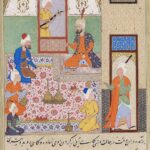
Miniature painting is a highly disciplined, small-scale art form characterized by extreme precision, vibrant mineral pigments, and a rejection of Western three-dimensional perspective. While each region has its own identity, they share a “flat” or isometric perspective, where the importance of a subject is dictated by its placement or color rather than its distance from the viewer.

  • Persian (Iranian) Miniature: Known for the “Herat” and “Safavid” schools. It features lyrical compositions, intricate “Tazhib” (illumination), and a focus on epic poetry (Shahnameh) and mysticism.

  • Indian (Mughal/Rajput) Miniature: A fusion of Persian technique and Indian flora/fauna. It introduced more naturalism, portraiture, and the “Ragmala” (musical modes) paintings.

  • East Asian (China/Japan) Influence: While often appearing as scrolls, the “miniature” element exists in Album Leaves and Fan Paintings. They emphasize calligraphic line work, the “spirit resonance” of brushstrokes, and the philosophical use of “negative space” (Ma).

Fantasy art

Fantasy Art is a broad, highly influential visual genre characterized by the depiction of mythic, supernatural, magical, or speculative themes that exist outside the boundaries of our consensus reality. It is an art form rooted in world-building, where the impossible is rendered with enough structural and material logic to suspend the viewer’s disbelief. Unlike abstract art, Fantasy Art typically relies on Representational Realism or Academic Realism to ground its impossible subjects—such as mythical creatures, ancient sorcery, invented landscapes, and legendary heroes—in a tangible, believable environment.

For researchers, historians, and digital artists, Fantasy Art is understood through several distinct sub-movements and technical evolutions:

  • The Mythological & Romantic Roots: Early foundations heavily borrowed from the Pre-Raphaelites and Symbolists, focusing on folklore, Arthurian legends, and classical mythology with a soft, idealized, and romanticized lens.

  • The Pulp & Sword-and-Sorcery Era (Mid-20th Century): Dominated by paperback book covers and magazines. This phase introduced hyper-muscular anatomy, dynamic kinetic energy, and raw, visceral action compositions.

  • Contemporary High Fantasy & Imaginative Realism: The modern phase blends classical oil painting techniques with advanced digital tools, emphasizing complex ecosystem designs, cultural anthropology for fictional races, and highly sophisticated atmospheric lighting.

Chiaroscuro Noir

Chiaroscuro Noir is a hybrid aesthetic synthesis born from the intersection of classical high-contrast lighting (chiaroscuro) and modern psychological cynicism (film noir / pulp narrative). It relies on the deliberate weaponization of shadow and light to communicate moral ambiguity, psychological tension, and spatial claustrophobia.

  • Comic (Graphic Noir): Heavily prioritized in this entry, Chiaroscuro Noir in comics is defined by heavy spot blacks, ink bleeding, minimal mid-tones, and negative space manipulation. The page layout often mimics cinematic framing, using gutters as shadows to hide or reveal character motivations.

  • Photography: Employs hard-edged lighting instruments (Kicker, Fresnel, and snoots) without softboxes, producing stark graphic silhouettes, silhouette profiles, and dramatic facial modeling (e.g., Rembrandt patches of light).

  • Cinematic: Characterized by low-key lighting setups, deep focus, smoke/fog atmosphere to catch light shafts, and canted angles (Dutch angles) that disorient the viewer, reflecting the corruption or instability of the narrative space.

  • Painting: Rooted in the tenebrism of Caravaggio and Rembrandt, utilizing an inky, pitch-black ground from which forms violently emerge through a single, harsh light source.

  • Graphic: Emphasizes minimalist vector or ink-brush reduction, where intricate details are sacrificed for high-contrast graphic impact, iconic silhouettes, and stark dualities of black and white.

Expressionism

Expressionism is a modernist movement that originated in Northern Europe at the beginning of the 20th century. Its core principle is the prioritization of emotional experience over physical reality. Unlike Impressionism, which sought to capture the visual “impression” of light, Expressionism seeks to depict the “expression” of the artist’s inner world—often involving intense feelings of anxiety, fear, passion, or spiritual awakening.

For students and art centers, the style is defined by a radical distortion of form and the use of violent, non-naturalistic colors. It is not meant to be “beautiful” in the traditional sense; rather, it aims to be “honest” and “visceral.” The movement is typically divided into two influential German groups:

  • Die Brücke (The Bridge): Known for crude, jagged lines and a primitive, raw aesthetic.

  • Der Blaue Reiter (The Blue Rider): More abstract and focused on the spiritual and symbolic power of color.

Reset to Default
+ FAVORITES ✎
✕
⋮ ☆ Naturalism
✕
HELP AGENT
PLEASE WAIT, LOADING...
×
MCA

--
Analyzing image & extracting data...

Link Copied!

General Inquiry

Have a question or feedback regarding portfolios? Drop us a line.

Strictly plain English text structure only.

Attachments Inventory

Max 500KB per file. Max 10 images.

Delivery Confirmed

Thank you. Your message and data structural packages have been safely transferred to our desk.

Artist Name Artwork Details
Search with Google Lens
Print...