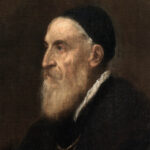



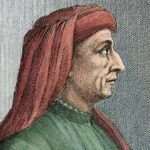
Agnolo di Cosimo di Mariano Tori | Agnolo di Cosimo (Father: Cosimo, a butcher. He was informally adopted by his master, the painter Pontormo.)
Agnolo di Cosimo, almost exclusively known by his nickname Bronzino (possibly referring to his dark complexion or hair), was a leading Florentine Mannerist painter. He is best remembered for his highly stylized, elegant, and chillingly precise portraits of the 16th-century Italian aristocracy.
Bronzino began his artistic training around the age of 14 under Jacopo da Pontormo, the pioneering Florentine Mannerist. Their relationship was remarkably close; Pontormo frequently included portraits of the young Bronzino in his works, and Bronzino later completed several of his master’s unfinished frescoes. While Bronzino absorbed Pontormo’s elongated forms and artificial colors, his mature style replaced his master’s intense emotional turbulence with a cool, aristocratic detachment.
In 1539, Bronzino was invited to help decorate for the wedding of Duke Cosimo I de’ Medici to Eleonora di Toledo. His impressive work secured him the position of official court painter to the Medici, a role he held for most of his life. His portraits of the Duke, the Duchess, and their children—most notably the iconic Portrait of Eleonora of Toledo with her son Giovanni (c. 1544)—set the standard for European court portraiture for a century. These works are characterized by their smooth, enamel-like finishes, meticulous attention to the rich textures of fabrics and jewels, and the impassive, mask-like expressions of the subjects.
Beyond portraiture, Bronzino painted highly intellectual and complex allegories, such as the famous Venus, Cupid, Folly and Time (c. 1545), a masterpiece of eroticism and obscure symbolism created as a gift for King Francis I of France. He was also deeply involved in the cultural life of Florence, becoming a founding member of the prestigious Accademia delle Arti del Disegno (Academy of the Arts of Drawing) in 1563.
Active in others filds : Poetry (He was a published poet, writing both elegant Petrarchan sonnets and humorous, bawdy burlesque poems).