


Homage to the Square
Accomplished as a designer, photographer, typographerprintmaker, and poet, Albers is best remembered for his work as an abstract painter and theorist. He favored a very disciplined approach to composition, especially in the hundreds of paintings and prints that make up the series Homage to the Square. In this rigorous series, begun in 1949, Albers explored chromatic interactions with nested squares. Usually painting on Masonite, he used a palette knife with oil colors and often recorded the colors he used on the back of his works. Each painting consists of either three or four squares of solid planes of color nested within one another, in one of four different arrangements and in square formats ranging from 406×406 mm to 1.22×1.22 m.[18]

Wikipedia

Name : Josef Albers

Born : 1888

Died : 1976

Art Style & Movement : Abstract , Color Field

Main Field/s :

SUB CATEGORIES
×

Keep Reading About

Josef Albers

Josef Albers (/ˈælbərz, ˈɑːl-/German: [ˈalbɐs]; March 19, 1888 – March 25, 1976)[1] was a German-born artist and educator. The first living artist to be given a solo shows at MoMa[2] and at the Metropolitan Museum of Art in New York,[3] he taught at the Bauhaus and Black Mountain College, headed Yale University‘s department of design, and is considered one of the most influential teachers of the visual arts in the twentieth century.

As an artist, Albers worked in several disciplines, including photography, typography, murals and printmaking. He is best known for his work as an abstract painter and a theorist. His book Interaction of Color was published in 1963.
Related Link/s

The Realm of Analog Artistry

This curated space is dedicated to the timeless works of global master artists, created through traditional mediums and manual precision. From fine oil paintings to architectural drafting, every piece represents the authentic tactile heritage of visual arts .

Josef Albers

Abstract

Abstract art represents a pivotal departure from “mimesis” (the imitation of visible reality). Instead of depicting recognizable objects from the physical world, it uses a formal language of shape, form, color, and line to create a composition that may exist with a degree of independence from visual references in the world.

For researchers and art centers, it is categorized into two main movements:

  • Non-Objective / Non-Representational: Work that does not take anything from the real world as a starting point. It is pure form and color (e.g., Mondrian).

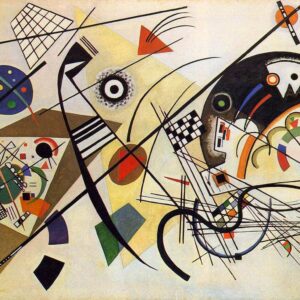
  • Abstracted Reality: Work that begins with a real-world subject (like a figure or landscape) and simplifies or distorts it until the original source is nearly unrecognizable (e.g., early Kandinsky).

The movement evolved through various sub-genres, including Geometric Abstraction (logical and calculated) and Lyrical Abstraction (emotional and gestural). It challenged the viewer to “feel” the art rather than “identify” it.

Related

Jasper Johns
karl schlamminger
Kandinsky
Yun Hyong-keun
Antoni Tàpies
Franz Kline
SUB CATEGORIES
×

Find Other Master Artists

1887

1968

Shopping Cart

Need Help?

Questions ! Comments ? You Tell Us We Listen .

Feel free to contact us

Add Your Heading Text Here

Login

Shopping Cart