A comprehensive guide to the visual principles, history, and pioneers of this movement. Curated for researchers and students seeking a structured analysis of artistic styles.
Art Style Directory
Abstract
Full General Specifications
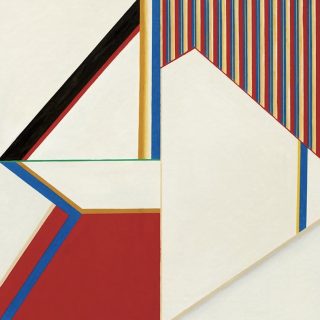
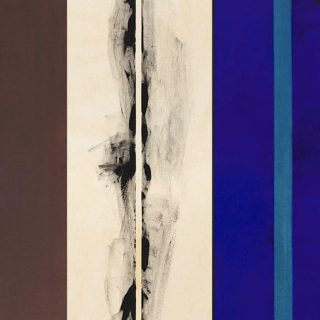
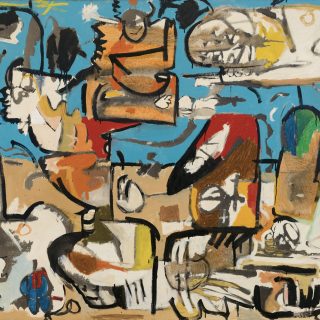
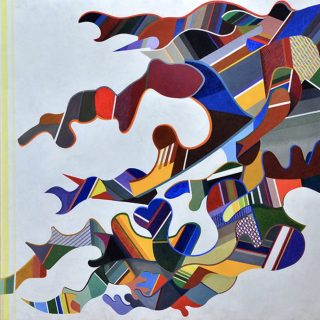
Abstract art represents a pivotal departure from “mimesis” (the imitation of visible reality). Instead of depicting recognizable objects from the physical world, it uses a formal language of shape, form, color, and line to create a composition that may exist with a degree of independence from visual references in the world.
For researchers and art centers, it is categorized into two main movements:
Non-Objective / Non-Representational: Work that does not take anything from the real world as a starting point. It is pure form and color (e.g., Mondrian).
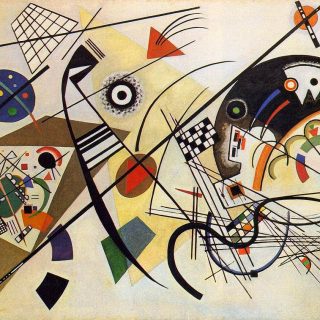
Abstracted Reality: Work that begins with a real-world subject (like a figure or landscape) and simplifies or distorts it until the original source is nearly unrecognizable (e.g., early Kandinsky).
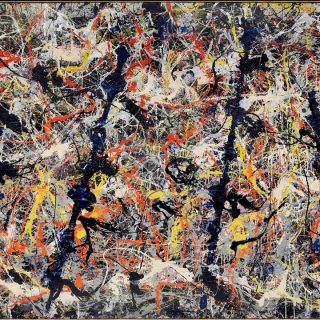
The movement evolved through various sub-genres, including Geometric Abstraction (logical and calculated) and Lyrical Abstraction (emotional and gestural). It challenged the viewer to “feel” the art rather than “identify” it.
Era/Period: Late 19th Century to Present (Peak movements: 1910–1950s).
Origin Location: Europe (Primarily Germany, Russia, and France) and later the USA.
Visual & Technical Specs
Key Visual Characteristics: Lack of narrative, emphasis on texture, gestural brushwork, geometric precision, and the use of “negative space” as a structural element.
Color Palette: Ranges from the “Primary” focus of De Stijl (Red, Blue, Yellow) to the vast, moody “Color Fields” of Mark Rothko.
Mediums & Tools: Acrylics, Oils, Ink, sand-mixed paints for texture, and digitally, vector-based software (Illustrator) or generative algorithms.
Pioneers & Key Works
Founders/Key Artists: Wassily Kandinsky (often cited as the first), Hilma af Klint, Piet Mondrian, Kazimir Malevich, Jackson Pollock.
Masterpieces:
Composition VII (Kandinsky, 1913)
Broadway Boogie Woogie (Mondrian, 1942–43)
Black Square (Malevich, 1915)
No. 5, 1948 (Pollock, 1948)
Influential Schools/Groups: The Bauhaus (Germany), De Stijl (Netherlands), The New York School (Abstract Expressionists).
The “Why”: The goal was to reach a “universal language.” Artists felt that representational art was limited by cultural and linguistic barriers. They sought to tap into the spiritual, the subconscious, and the emotional through pure aesthetic elements.
Historical Context: The trauma of World War I and II led many artists to feel that the “old world” and its traditional art were broken. Scientific advances (subatomic particles, X-rays) also suggested that reality was not just what the eye could see.
Modern Influence: Cinema, TV & CGI
2D, 3D, CGI, VFX: Abstraction is the backbone of modern motion graphics and UI/UX design. In VFX, abstract simulations (fluid dynamics, particle clouds) are used to represent concepts like “The Multiverse” or digital consciousness.
Modern Legacy: Visible in the work of title sequence designers (like Saul Bass) and the aesthetic of films like 2001: A Space Odyssey (the Stargate sequence) or Interstellar.
Modern Influence: AI & Hybrid Media
Modern Legacy: AI excels at “Latent Space Abstraction,” where it blends thousands of concepts into a singular, unidentifiable form. It has popularized “Generative Abstraction,” where the artist sets parameters and the machine creates the final visual.
AI Prompting Keywords:Abstract Expressionism, fluid forms, non-representational, splashes of color, geometric minimalism, organic textures, Jackson Pollock drip style, Mark Rothko color field, high contrast, non-objective.