

Art Style & Movement
Architectural Movements
A comprehensive guide to the visual principles, history, and pioneers of this movement. Curated for researchers and students seeking a structured analysis of artistic styles.
Full General Specifications
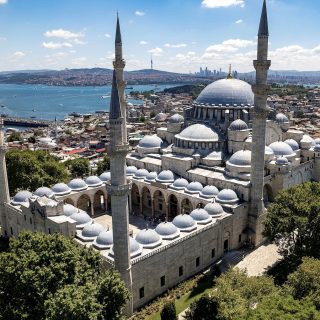
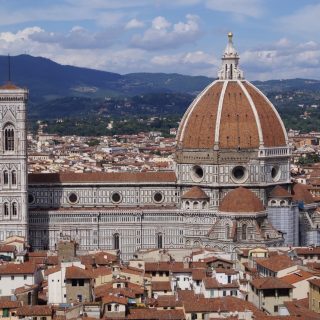
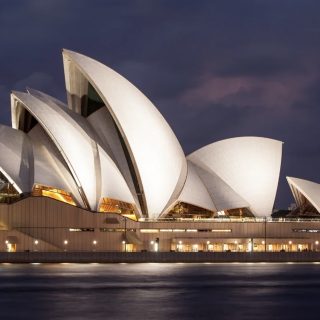
Architectural movements represent the evolution of human civilization through the lens of Form, Function, and Material. Unlike isolated art movements, architecture is bound by the laws of physics and the socio-economic needs of the time. A “Movement” in architecture is defined by a shared vocabulary of structural elements (how it stands up) and aesthetic ornamentation (how it looks).
For the Cgitems database, architectural movements are analyzed through three primary lenses:
-
Structural Innovation: The transition from Post-and-Lintel (Ancient) to Arches/Vaults (Medieval) to Steel Frames (Modern) and finally to Computational/Parametric design.
-
Spatial Philosophy: How a building treats the person inside—from the intimidating “divine scale” of the Gothic era to the “human-centric” ergonomics of Modernism.
-
The Facade & Envelope: The “skin” of the building, which reflects the artistic trends of the era, such as the intricate carvings of the Baroque or the “Glass Curtain Walls” of the International Style.
Related Random Architectural Movements Artwork
Classification
-
Category: Architecture, Urban Planning, Interior Design, Environmental Design.
-
Era/Period: Prehistoric to Contemporary (Approx. 10,000 BCE – Present).
-
Origin Location: Global (with major historical nodes in Mesopotamia, Greece, Italy, France, and the USA).
Visual & Technical Specs
-
Key Visual Characteristics: Massing (volume), Symmetry vs. Asymmetry, Fenestration (window patterns), and the “Order” of columns or structural supports.
-
Color Palette: Traditionally dictated by local materials (Limestone, Brick, Marble). In the Modern era, defined by the “Truth to Materials” (Grey concrete, Black steel, Clear glass).
-
Mediums & Tools:
-
Historical: Stone masonry, timber framing, lime mortar.
-
Industrial: Reinforced concrete (Béton armé), I-beams, plate glass.
-
Digital: BIM (Building Information Modeling), Rhino/Grasshopper (Parametricism).
-
Pioneers & Key Works
-
Founders/Key Figures: Vitruvius (Ancient Theory), Andrea Palladio (Renaissance), Le Corbusier (Modernism), Zaha Hadid (Parametricism).
-
Masterpieces:
-
The Parthenon (Classical perfection).
-
The Sagrada Família (Art Nouveau/Gothic hybrid).
-
The Villa Savoye (Modernist manifesto).
-
The Burj Khalifa (Neo-Futurism/Contemporary engineering).
-
-
Influential Schools: The Bauhaus (Germany), École des Beaux-Arts (France), Vkhutemas (Russia).
Philosophy & Context
-
The “Why”: Architecture is the “Will of an epoch translated into space.” It aims to solve the fundamental conflict between Beauty (Venustas), Utility (Utilitas), and Stability (Firmitas).
-
Historical Context: Movements are usually reactions. Modernism was a reaction to the “clutter” of the 19th century; Post-Modernism was a reaction to the “boring” boxes of Modernism.
Modern Influence: Cinema, TV & CGI
-
2D, 3D, CGI, VFX: Architecture provides the “Stage” for all visual storytelling. In CGI, “Procedural Architecture” allows for the instant creation of cities (like in Cyberpunk 2077 or Inception). Knowledge of architectural styles is essential for believable Environment Design.
-
Modern Legacy: Digital twin technology and Metaverse “Virtual Architecture” where gravity no longer limits form.
Modern Influence: AI & Hybrid Media
-
Modern Legacy: AI is currently used for “Generative Design,” where an algorithm optimizes a building’s shape for sunlight or wind based on historical style prompts.
-
AI Prompting Keywords: Architectural photography, [Style Name], isometric view, floor plan, brutalist concrete, neoclassical symmetry, parametric curves, photorealistic, Unreal Engine 5 render, global illumination, Ray-traced shadows.


