A comprehensive guide to the visual principles, history, and pioneers of this movement. Curated for researchers and students seeking a structured analysis of artistic styles.
Art Style Directory
Byzantine
Full General Specifications
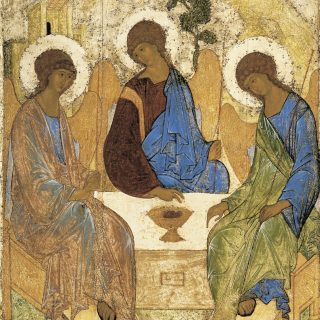
Byzantine art refers to the body of Christian Greek artistic products of the Eastern Roman Empire. This style is the bridge between Classical Antiquity and the Middle Ages, shifting away from the 3D realism of the Greeks and Romans toward a highly symbolic, two-dimensional, and spiritual aesthetic.
For researchers and art centers, the defining characteristic is the “Eternal Presence.” Figures are depicted frontally with large, soul-searching eyes, existing in a timeless space represented by a flat gold background. This was not due to a lack of skill, but a deliberate theological choice: art was meant to be a “window to heaven” (Icon), not a reflection of the physical world. The architecture is equally revolutionary, perfecting the Pendentive—a constructive device permitting the placing of a circular dome over a square room.
Key Visual Characteristics: Frontal poses, elongated figures, “hovering” feet, haloed saints, and the use of Reverse Perspective (where objects get larger as they move away from the viewer to emphasize the importance of the subject).
Color Palette: Dominated by Imperial Gold, Tyrian Purple (royalty), Lapis Lazuli Blue, and Deep Emerald Green.
Mediums & Tools: Glass and stone tesserae (mosaics), egg tempera on wood panels (icons), and gold leaf. Architectural mastery of the Pendentive dome.
Pioneers & Key Works
Founders/Key Artists: Mostly anonymous “Iconographers” (monks), but notable figures include Anthemius of Tralles and Isidore of Miletus (architects of Hagia Sophia).
Masterpieces:
Hagia Sophia (Istanbul) – The zenith of Byzantine architecture.
Basilica of San Vitale (Ravenna) – Home to the Justinian and Theodora mosaics.
The Virgin of Vladimir (12th Century) – One of the most famous icons in history.
Chora Church Frescoes (The Anastasis).
Influential Schools/Groups: The Macedonian Renaissance, The Palaeologan Renaissance.
The “Why”: To evoke the “Kingdom of God.” The art was intended to be meditative and liturgical. By using gold backgrounds, the figures were removed from “Earthly Time” and placed into “Divine Eternity.”
Historical Context: Born from Emperor Constantine’s move to the East. While the Western Roman Empire fell into the Dark Ages, the Byzantine Empire preserved Greek and Roman knowledge, fusing it with Christian mysticism for over a millennium.
Modern Influence: Cinema, TV & CGI
2D, 3D, CGI, VFX: Byzantine “glitter” and the shimmering effect of uneven mosaics are often used in high-end VFX to create “Divine” or “Ancient Alien” environments. The architecture of Naboo in Star Wars or the ornate interiors in 300 draw heavily from Byzantine geometry.
Modern Legacy: It is the direct ancestor of Eastern Orthodox religious art and heavily influenced the Art Nouveau movement (specifically Gustav Klimt’s “Gold Phase”).
Modern Influence: AI & Hybrid Media
Modern Legacy: AI excels at the “Byzantine prompt” because of the consistent pattern density and high-contrast color blocks. It is a favorite for “Neo-Byzantine” hybrid art.