

Art Style & Movement
Cartoon
A comprehensive guide to the visual principles, history, and pioneers of this movement. Curated for researchers and students seeking a structured analysis of artistic styles.
Full General Specifcations for Cartoon
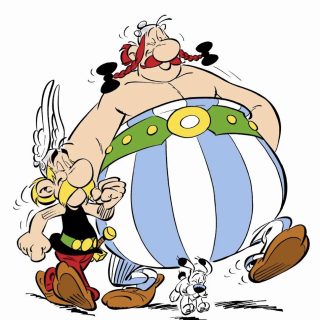
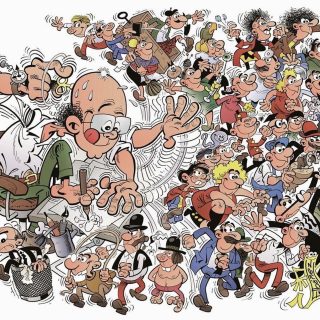
The “Cartoon” style is a broad artistic language defined by simplification, exaggeration, and symbolism. Unlike realism, which seeks to mimic the physical world, cartooning captures the essence of a subject through “The Principle of Amplification through Simplification.” By stripping away non-essential details, the artist directs the viewer’s attention to specific emotions, actions, or personality traits.
Technically, the style relies on visual shorthand. A lightbulb over a head signifies an idea; stars around a head signify dizziness. This “language of symbols” allows for rapid storytelling. Within the professional sphere, cartooning is divided into several major aesthetic movements:
-
Rubber Hose (1920s-30s): Characters with limbs that lack elbows or knees, moving like noodles (e.g., Early Mickey Mouse).
-
Limited Animation (1950s-60s): A stylistic choice (often driven by budget) that uses static backgrounds and only moves specific parts of a character, creating a graphic, “flat” look (e.g., Hanna-Barbera).
-
Modern CalArts/Bean Mouth: A contemporary trend focusing on soft, rounded shapes and expressive, elastic facial features.
Related Random Cartoon Artwork
Classification
-
Category: Digital/AI Art, Painting (Illustration), Fashion.
-
Era/Period: Early 19th Century (Political Cartoons) to the Digital Age.
-
Origin Location: Global (Significant roots in the USA, France, and Japan).
Visual & Technical Specs
-
Key Visual Characteristics: Exaggerated anatomy (large eyes, expressive hands), bold line weights (Line Art), Squash and Stretch physics, and a lack of complex realistic textures.
-
Color Palette: Typically uses a saturated and high-contrast palette. Modern cartoons often use “Color Scripts” to define the mood of a scene, using vibrant primaries for heroes and desaturated or neon tones for villains/environments.
-
Mediums & Tools: * Traditional: Ink pens, cel paint (Gouache-based), and light tables.
-
Modern: Vector software (Adobe Illustrator), Raster tools (Procreate, Photoshop), and 3D NPR (Non-Photorealistic Rendering).
-
Pioneers & Key Works
-
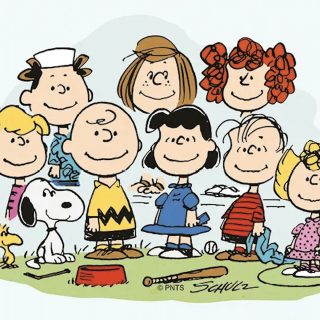
Founders/Key Artists: Walt Disney & Ub Iwerks, Chuck Jones (Looney Tunes), Charles Schulz (Peanuts), Matt Groening (The Simpsons), Tex Avery.
-
Masterpieces:
-
Steamboat Willie (1928) – The birth of the modern sound cartoon.
-
What’s Opera, Doc? (1957) – Masterpiece of layout and color.
-
The Lion King (1994) – Peak of 2D “Feature” cartooning.
-
Spider-Man: Into the Spider-Verse (2018) – The evolution of the 3D-Cartoon hybrid.
-
-
Influential Schools/Groups: CalArts, UPA (United Productions of America), Studio Ghibli (for the “Anime-Cartoon” hybrid).
Philosophy & Context
-
The “Why”: The goal is Maximum Expression. Cartoons allow creators to depict situations that are physically impossible in the real world (e.g., walking off a cliff and not falling until you look down). It is a medium of “Infinite Budget” where the only limit is the artist’s imagination.
-
Historical Context: Originally used for social and political satire in newspapers (Thomas Nast). It shifted into entertainment with the invention of the cinematograph, eventually becoming a pillar of global pop culture and branding.
Modern Influence: Cinema, TV & CGI
N/A
Modern Influence: AI & Hybrid Media
-
Modern Legacy: AI models like Midjourney and Stable Diffusion are extremely proficient in “Style Transfer,” allowing users to turn real-life photos into “Cartoon” avatars instantly.
-
AI Prompting Keywords: Flat vector art, 2D cartoon style, bold outlines, cel-shaded, vibrant colors, exaggerated features, whimsical character design, Saturday Morning Cartoon aesthetic, high-quality line art.
Some Other Art Styles by Random Seed
Art Styles by random seed
Baroque
Baroque is a period and style of Western classical art that used exaggerated motion and clear, easily interpreted detail to produce drama, tension, exuberance, and grandeur. It began around 1600 in Rome and spread throughout most of Europe.
The hallmark of Baroque art is theatricality. Unlike the balanced and “static” perfection of the Renaissance, Baroque art is “dynamic.” It seeks to involve the viewer emotionally and physically. In painting, this was achieved through Chiaroscuro (strong contrasts between light and dark) and Tenebrism (where darkness becomes a dominating feature of the image). In architecture, it moved away from flat surfaces toward undulating walls and domes that created a sense of movement. For researchers, it is defined by the “co-extensive space,” where the art seems to break the “fourth wall” and enter the viewer’s world.
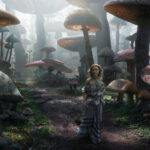
Fantasy art
Fantasy art is a broad and enduring genre of speculative fiction that depicts magical, supernatural, or mythological themes. Unlike “Realism,” which seeks to document the world as it is, Fantasy art uses the “Secondary World” concept—creating entirely new ecosystems, architectures, and biomes that operate under their own internal logic.
Historically, it evolved from folk tales and religious iconography into a massive commercial industry. It is characterized by Heroic Realism, where the human (or humanoid) figure is often idealized and placed in extreme, awe-inspiring environments. For students and researchers, the genre is often subdivided into:
-
High Fantasy: Epic scales, medieval-inspired aesthetics, and clear struggles between light and dark.
-
Dark Fantasy: Incorporates elements of horror, decay, and morally ambiguous “anti-heroes.”
-
Urban Fantasy: Merges magical elements with modern, gritty cityscapes.
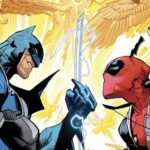
Comic
Comic art is a sophisticated visual language that combines sequential imagery with textual elements (word balloons, onomatopoeia, and captions) to deliver a narrative. Unlike a single painting, comic art relies on the “gutter”—the space between panels—where the reader’s imagination bridges the gap between actions, a concept known as closure.
Technically, it is defined by its use of graphic shorthand. Because comics were historically printed on cheap newsprint, artists developed a style using high-contrast black inks and limited color palettes (like the Ben-Day dots process) to ensure clarity. Modern comic art has evolved into various sub-genres:
-
The Silver/Golden Age Style: Characterized by heroic proportions, bold primary colors, and heavy “Kirby Krackle” energy signatures.
-
Noir/Dark Age: Focused on heavy chiaroscuro (extreme light and shadow) and gritty realism.
-
Clear Line (Ligne Claire): Popularized by Franco-Belgian creators, emphasizing strong, continuous outlines and vivid, flat colors without hatching.
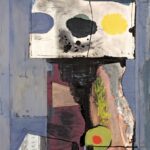
Abstract
Abstract art represents a pivotal departure from “mimesis” (the imitation of visible reality). Instead of depicting recognizable objects from the physical world, it uses a formal language of shape, form, color, and line to create a composition that may exist with a degree of independence from visual references in the world.
For researchers and art centers, it is categorized into two main movements:
-
Non-Objective / Non-Representational: Work that does not take anything from the real world as a starting point. It is pure form and color (e.g., Mondrian).
-
Abstracted Reality: Work that begins with a real-world subject (like a figure or landscape) and simplifies or distorts it until the original source is nearly unrecognizable (e.g., early Kandinsky).
The movement evolved through various sub-genres, including Geometric Abstraction (logical and calculated) and Lyrical Abstraction (emotional and gestural). It challenged the viewer to “feel” the art rather than “identify” it.
Sci-fi - Futurist
Science Fiction art is a visionary genre that depicts imagined technological advancements, space exploration, and futuristic civilizations. It is a “literature of ideas” rendered visually. Unlike pure fantasy, Sci-Fi art is grounded in extrapolation—taking current scientific trends and pushing them to their logical (or illogical) extremes.
The style is defined by its ability to balance the Technological Sublime (massive, awe-inspiring machines) with meticulous mechanical detail. It functions as a bridge between industrial design and fine art. Key sub-movements include:
-
Golden Age (1930s-50s): Optimistic, sleek, “Aero-styled” rockets and bright, primary-colored spacesuits.
-
New Wave/Cyberpunk (1970s-80s): Gritty, “used future” aesthetics, neon-noir lighting, and the fusion of biology with technology.
-
Hard Sci-Fi: Prioritizes physical accuracy, structural engineering, and realistic orbital mechanics in its visuals.
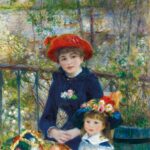
Impressionism
Impressionism is perhaps the most famous movement in modern art history, marking the moment when painting shifted from “what the eye knows” to “what the eye sees.” It originated as a rebellion against the rigid, polished standards of the French Académie des Beaux-Arts.
Rather than focusing on precise detail and smooth finishes, Impressionist painters sought to capture the ephemeral moment—the shifting effects of light, weather, and time on a subject. This was facilitated by the invention of portable tin paint tubes, which allowed artists to leave their studios and paint en plein air (outdoors). The style is defined by short, thick strokes of paint that capture the essence of a subject rather than its details. When viewed up close, an Impressionist painting looks like a chaotic mess of colors; however, when the viewer steps back, the eye performs optical mixing, blending the distinct strokes into a vibrant, shimmering image.


