A comprehensive guide to the visual principles, history, and pioneers of this movement. Curated for researchers and students seeking a structured analysis of artistic styles.
Art Style Directory
Cubism
Full General Specifications
Cubism is arguably the most influential art movement of the 20th century, marking a definitive break from the traditional Renaissance window-on-the-world perspective. At its core, Cubism is an analytical approach to three-dimensional reality, where objects are analyzed, broken up, and reassembled in an abstracted form.
For researchers and students, it is essential to distinguish between its two primary phases:
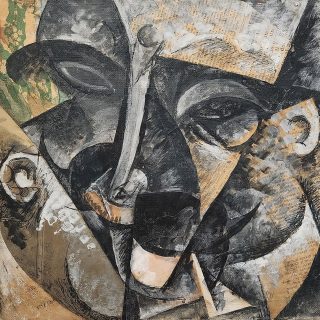
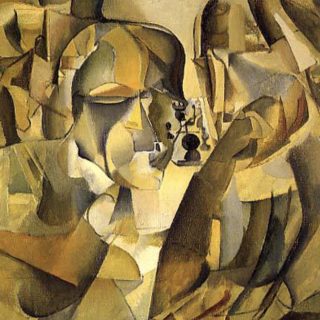
Analytic Cubism (1907–1912): Characterized by a fragmented, “shattered” appearance with a monochromatic color palette. The goal was to represent all viewpoints of an object simultaneously.
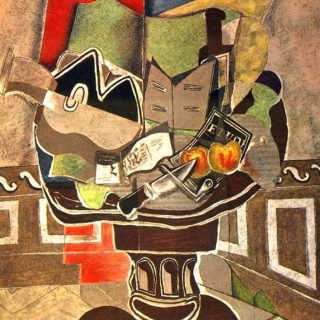
Synthetic Cubism (1912–1914): Introduced collage elements (newspaper, sand, cloth) and brighter colors, focusing on building up new forms from diverse materials rather than breaking them down
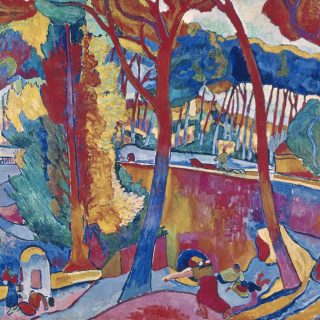
Synthetic: Bolder, more decorative primary and secondary colors.
Mediums & Tools: Oil on canvas, charcoal, wood carving, and mixed media (found objects like newspaper clippings and rope for collage)
Pioneers & Key Works
Founders/Key Artists: Pablo Picasso and Georges Braque (The Co-Founders); Juan Gris, Fernand Léger, and Jean Metzinger.
Masterpieces: 1. Les Demoiselles d’Avignon (Picasso, 1907) – The precursor. 2. The Portuguese (Braque, 1911). 3. Portrait of Picasso (Juan Gris, 1912). 4. Ma Jolie (Picasso, 1911–12). 5. Woman with a Guitar (Braque, 1913).
Influential Schools/Groups:The Puteaux Group (also known as Section d’Or) and the Bateau-Lavoir studio collective.
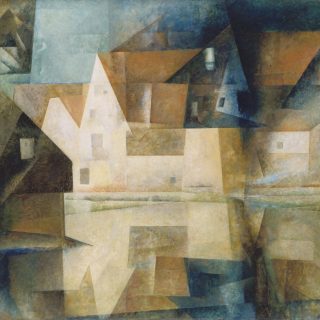
The “Why”: To challenge the “illusion” of three-dimensional space on a two-dimensional surface. Cubists believed that the human eye perceives an object from multiple angles over time; therefore, a single-point perspective was “false.” It aimed to show the total concept of an object rather than just its appearance.
Historical Context: The rise of the Industrial Revolution, the invention of photography (which freed painting from being purely representational), and early 20th-century physics (Einstein’s relativity) shifted how society perceived time and space
Modern Influence: Cinema, TV & CGI
2D, 3D, CGI, VFX: Cubist principles are foundational to low-poly 3D modeling and abstract motion graphics. In VFX, “fragmentation” effects often draw from Cubist deconstruction.
Modern Legacy: Visible in the fractured editing of avant-garde cinema and the set designs of German Expressionist films (like The Cabinet of Dr. Caligari), which evolved into modern psychological thrillers.
Modern Influence: AI & Hybrid Media
Modern Legacy: Cubism serves as a primary “stress test” for latent diffusion models, as it requires the AI to ignore the laws of physics and perspective while maintaining structural integrity.
AI Prompting Keywords:Cubism, multi-faceted, fractured planes, geometric abstraction, overlapping geometric shapes, simultaneous perspective, analytic cubism style, palette of ochre and grey, Juan Gris lighting.