


Art Style & Movement

SUB CATEGORIES
×

Muralism

A comprehensive guide to the visual principles, history, and pioneers of this movement. Curated for researchers and students seeking a structured analysis of artistic styles.

Full General Specifcations for Muralism

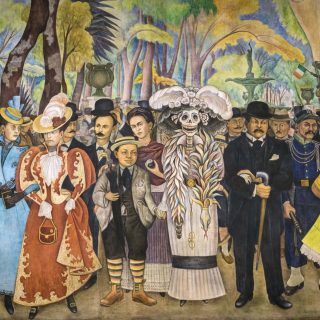
Muralism is a monumental art form characterized by large-scale paintings applied directly to walls, ceilings, or other permanent surfaces. While mural painting dates back to antiquity, the modern movement—Mexican Muralism—transformed it into a powerful tool for social and political transformation. Unlike canvas paintings housed in private galleries, Muralism is inherently public art, designed to be accessible to the masses regardless of their education or economic status.

For students and researchers, the technical “Long Form” of Muralism involves a complex integration of architecture and narrative. The artist must consider the viewer’s physical movement through a space, often using polyangular perspective (pioneered by Siqueiros) so that the image remains coherent from multiple walking angles. It frequently blends indigenous motifs with industrial imagery, symbolizing a bridge between a nation’s past and its technological future.

Related Random Muralism Artwork

Diego Rivera

Classification

  • Category: Painting, Architecture, Public Art.

  • Era/Period: Early to mid-20th Century (Main movement: 1920s–1950s).

  • Origin Location: Mexico (Post-Revolutionary era).

Visual & Technical Specs

  • Key Visual Characteristics: Monumental scale, heroic figures, heavy outlines, crowded “horror vacui” compositions (no empty space), and the inclusion of historical/political symbols (gears, sickles, indigenous masks).

  • Color Palette: Dominated by Earth Tones (terracotta, deep browns) contrasted with Vibrant Primaries (cobalt blue, fiery red, sun yellow). The colors are chosen for high visibility in natural outdoor lighting.

  • Mediums & Tools: * Traditional: Fresco (pigment on wet lime plaster) and Encaustic (wax).

    • Modern: Pyroxylin (an industrial lacquer/automotive paint popularized by Siqueiros for its durability) and Acrylics.

Pioneers & Key Works

  • Founders/Key Artists: “Los Tres Grandes” (The Big Three): Diego Rivera, José Clemente Orozco, and David Alfaro Siqueiros.

  • Masterpieces:

    1. Man at the Crossroads (Diego Rivera) – Famous for its depiction of industry and science.

    2. The March of Humanity (Siqueiros) – The largest mural in the world at Polyforum Siqueiros.

    3. The Epic of American Civilization (Orozco) – Located at Dartmouth College.

    4. Detroit Industry Murals (Diego Rivera) – A masterpiece of industrial integration.

  • Influential Schools/Groups: The Syndicate of Technical Workers, Painters, and Sculptors.

Philosophy & Context

  • The “Why”: The goal was to democratize art. In a post-revolutionary society with high illiteracy rates, murals served as “visual books” to teach history, celebrate labor, and foster national identity. It was a rejection of “Art for Art’s sake” in favor of “Art for the People.”

  • Historical Context: Born in the wake of the Mexican Revolution. The government commissioned artists to decorate public buildings to unify a fractured nation and move away from European colonial aesthetics toward “Mestizaje” (blended) identity.

Modern Influence: Cinema, TV & CGI

N/A

Modern Influence: AI & Hybrid Media

  • Modern Legacy: AI struggles with the “Spatial Integration” of murals but excels at the Stylistic Texture. Prompts often use Muralism to achieve a “socialist realism” or “industrial folk” look in digital character design.

  • AI Prompting Keywords: Muralism style, monumental fresco, Diego Rivera aesthetic, bold outlines, social realism, industrial motifs, heroic proportions, earth tones and vibrant primaries, crowded composition, public art wall.

Some Other Art Styles by Random Seed

Art Styles by random seed

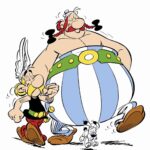
Cartoon

The “Cartoon” style is a broad artistic language defined by simplification, exaggeration, and symbolism. Unlike realism, which seeks to mimic the physical world, cartooning captures the essence of a subject through “The Principle of Amplification through Simplification.” By stripping away non-essential details, the artist directs the viewer’s attention to specific emotions, actions, or personality traits.

Technically, the style relies on visual shorthand. A lightbulb over a head signifies an idea; stars around a head signify dizziness. This “language of symbols” allows for rapid storytelling. Within the professional sphere, cartooning is divided into several major aesthetic movements:

  • Rubber Hose (1920s-30s): Characters with limbs that lack elbows or knees, moving like noodles (e.g., Early Mickey Mouse).

  • Limited Animation (1950s-60s): A stylistic choice (often driven by budget) that uses static backgrounds and only moves specific parts of a character, creating a graphic, “flat” look (e.g., Hanna-Barbera).

  • Modern CalArts/Bean Mouth: A contemporary trend focusing on soft, rounded shapes and expressive, elastic facial features.

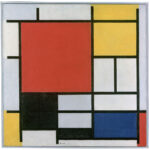
Bauhaus

Orientalism in the visual arts refers to a specific movement in the 19th century where Western painters—primarily from France, Britain, and Germany—depicted the landscapes, people, and cultures of the Near East, Middle East, and North Africa. It is characterized by an Academic Realism so precise it often feels photographic, though the subjects were frequently romanticized or staged.

For researchers and students, it is vital to understand that Orientalism functioned as both an artistic style and a cultural lens. The movement is divided into two main artistic approaches:

  • The Ethnographic/Documentary Style: Artists who traveled extensively (like David Roberts) and sought to capture the architecture and ruins of Egypt and the Levant with archaeological accuracy.

  • The Romantic/Imaginary Style: Artists (like Jean-Léon Gérôme) who created highly detailed, “hyper-real” scenes of harems, bazaars, and desert life, often blending various cultures into a singular, exotic “Orient” that appealed to European fantasies.

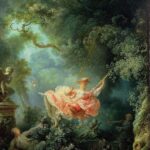
Rococo

Cubism represents the most radical break from traditional Western pictorial representation since the Renaissance. Developed primarily in Paris, it abandoned the single-viewpoint perspective that had dominated art for centuries. Instead, Cubist artists analyzed subjects from multiple angles, breaking them into geometric fragments and reassembling them within a shallow, ambiguous space.

For researchers and students, it is essential to distinguish between its two primary phases:

  • Analytic Cubism (1907–1912): Focused on breaking down forms into monochromatic, overlapping planes.

  • Synthetic Cubism (1912–1914): Introduced collage, vibrant colors, and simpler shapes, emphasizing the construction of new forms rather than the deconstruction of existing ones.

Sci-fi - Futurist

Science Fiction art is a visionary genre that depicts imagined technological advancements, space exploration, and futuristic civilizations. It is a “literature of ideas” rendered visually. Unlike pure fantasy, Sci-Fi art is grounded in extrapolation—taking current scientific trends and pushing them to their logical (or illogical) extremes.

The style is defined by its ability to balance the Technological Sublime (massive, awe-inspiring machines) with meticulous mechanical detail. It functions as a bridge between industrial design and fine art. Key sub-movements include:

  • Golden Age (1930s-50s): Optimistic, sleek, “Aero-styled” rockets and bright, primary-colored spacesuits.

  • New Wave/Cyberpunk (1970s-80s): Gritty, “used future” aesthetics, neon-noir lighting, and the fusion of biology with technology.

  • Hard Sci-Fi: Prioritizes physical accuracy, structural engineering, and realistic orbital mechanics in its visuals.

Gothic

Gothic art was a medieval movement that revolutionized European aesthetics, transitioning from the heavy, dark, and earthbound Romanesque style to a form defined by height, light, and verticality. While often associated with “darkness” in modern pop culture, the original Gothic movement was obsessed with the divine quality of light (Lux Nova).

In architecture, the style solved the “weight problem” of stone buildings. By using pointed arches and ribbed vaults, builders could channel weight downward rather than outward, allowing walls to be thinner and replaced with massive stained-glass windows. In visual arts, Gothic style marked a move toward greater realism; figures became less stiff and more emotional compared to Byzantine or Romanesque predecessors, showing naturalistic drapery and human expressions.

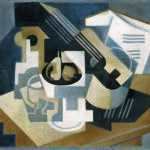
Cubism

Cubism is arguably the most influential art movement of the 20th century, marking a definitive break from the traditional Renaissance window-on-the-world perspective. At its core, Cubism is an analytical approach to three-dimensional reality, where objects are analyzed, broken up, and reassembled in an abstracted form.

For researchers and students, it is essential to distinguish between its two primary phases:

  • Analytic Cubism (1907–1912): Characterized by a fragmented, “shattered” appearance with a monochromatic color palette. The goal was to represent all viewpoints of an object simultaneously.

  • Synthetic Cubism (1912–1914): Introduced collage elements (newspaper, sand, cloth) and brighter colors, focusing on building up new forms from diverse materials rather than breaking them down

Need Help?

Questions ! Comments ? You Tell Us We Listen .

Feel free to contact us

Add Your Heading Text Here

Login