
Orientalism
A comprehensive guide to the visual principles, history, and pioneers of this movement. Curated for researchers and students seeking a structured analysis of artistic styles.
Full General Specifications
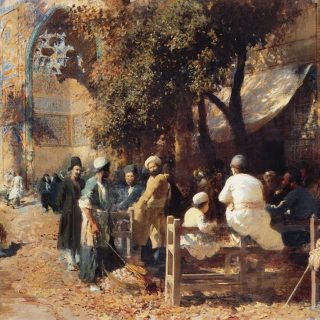
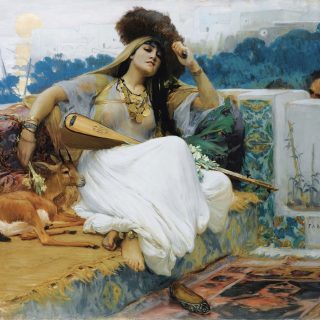
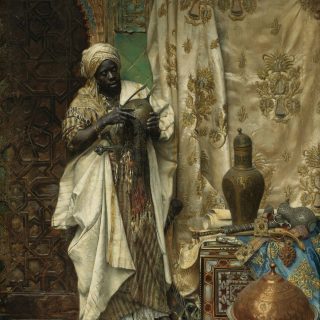
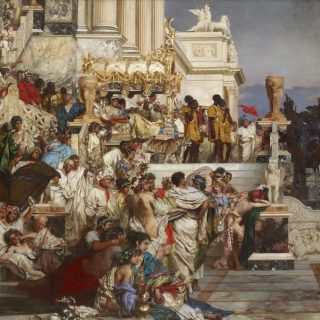
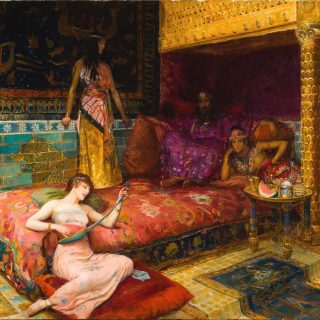
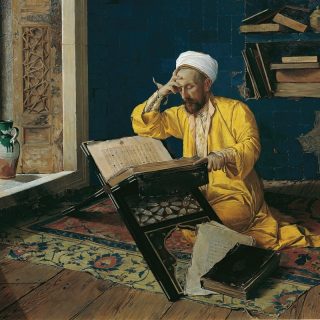
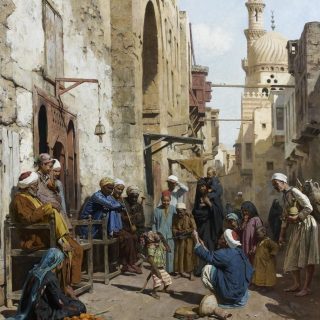
Orientalism in the visual arts refers to a specific movement in the 19th century where Western painters—primarily from France, Britain, and Germany—depicted the landscapes, people, and cultures of the Near East, Middle East, and North Africa. It is characterized by an Academic Realism so precise it often feels photographic, though the subjects were frequently romanticized or staged.
For researchers and students, it is vital to understand that Orientalism functioned as both an artistic style and a cultural lens. The movement is divided into two main artistic approaches:
-
The Ethnographic/Documentary Style: Artists who traveled extensively (like David Roberts) and sought to capture the architecture and ruins of Egypt and the Levant with archaeological accuracy.
-
The Romantic/Imaginary Style: Artists (like Jean-Léon Gérôme) who created highly detailed, “hyper-real” scenes of harems, bazaars, and desert life, often blending various cultures into a singular, exotic “Orient” that appealed to European fantasies.
Related Random Orientalism Artwork
Classification
-
Category: Painting, Architecture (Moorish Revival), Interior Design.
-
Era/Period: 19th Century (peak roughly 1830–1890).
-
Origin Location: Western Europe (France and Great Britain).
Visual & Technical Specs
-
Key Visual Characteristics: Exquisite architectural detail (arabesques, mosaics, horseshoe arches), dramatic play of light and shadow (Chiaroscuro), vast desert horizons, and highly textured depictions of fabrics like silk, fur, and wool.
-
Color Palette: Rich, warm tones. Dominant colors include Lapis Lazuli blue, Venetian red, burnt orange, gold, and deep ochre, reflecting the sun-drenched environments of the Maghreb and Levant.
-
Mediums & Tools: Primarily oil on canvas for its ability to render fine textures and glazes. Watercolors were also popular for “Plein air” sketches during travels.
Pioneers & Key Works
-
Founders/Key Artists: Jean-Léon Gérôme, Eugène Delacroix, John Frederick Lewis, David Roberts, Ludwig Deutsch.
-
Masterpieces:
-
The Snake Charmer (Jean-Léon Gérôme, c. 1879)
-
Women of Algiers in their Apartment (Eugène Delacroix, 1834)
-
The Reception (John Frederick Lewis, 1873)
-
The Chess Players (Ludwig Deutsch, 1896)
-
-
Influential Schools/Groups: The École des Beaux-Arts (Paris), The Royal Academy (London).
Philosophy & Context
-
The “Why”: The goal was to capture the “Exotic Other.” To the 19th-century European mind, the East represented a world of mystery, tradition, and sensory richness that contrasted with the “grey” industrialization of London and Paris.
-
Historical Context: Heavily tied to European imperialism and the Napoleonic campaigns in Egypt. As travel became easier via steamships, artists flooded these regions to bring back visual “trophies” for the European elite.
Modern Influence: Cinema, TV & CGI
-
2D, 3D, CGI, VFX: Orientalist aesthetics are the blueprint for “World Building” in historical and fantasy cinema. The lighting and architectural scales seen in Gérôme’s paintings directly influenced the production design of films like Lawrence of Arabia, Gladiator, and even the cities of Dune or Star Wars (Tatooine).
-
Modern Legacy: It remains a controversial but visually dominant influence in the design of luxury “Middle Eastern” themed resorts and film sets.
Modern Influence: AI & Hybrid Media
-
Modern Legacy: AI models excel at the Orientalist style because of the high density of patterns and textures (tiles, rugs, carvings) in the training data. It is a popular style for creating hyper-realistic architectural visualizations.
-
AI Prompting Keywords: Orientalism painting style, 19th-century academic realism, hyper-detailed Islamic architecture, intricate mosaic tiles, cinematic desert lighting, lush silk textures, oil on canvas, Jean-Léon Gérôme style, warm golden hour.


