A comprehensive guide to the visual principles, history, and pioneers of this movement. Curated for researchers and students seeking a structured analysis of artistic styles.
Full General Specifcations for Realism
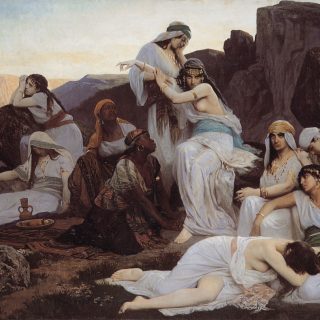
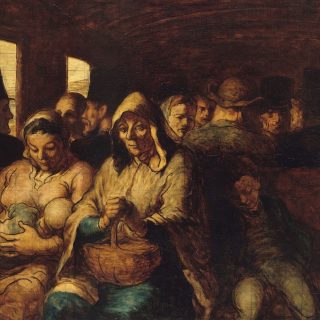
Realism was a pivotal 19th-century movement that acted as a “truth-telling” force in art. It emerged as a direct rejection of Romanticism (which exaggerated emotion) and Neoclassicism (which idealized history). Realism insisted on depicting the world exactly as it was—warts and all—focusing on the mundane, the gritty, and the everyday lives of the working class.
For researchers and students, it is crucial to distinguish between Artistic Realism (the movement) and Photorealism (the technical ability to mimic a photo). Realism wasn’t just about “looking real”; it was about “being honest.” Realist painters refused to paint angels or Greek gods because, as Gustave Courbet famously said, “I have never seen an angel. Show me an angel, and I will paint one.” This movement laid the essential groundwork for Impressionism and all subsequent modern art by breaking the rules of what was considered “worthy” of being painted.
Origin Location:France (spreading throughout Europe and the USA).
Visual & Technical Specs
Key Visual Characteristics: Objective depiction of contemporary life, lack of idealization, emphasis on physical labor, textural honesty (dirt, worn fabric, aged skin), and naturalistic light.
Color Palette: Grounded and earthy. Predominant use of raw umber, sienna, muted ochre, slate grey, and deep forest greens. It avoids the “synthetic” or overly vibrant colors of later movements.
Mediums & Tools: Oil on canvas with a focus on “heavy” application to represent the weight of the subject matter. Pallet knives were often used to create rugged textures.
The “Why”: The goal was to democratize art. Realists believed that the life of a peasant was as important as the life of a general. They wanted to strip away the “fake” drama of the past and confront the viewer with the social realities of their own time.
Historical Context: Developed during the Industrial Revolution and the Rise of Socialism. As the working class grew and faced harsh conditions, artists used their brushes as a form of social reportage.
Modern Influence: Cinema, TV & CGI
N/A
Modern Influence: AI & Hybrid Media
Modern Legacy: In AI prompting, “Realism” is used to counteract the overly “glossy” or “digital” look that AI often defaults to. It forces the model to include skin pores, fabric fraying, and natural lighting inconsistencies.
AI Prompting Keywords:Realism style, 19th-century realism, oil on canvas, earthy tones, muted colors, gritty texture, everyday life, natural lighting, unidealized, highly detailed skin texture, raw umber palette, Gustave Courbet style.
Some Other Art Styles
Art Styles by random seed
Landscape
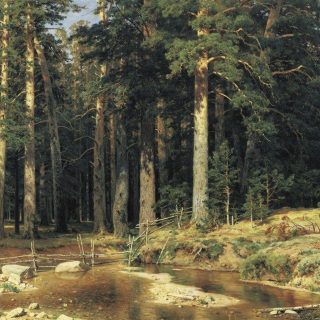
Landscape art focuses on the depiction of natural scenery such as mountains, valleys, trees, rivers, and forests. While nature has been a backdrop in art for millennia, “Landscape” as a standalone genre represents a shift in human consciousness—moving from nature as a setting for religious or heroic figures to nature as the primary subject.
Historically, the genre is divided into several distinct approaches:
The Classical/Ideal Landscape: Perfected in the 17th century, these are composed, balanced scenes often featuring Roman ruins to evoke a sense of timelessness and harmony.
The Topographical Landscape: Accurate, map-like recordings of specific places, common before the invention of photography.
The Sublime & Picturesque: A focus on the raw, often terrifying power of nature (The Sublime) versus the charming, irregular beauty of the countryside (The Picturesque).
The Impressionist Landscape: A revolutionary shift toward capturing the fleeting effects of light and atmosphere using broken brushstrokes and en plein air (outdoor) techniques.
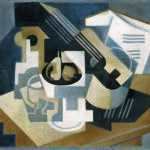
Cubism represents the most radical break from traditional Western pictorial representation since the Renaissance. Developed primarily in Paris, it abandoned the single-viewpoint perspective that had dominated art for centuries. Instead, Cubist artists analyzed subjects from multiple angles, breaking them into geometric fragments and reassembling them within a shallow, ambiguous space.
For researchers and students, it is essential to distinguish between its two primary phases:
Analytic Cubism (1907–1912): Focused on breaking down forms into monochromatic, overlapping planes.
Synthetic Cubism (1912–1914): Introduced collage, vibrant colors, and simpler shapes, emphasizing the construction of new forms rather than the deconstruction of existing ones.
Cubism is arguably the most influential art movement of the 20th century, marking a definitive break from the traditional Renaissance window-on-the-world perspective. At its core, Cubism is an analytical approach to three-dimensional reality, where objects are analyzed, broken up, and reassembled in an abstracted form.
For researchers and students, it is essential to distinguish between its two primary phases:
Analytic Cubism (1907–1912): Characterized by a fragmented, “shattered” appearance with a monochromatic color palette. The goal was to represent all viewpoints of an object simultaneously.
Synthetic Cubism (1912–1914): Introduced collage elements (newspaper, sand, cloth) and brighter colors, focusing on building up new forms from diverse materials rather than breaking them down
Baroque is a period and style of Western classical art that used exaggerated motion and clear, easily interpreted detail to produce drama, tension, exuberance, and grandeur. It began around 1600 in Rome and spread throughout most of Europe.
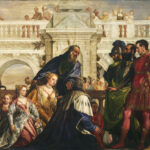
The hallmark of Baroque art is theatricality. Unlike the balanced and “static” perfection of the Renaissance, Baroque art is “dynamic.” It seeks to involve the viewer emotionally and physically. In painting, this was achieved through Chiaroscuro (strong contrasts between light and dark) and Tenebrism (where darkness becomes a dominating feature of the image). In architecture, it moved away from flat surfaces toward undulating walls and domes that created a sense of movement. For researchers, it is defined by the “co-extensive space,” where the art seems to break the “fourth wall” and enter the viewer’s world.
Pop Art was a revolutionary movement that blurred the line between “high art” and “low culture.” It emerged as a challenge to the elitism of AbstractExpressionism, choosing instead to find beauty and meaning in the mundane, the commercial, and the mass-produced.
For researchers and students, Pop Art is defined by its use of appropriation—taking existing imagery from advertisements, comic books, and celebrity culture and placing them in an art gallery context. This was often achieved through mechanical reproduction techniques rather than traditional hand-painting. While it looks “fun” and vibrant, it often carries a satirical or ironic subtext regarding consumerism, fame, and the “American Dream.”
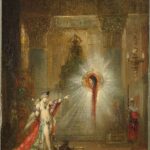
Symbolism was a late 19th-century movement that rejected the literal representation of the world (Realism and Impressionism) in favor of the inner life of the mind. Symbolist artists did not aim to paint a tree or a person as they appeared to the eye, but rather as symbols of a deeper, often darker, psychological or spiritual reality.
It is characterized by an interest in the occult, dreams, melancholy, and the macabre. For researchers, it is the bridge between the Romanticism of the early 1800s and the Surrealism of the 20th century. The art is intentionally ambiguous; it uses “private” symbols—motifs that might mean something specific to the artist but remain mysterious to the viewer—to evoke a mood or a “state of soul” rather than a clear narrative.