
Romanticism
A comprehensive guide to the visual principles, history, and pioneers of this movement. Curated for researchers and students seeking a structured analysis of artistic styles.
Full General Specifications
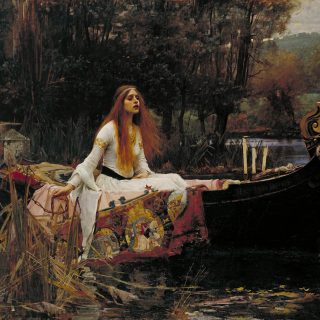
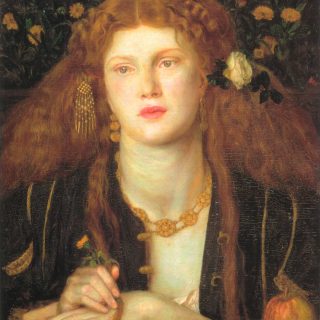
Romanticism was an intellectual and artistic movement that emerged as a reaction against the scientific rationalism of the Enlightenment and the industrialization of the 18th century. It shifted the focus of art from objective “reason” to subjective emotion, the power of the individual, and the overwhelming awe of nature (The Sublime).
In visual arts, Romanticism is characterized by a move away from the rigid, “clean” lines of Neoclassicism toward a more painterly, expressive approach. Artists sought to capture the “uncontrollable”—stormy seas, misty mountains, ruins, and intense human psychological states (horror, passion, and insanity). It wasn’t about “romance” in the modern sense of dating; it was about the “romance” of the soul’s struggle against the infinite.
Related Random Romanticism Artwork
Classification
-
Category: Painting, Literature, Music, Architecture (Gothic Revival).
-
Era/Period: Late 18th Century to Mid-19th Century (c. 1780–1850).
-
Origin Location: Europe (primarily Germany, Great Britain, and France).
Visual & Technical Specs
-
Key Visual Characteristics: Dynamic compositions (diagonal lines), dramatic lighting (Chiaroscuro), loose and visible brushwork, emphasis on the “Sublime” landscape, and depictions of the solitary hero or the force of nature.
-
Color Palette: Highly emotional and atmospheric. Often features deep reds, moody blues, stormy greys, and warm, hazy ambers to mimic sunset or sunrise.
-
Mediums & Tools: Oil on canvas (for depth and texture), watercolor (popular for atmospheric landscapes), and etching/engraving.
Pioneers & Key Works
-
Founders/Key Artists: Caspar David Friedrich (Germany), J.M.W. Turner (UK), Eugène Delacroix (France), Francisco Goya (Spain), William Blake (UK).
-
Masterpieces:
-
The Wanderer above the Sea of Fog (Friedrich, 1818)
-
The Slave Ship (J.M.W. Turner, 1840)
-
Liberty Leading the People (Delacroix, 1830)
-
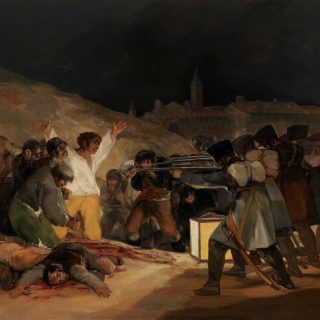
The Third of May 1808 (Goya, 1814)
-
-
Influential Schools/Groups: Hudson River School (USA), Nazarene movement (Germany).
Philosophy & Context
-
The “Why”: To celebrate the Individual and the Intuitive. Romanticists believed that truth was found through intense feeling and the imagination rather than logic or empirical data. They viewed nature as a spiritual force that could not be tamed by man’s machines.
-
Historical Context: Developed during the Industrial Revolution and the French Revolution. As cities became polluted and mechanized, artists longed for a “purer” past (Middle Ages) and the untamed wilderness.
Modern Influence: Cinema, TV & CGI
-
2D, 3D, CGI, VFX: Romanticism is the primary source for “Cinematic Lighting.” The concept of a lone character standing against a massive, CG-rendered landscape (Environment Concept Art) is a direct descendant of Friedrich’s paintings.
-
Modern Legacy: The visual language of films like The Revenant, The Northman, and the wide, atmospheric shots in Lord of the Rings are modern digital versions of the Romantic Sublime.
Modern Influence: AI & Hybrid Media
-
Modern Legacy: AI image generators are incredibly effective at “Romanticism” because they excel at blending light and texture (atmospheric haze, volumetric lighting). It is the most requested style for fantasy world-building.
-
AI Prompting Keywords: Romanticism style, the sublime, atmospheric haze, moody lighting, stormy sky, oil painting, visible brushstrokes, epic landscape, solitary figure, dramatic clouds, J.M.W. Turner lighting, Caspar David Friedrich composition.


