



SCI-FI
A comprehensive guide to the visual principles, history, and pioneers of this movement. Curated for researchers and students seeking a structured analysis of artistic styles.
Full General Specifications
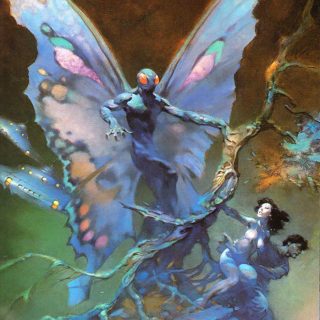
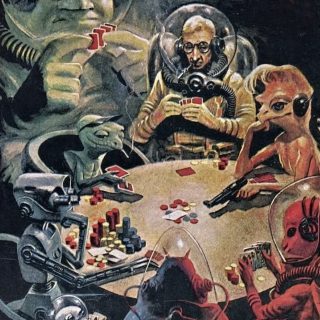
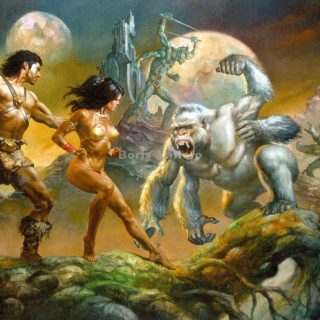
Science Fiction art is a visionary genre that depicts imagined technological advancements, space exploration, and futuristic civilizations. It is a “literature of ideas” rendered visually. Unlike pure fantasy, Sci-Fi art is grounded in extrapolation—taking current scientific trends and pushing them to their logical (or illogical) extremes.
The style is defined by its ability to balance the Technological Sublime (massive, awe-inspiring machines) with meticulous mechanical detail. It functions as a bridge between industrial design and fine art. Key sub-movements include:
-
Golden Age (1930s-50s): Optimistic, sleek, “Aero-styled” rockets and bright, primary-colored spacesuits.
-
New Wave/Cyberpunk (1970s-80s): Gritty, “used future” aesthetics, neon-noir lighting, and the fusion of biology with technology.
-
Hard Sci-Fi: Prioritizes physical accuracy, structural engineering, and realistic orbital mechanics in its visuals.
Related Random SCI-FI Artwork
Classification
-
Category: Digital/AI Art, Architecture (Parametric/Futurist), Concept Art.
-
Era/Period: Late 19th Century (Verne/Wells era) to the Present.
-
Origin Location: International (Parallel roots in Europe, USA, and Soviet Russia).
Visual & Technical Specs
-
Key Visual Characteristics: Megastructures, glowing emissive surfaces, weathered metal textures (“Greebles”), atmospheric perspective on a planetary scale, and non-humanoid anatomy.
-
Color Palette: Traditionally high contrast. Common schemes include Teal and Orange (complementary action), Neon Violet and Cyan (Cyberpunk), or Monochromatic White/Grey (Minimalist High-Tech).
-
Mediums & Tools: * Historical: Gouache, airbrush, and oil. * Modern: Kitbashing, 3D sculpting (ZBrush), photobashing in Photoshop, and procedural generation in Unreal Engine.
Pioneers & Key Works
-
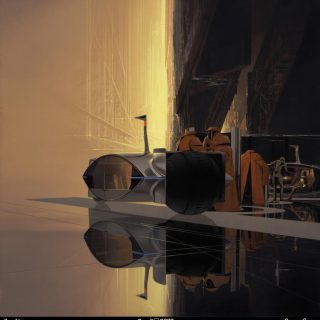
Founders/Key Artists: Chesley Bonestell (The Father of Modern Space Art), H.R. Giger (Biomechanical), Syd Mead (Visual Futurist), Moebius, John Berkey.
-
Masterpieces:
-
Saturn as Seen from Titan (Chesley Bonestell, 1944)
-
The Sentinel (Arthur C. Clarke/Illustrations by various)
-
Blade Runner Visual Concepts (Syd Mead, 1982)
-
The Arzach series (Moebius)
-
-
Influential Schools/Groups: NASA Art Program, OMNI Magazine, The British Science Fiction Association.
Philosophy & Context
-
The “Why”: To explore the “What If?” Science Fiction art acts as a mirror to contemporary anxieties (Nuclear war, AI takeover, Climate change) while simultaneously serving as a blueprint for the future. It challenges the viewer to look beyond the terrestrial horizon.
-
Historical Context: Closely tied to the Space Race of the 1960s and the Digital Revolution. As humanity’s reach extended into the cosmos and the microchip, the art style shifted from “magic rockets” to “integrated tech.”
Modern Influence: Cinema, TV & CGI
-
2D, 3D, CGI, VFX: This style is the backbone of the global VFX industry. It pioneered techniques like Matte Painting and Miniature Photography, which evolved into modern digital environment design.
-
Modern Legacy: Modern “Product Design” (Apple, Tesla) often mimics the clean, minimalist Sci-Fi aesthetics of the 1970s (2001: A Space Odyssey).
-
Default Answer: N/A
Modern Influence: AI & Hybrid Media
-
Modern Legacy: AI is currently revolutionizing this genre through “Neural Kitbashing.” Prompting allows for the instant creation of complex mechanical parts that would take a 3D artist weeks to model.
-
AI Prompting Keywords: Hard Sci-fi, cinematic lighting, greeble, hyper-detailed mechanical parts, volumetric fog, megastructure, futuristic realism, Syd Mead style, 8k render, Unreal Engine 5, octane render, intricate circuitry.


