


Art Style & Movement
Sculpting Movement
A comprehensive guide to the visual principles, history, and pioneers of this movement. Curated for researchers and students seeking a structured analysis of artistic styles.
Full General Specifcations for Sculpting Movement
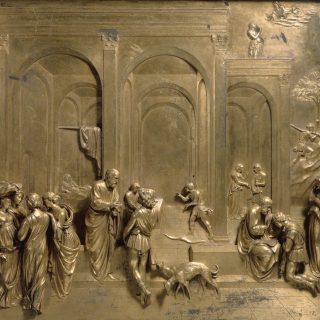
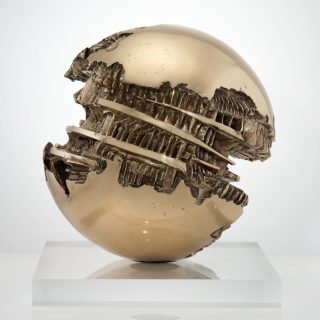
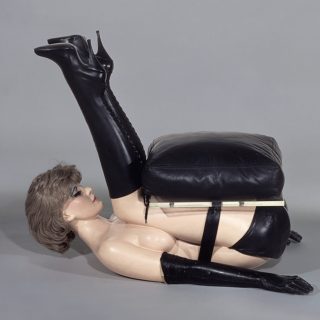
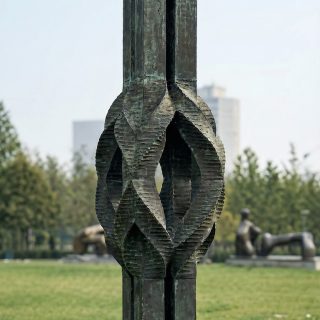
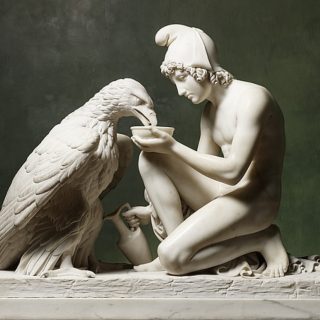
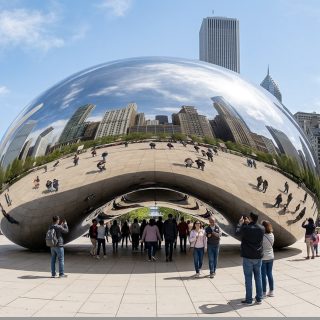
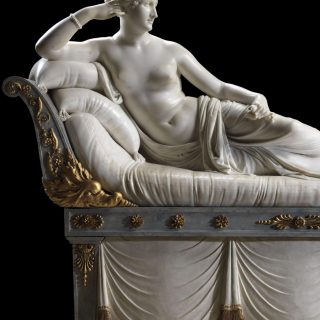
Sculpting is the branch of the visual arts that operates in three dimensions. Unlike painting, which creates the illusion of depth, sculpture occupies physical space and is governed by the relationship between mass and void. Historically, it was divided into two primary processes: Subtractive (carving away material like stone or wood) and Additive (building up material like clay or wax).
For researchers and digital artists, sculpting is defined by its tactile nature and its interaction with real-world physics—specifically gravity and light. Modern “Digital Sculpting” mimics these traditional workflows using millions of polygons to simulate the “feel” of clay. Key concepts include:
-
Armature: The internal skeleton that supports the weight of the sculpture.
-
Contrapposto: The shifting of weight in the human figure to create a sense of life and potential movement.
-
Relief vs. Free-standing: Whether the work is attached to a background (like a coin) or can be viewed from all 360°.
Related Random Sculpting Movement Artwork
Classification
-
-
Category: Sculpture, Architecture, Digital/AI Art (3D).
-
Era/Period: Prehistoric to Contemporary.
-
Origin Location: Global (Independently developed in virtually every ancient civilization).
-
Visual & Technical Specs
-
-
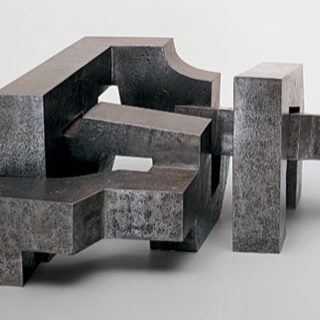
Key Visual Characteristics: Mass, volume, texture, “negative space” (the holes or gaps in a work), and the interplay of light and shadow on physical surfaces.
-
Color Palette: Traditionally monochromatic (the natural color of marble, bronze, or wood), though ancient sculptures were often polychromatic (brightly painted). Modern digital sculpting uses “Matcaps” (Material Captures) to simulate different lighting.
-
Mediums & Tools: * Traditional: Chisel, mallet, rasp, clay wire cutters, kilns, lost-wax casting.
-
Digital: ZBrush, Mudbox, Blender, 3D Printing (SLA/FDM).
-
-
Pioneers & Key Works
-
Founders/Key Artists: Unknown (Prehistoric), Phidias (Greek High Classical), Donatello (Early Renaissance), Michelangelo (High Renaissance), Gian Lorenzo Bernini (Baroque), Auguste Rodin (Modern).
-
Masterpieces:
-
Venus of Willendorf (c. 25,000 BCE)
-
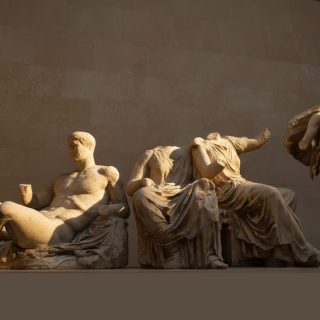
The Parthenon Marbles (Phidias, 447 BCE)
-
David (Michelangelo, 1504)
-
The Ecstasy of Saint Teresa (Bernini, 1652)
-
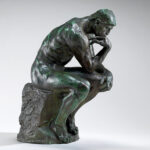
The Thinker (Rodin, 1904)
-
-
Influential Schools/Groups: The Academy of Fine Arts (Florence), The Bauhaus (for abstract form).
Philosophy & Context
-
The “Why”: To give permanent, physical form to ideas, deities, or the human spirit. Sculpture often serves a “monumental” purpose—to outlast the creator and freeze a moment or an emotion in time.
-
Historical Context: In antiquity, sculpture was the primary medium for religious and political propaganda. In the 20th century, it broke away from “representing objects” to exploring the beauty of the materials themselves (Abstract Sculpture).
Modern Influence: Cinema, TV & CGI
-
2D, 3D, CGI, VFX: Digital sculpting is the backbone of modern character design. Every creature in a blockbuster film (like Avatar or Godzilla) begins as a high-resolution digital “sculpt.”
-
Modern Legacy: Virtual Reality (VR) sculpting allows artists to “stand” inside their creations, blurring the line between the physical and digital worlds.
Modern Influence: AI & Hybrid Media
-
Modern Legacy: AI is now moving from 2D images to Text-to-3D, where prompts generate printable 3D meshes. This creates a “Hybrid” era where AI provides the base volume and the artist “cleans” it using traditional digital sculpting tools.
-
AI Prompting Keywords: 3D sculpture, hyper-detailed, clay render, marble texture, bronze patina, chiseled edges, dynamic pose, anatomical precision, ZBrush style, high-poly, tactile surface, volumetric lighting.
-
Some Other Art Styles by Random Seed
Art Styles by random seed
Sculpting
Sculpting is the branch of the visual arts that operates in three dimensions. Unlike painting, which creates the illusion of depth, sculpture occupies physical space and is governed by the relationship between mass and void. Historically, it was divided into two primary processes: Subtractive (carving away material like stone or wood) and Additive (building up material like clay or wax).
For researchers and digital artists, sculpting is defined by its tactile nature and its interaction with real-world physics—specifically gravity and light. Modern “Digital Sculpting” mimics these traditional workflows using millions of polygons to simulate the “feel” of clay. Key concepts include:
-
Armature: The internal skeleton that supports the weight of the sculpture.
-
Contrapposto: The shifting of weight in the human figure to create a sense of life and potential movement.
-
Relief vs. Free-standing: Whether the work is attached to a background (like a coin) or can be viewed from all 360°.
Manga
Manga (漫画) is a sophisticated Japanese sequential art form that evolved from 12th-century scrolls into a global cultural phenomenon. Unlike Western comics, Manga is a multi-generational medium with specific demographic classifications: Shonen (young males), Shojo (young females), Seinen (adult men), and Josei (adult women).
Technically, Manga is defined by its “cinematic” pacing. While Western comics often focus on action-to-action transitions, Manga frequently uses aspect-to-aspect transitions—lingering on a falling leaf or a background detail to establish mood or “Ma” (the interval of empty space). The style relies heavily on a specialized vocabulary of visual symbols, such as “sweat drops” for anxiety or “popping veins” for anger. For researchers, the core of Manga’s power lies in its Iconic Abstraction: characters are drawn with simplified, expressive features (large eyes, minimal noses) to allow the reader to project themselves onto the character more easily.
Cartoon
The “Cartoon” style is a broad artistic language defined by simplification, exaggeration, and symbolism. Unlike realism, which seeks to mimic the physical world, cartooning captures the essence of a subject through “The Principle of Amplification through Simplification.” By stripping away non-essential details, the artist directs the viewer’s attention to specific emotions, actions, or personality traits.
Technically, the style relies on visual shorthand. A lightbulb over a head signifies an idea; stars around a head signify dizziness. This “language of symbols” allows for rapid storytelling. Within the professional sphere, cartooning is divided into several major aesthetic movements:
-
Rubber Hose (1920s-30s): Characters with limbs that lack elbows or knees, moving like noodles (e.g., Early Mickey Mouse).
-
Limited Animation (1950s-60s): A stylistic choice (often driven by budget) that uses static backgrounds and only moves specific parts of a character, creating a graphic, “flat” look (e.g., Hanna-Barbera).
-
Modern CalArts/Bean Mouth: A contemporary trend focusing on soft, rounded shapes and expressive, elastic facial features.
Bauhaus
Orientalism in the visual arts refers to a specific movement in the 19th century where Western painters—primarily from France, Britain, and Germany—depicted the landscapes, people, and cultures of the Near East, Middle East, and North Africa. It is characterized by an Academic Realism so precise it often feels photographic, though the subjects were frequently romanticized or staged.
For researchers and students, it is vital to understand that Orientalism functioned as both an artistic style and a cultural lens. The movement is divided into two main artistic approaches:
-
The Ethnographic/Documentary Style: Artists who traveled extensively (like David Roberts) and sought to capture the architecture and ruins of Egypt and the Levant with archaeological accuracy.
-
The Romantic/Imaginary Style: Artists (like Jean-Léon Gérôme) who created highly detailed, “hyper-real” scenes of harems, bazaars, and desert life, often blending various cultures into a singular, exotic “Orient” that appealed to European fantasies.
Expressionism
Expressionism is a modernist movement that originated in Northern Europe at the beginning of the 20th century. Its core principle is the prioritization of emotional experience over physical reality. Unlike Impressionism, which sought to capture the visual “impression” of light, Expressionism seeks to depict the “expression” of the artist’s inner world—often involving intense feelings of anxiety, fear, passion, or spiritual awakening.
For students and art centers, the style is defined by a radical distortion of form and the use of violent, non-naturalistic colors. It is not meant to be “beautiful” in the traditional sense; rather, it aims to be “honest” and “visceral.” The movement is typically divided into two influential German groups:
-
Die Brücke (The Bridge): Known for crude, jagged lines and a primitive, raw aesthetic.
-
Der Blaue Reiter (The Blue Rider): More abstract and focused on the spiritual and symbolic power of color.
Impressionism
Impressionism is perhaps the most famous movement in modern art history, marking the moment when painting shifted from “what the eye knows” to “what the eye sees.” It originated as a rebellion against the rigid, polished standards of the French Académie des Beaux-Arts.
Rather than focusing on precise detail and smooth finishes, Impressionist painters sought to capture the ephemeral moment—the shifting effects of light, weather, and time on a subject. This was facilitated by the invention of portable tin paint tubes, which allowed artists to leave their studios and paint en plein air (outdoors). The style is defined by short, thick strokes of paint that capture the essence of a subject rather than its details. When viewed up close, an Impressionist painting looks like a chaotic mess of colors; however, when the viewer steps back, the eye performs optical mixing, blending the distinct strokes into a vibrant, shimmering image.


